
THE BADLANDS NIGHTSCAPE WORKSHOP
–––
The next several days were going to be different from the rest of my trip.
I was with a small group of photographers, spending our days and nights photographing the Badlands and trying to make the most of whatever conditions we were given.
There wasn't much downtime.
Late nights turned into early mornings, and most of the time we were too busy photographing to think about pulling out a phone and recording video. So this isn't going to be a day-by-day account of everything we did. Instead, I'm going to break the workshop into sections and let the photographs tell most of the story.
EARLY MORNING, EARLY CLOUDS
–––
Today was an early morning for me and my photography friends. We left the motel quite early to get to our sunrise location.
Once we arrived, everyone scouted out a spot that looked promising and set up their gear. We chatted, compared compositions and talked about what we were seeing while waiting for the light.
And what do you know.
Clouds. Again. In the eastern horizon.
I'm starting to wonder.
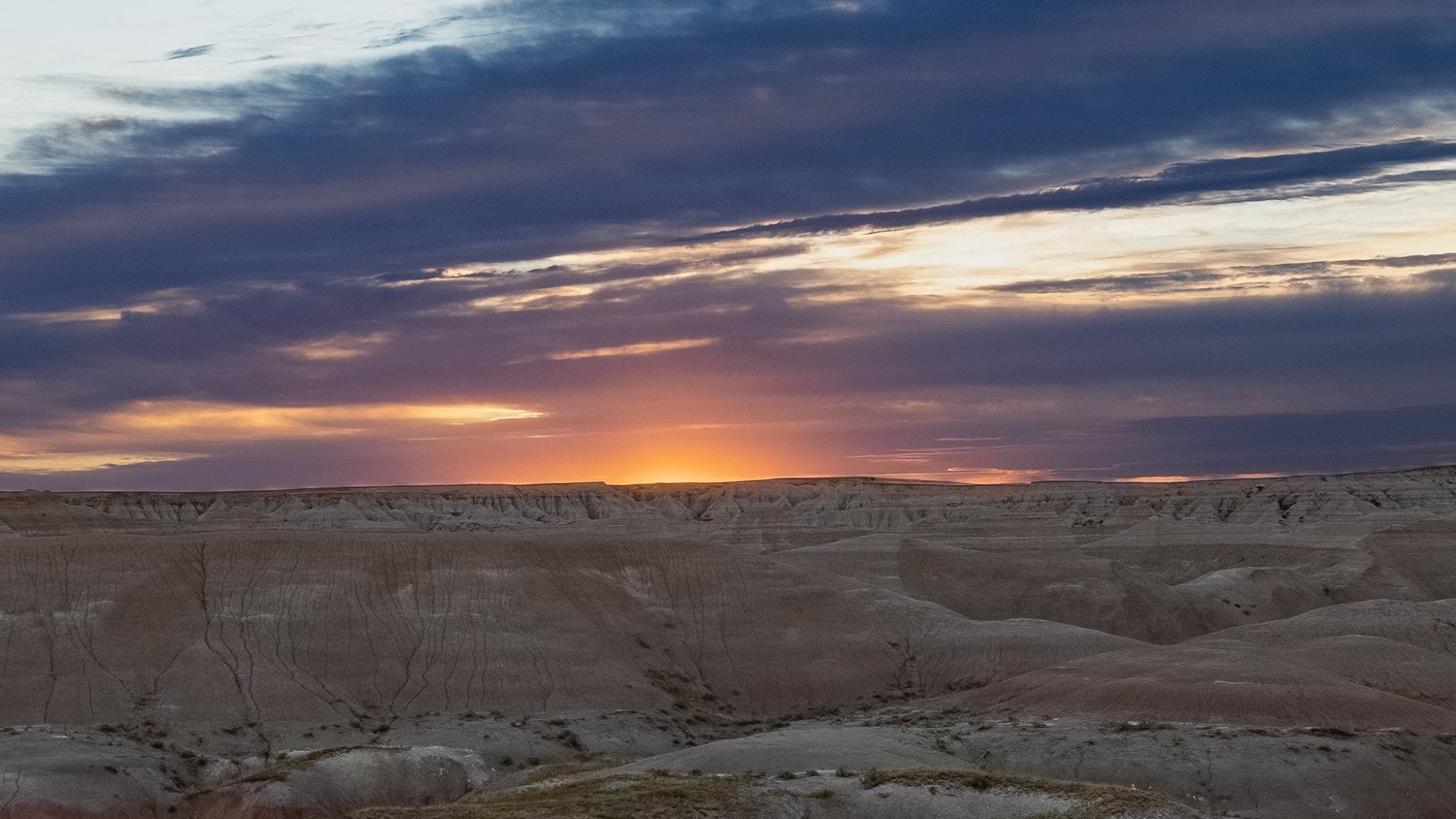
We made the best of it and photographed what we could before moving on.
SCOUTING THE EVENING
–––
After we finished shooting some sunrise images, we were taken to our evening shoot location. Ian, our instructor, gave us some insight into where we could shoot for golden hour and eventually the Milky Way.
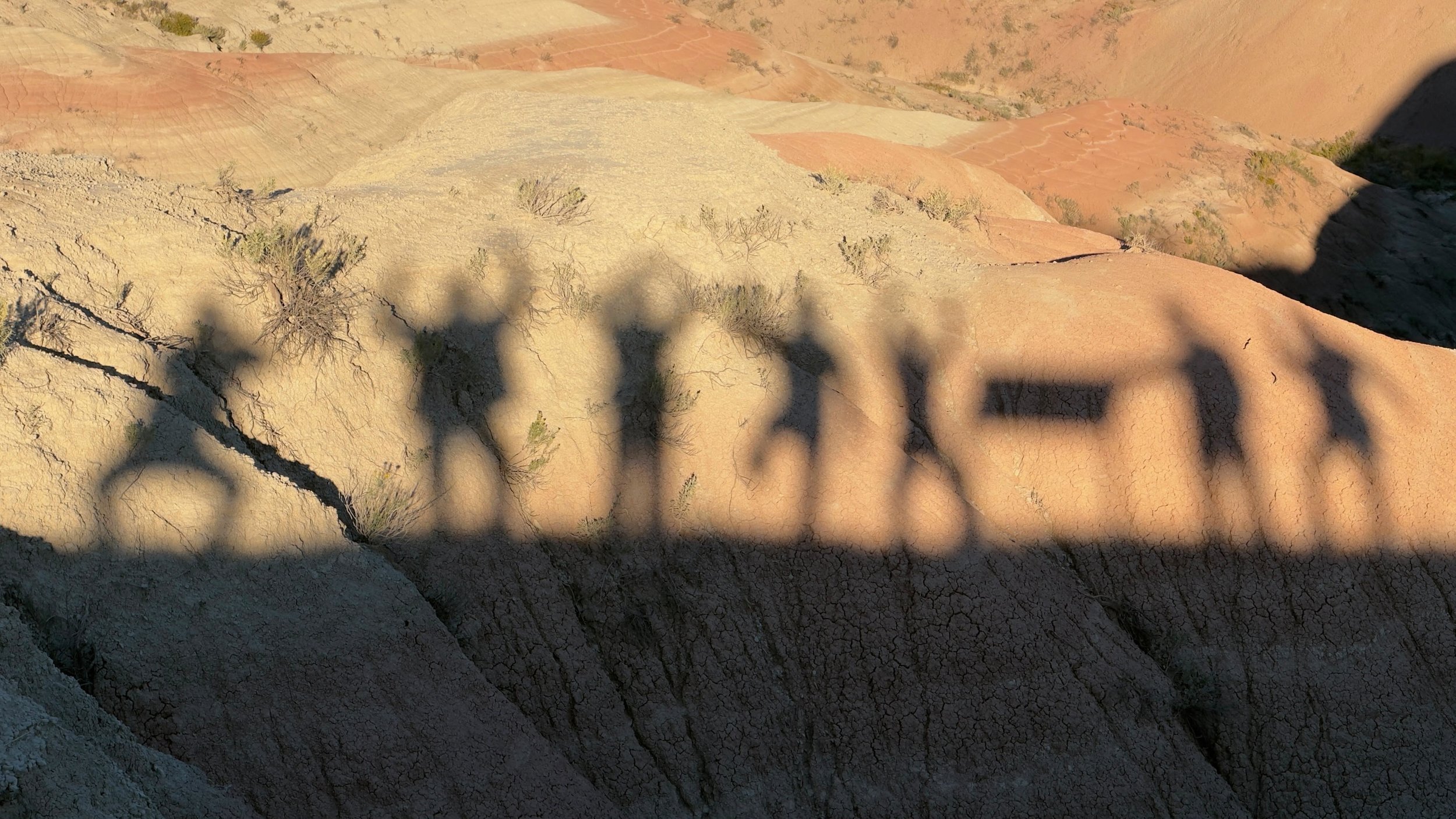
We also had a little fun photographing our shadows before we left. I’m third from the right.
By then, breakfast sounded like a pretty good idea.
BREAKFAST AT CEDAR PASS
–––
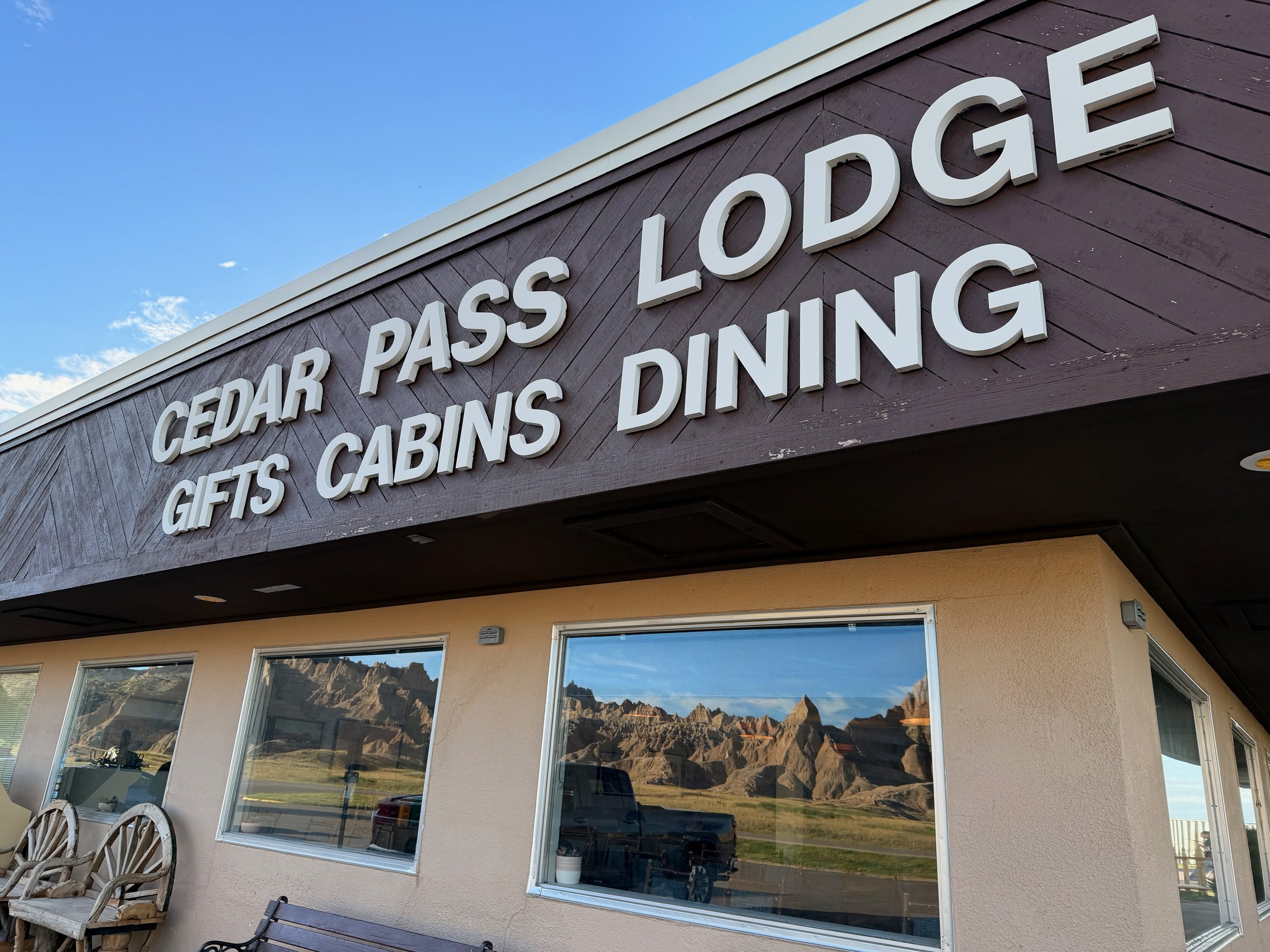
We decided to grab breakfast at the Cedar Pass Lodge gift shop and restaurant. It was right next door to the Ben Reifel Visitor Center, so it wasn't too far of a drive.
I ended up getting a caramel latte and oatmeal.
For some reason, my appetite hadn't been that great since I arrived in the Dakotas. Maybe my body was still adjusting to all the traveling.
Either way, I knew I needed to eat something to keep my energy up.
I wasn't expecting too much from the coffee because the restaurant looked a bit plain, but it was actually quite delicious.
Some of the others ordered breakfasts piled high with bacon, eggs, potatoes and everything else you'd expect on a big breakfast plate. That was way too heavy for me. I was perfectly happy with my oatmeal and caramel latte.
Once we were done, the plan was to head back to the motel and catch some sleep before our photography processing instruction.
But a few of us wanted to do some sightseeing first.
BACK TO THE BIG BADLANDS
–––
We ended up going back to the Big Badlands Overlook.
I had really liked it when I visited earlier, so I was happy to see it again. Unfortunately, by that time the lighting was just too harsh for the kind of landscape photography I wanted to do.
Oh well.
Sometimes you get the light you want. Sometimes you don't.
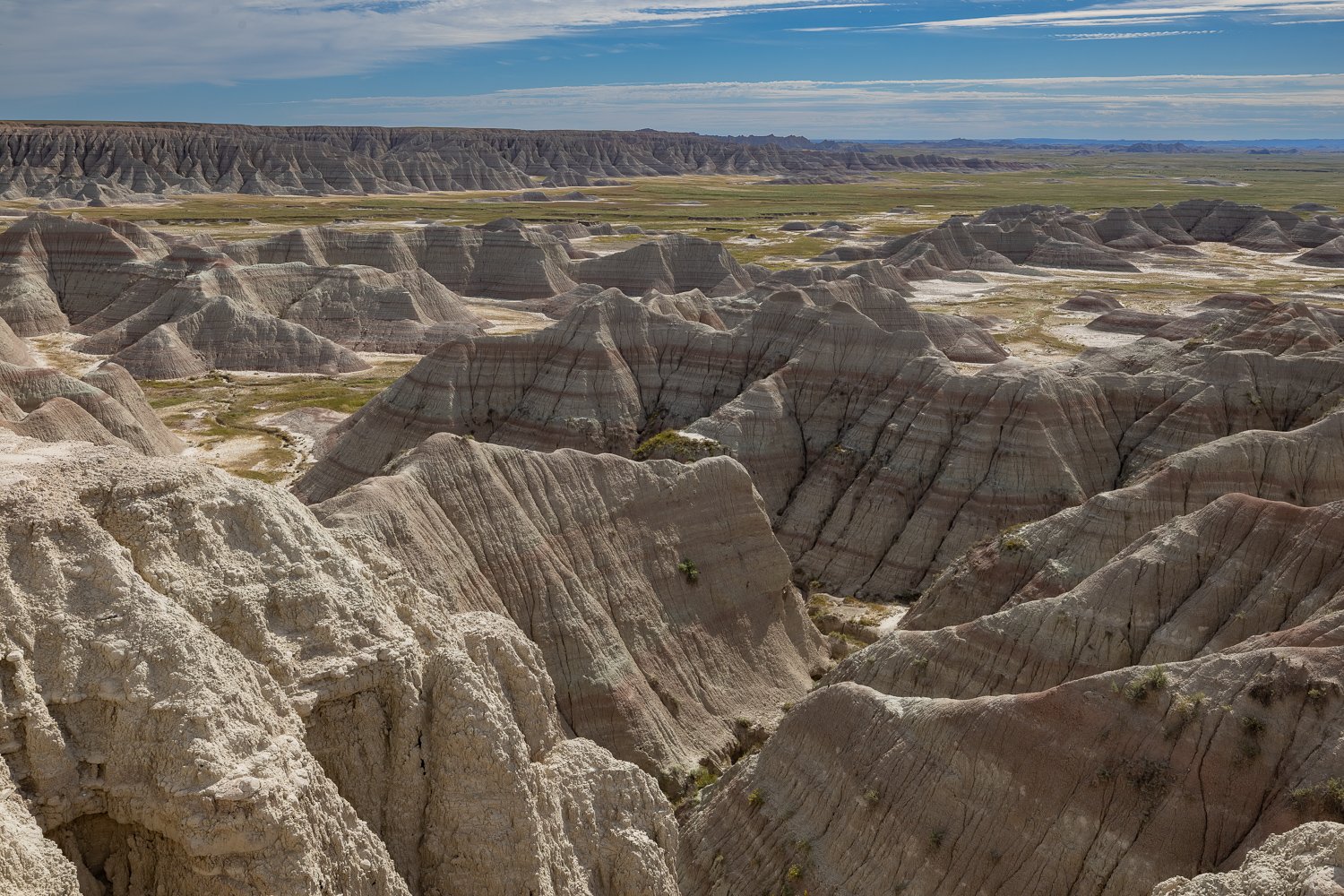
Eventually, we headed back to the motel to get ready for class.
ONE MORE SHOT
–––
Then one of the photographers mentioned wanting to photograph the conjunction of Jupiter and the Moon.
Okay. I'll give it a shot.
I grabbed my 150–600mm and tried to photograph it too.
Stupid me—I didn't put the camera on a tripod.
At 600mm, handholding was not exactly a recipe for sharp photographs. The movement was magnified by the telephoto lens, and my photos were blurred.
They weren't exactly what I was hoping for.
Lesson learned.
And that's one of the things about photography: sometimes you learn by getting it wrong.
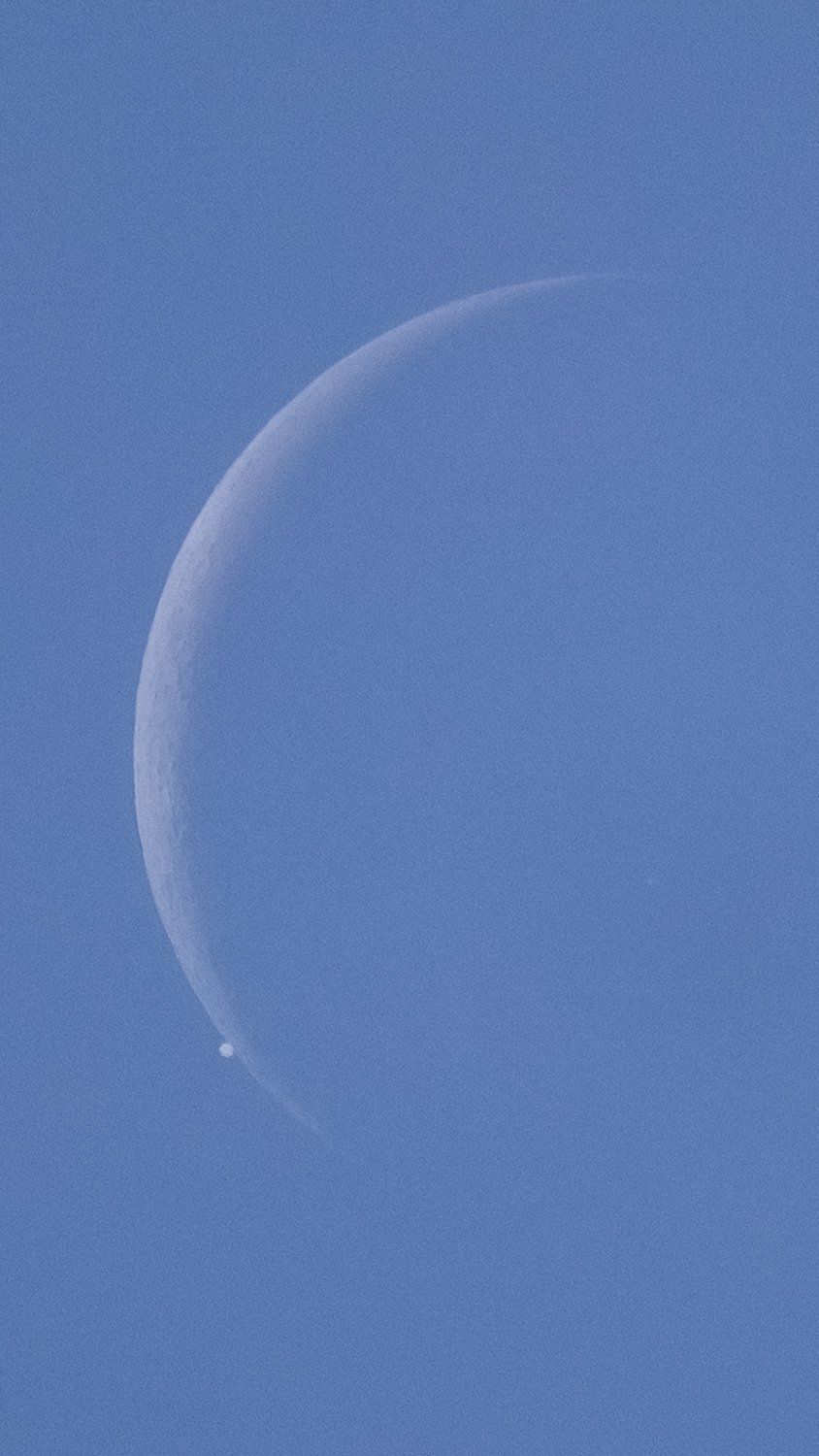
Conjunction of Jupiter and the Moon
Jupiter tucked beside a sliver of Moon in the daytime sky. Handheld at 600mm. Lesson learned: use a tripod.
Canon R6 Mark II
Tamron SP 150-600mm f/5-6.3 Di VC USD
LEARNING THE HARD PART
–––
One of the things I had hoped to get out of the workshop wasn't just photographing the Badlands at night. I also wanted to understand more about what happens after the photographs are taken.
I've struggled with some of that for years.
One thing in particular had always frustrated me: editing my photographs in Photoshop.
We chatted about different techniques, and I tried following the steps.
I just wasn't getting it.
Maybe I'm picky about the outcome. I understood the concept of what we were trying to accomplish. My problem was actually doing it correctly and getting the result I wanted.
Still, I had several more days to practice.
And that was a good thing.
A LITTLE WOODWORK BEFORE DINNER
–––
Before dinner, I went to check out some local woodwork. There were some really intricate carvings, including a jackalope and several other pieces that caught my attention.
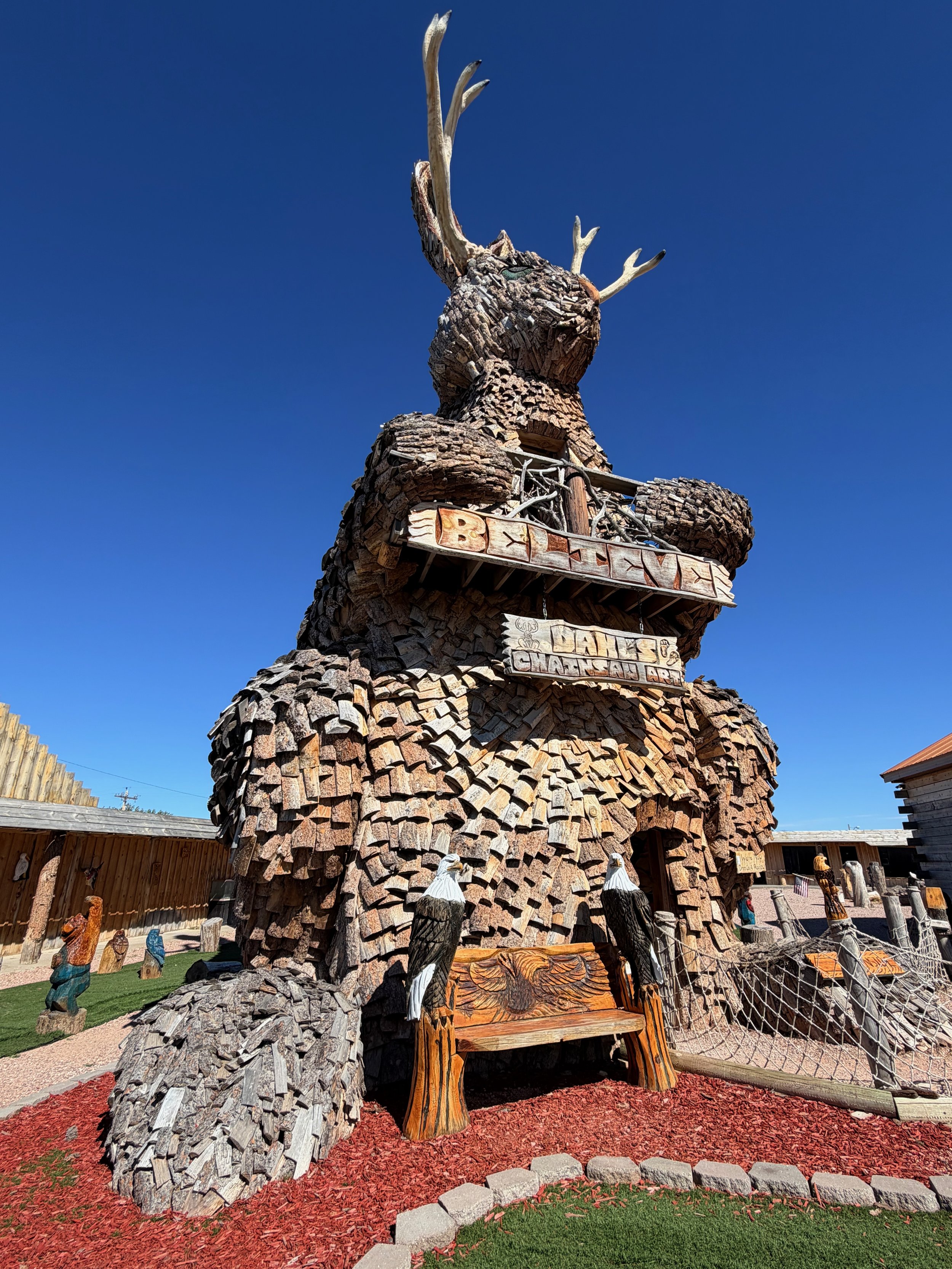
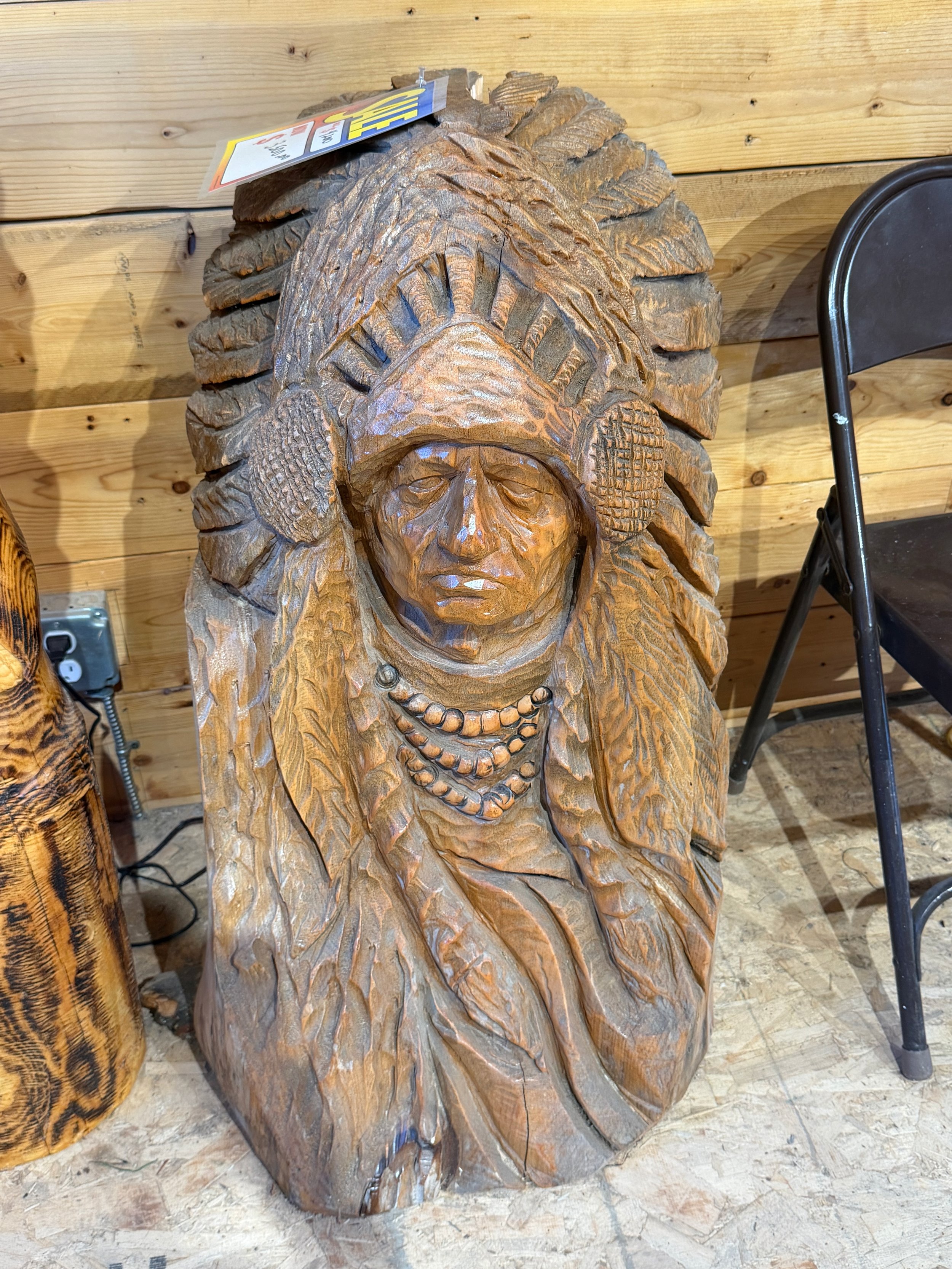
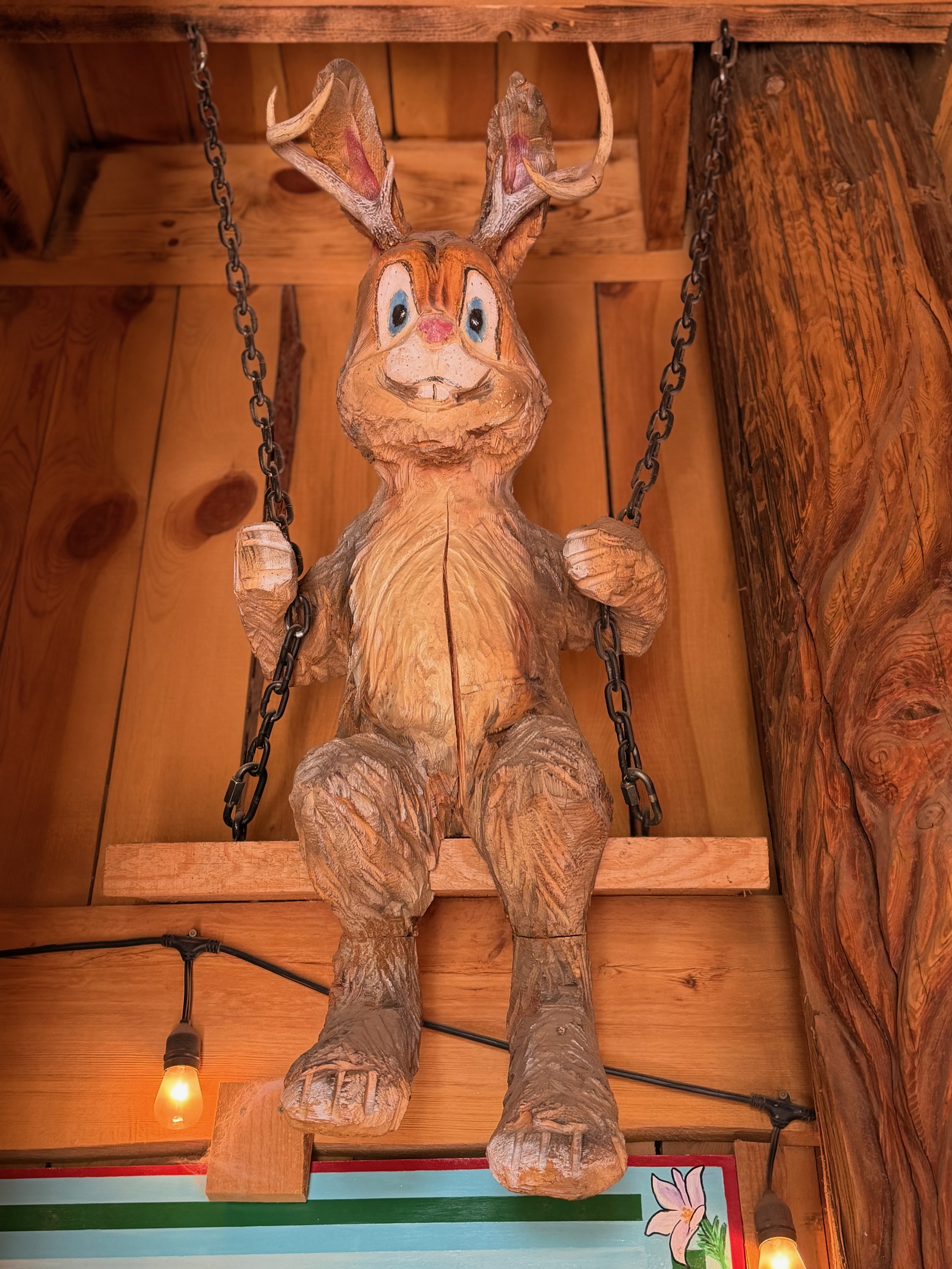
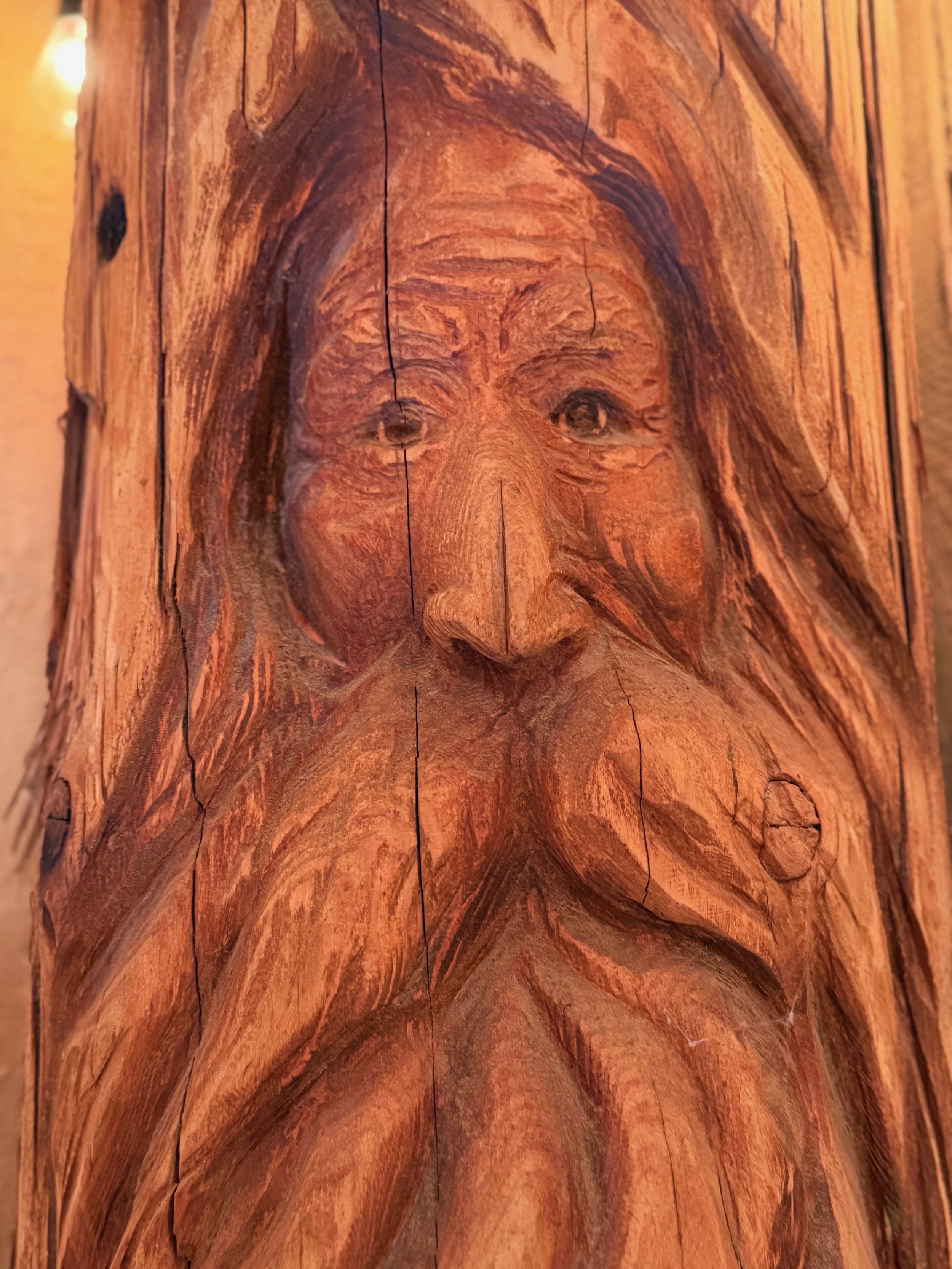
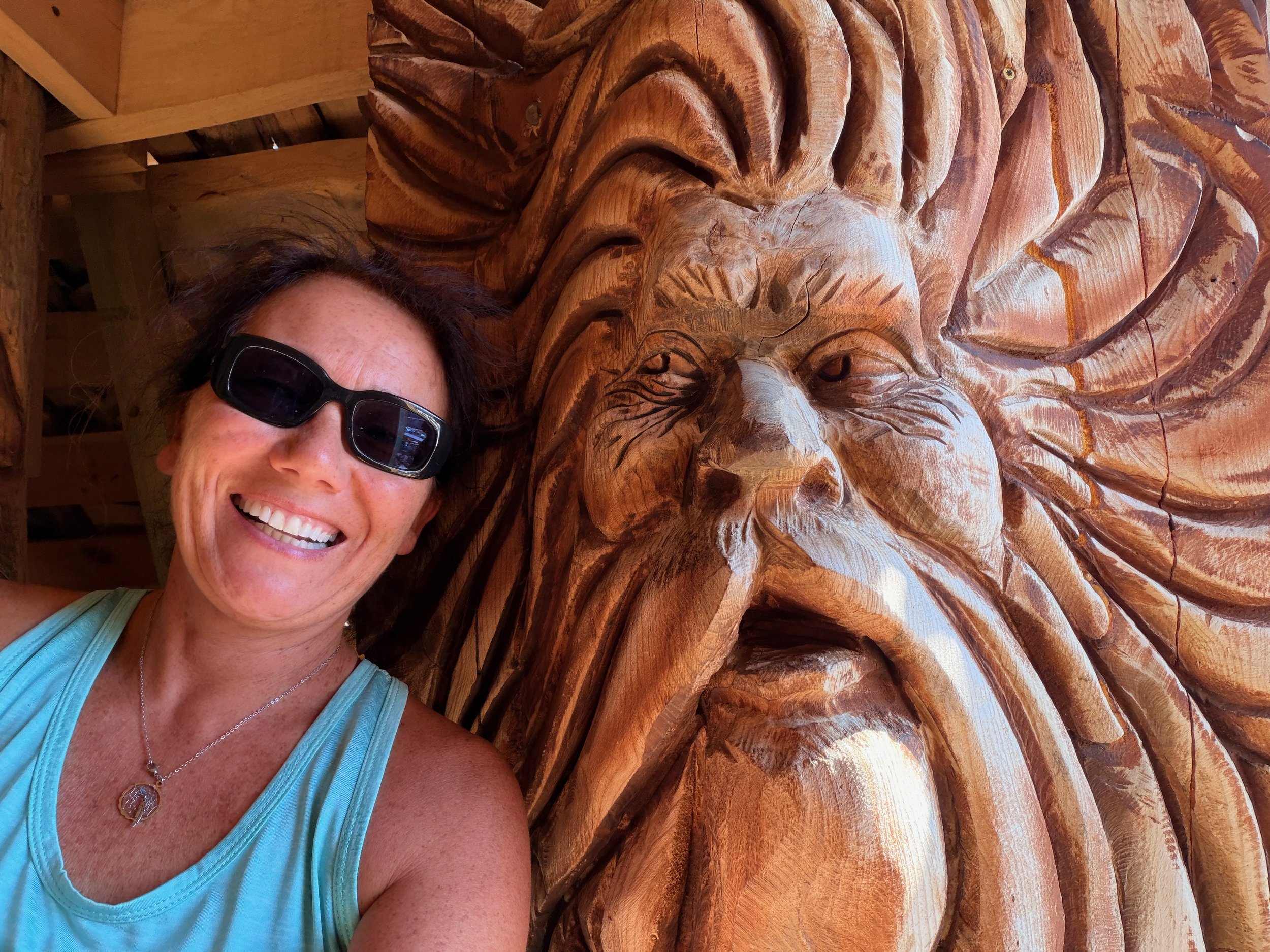
It was a nice little break before getting back into photography mode.
DINNER, THEN BACK OUT
–––
Dinner time was approaching, so we decided to eat at the Salty Steer. There are quite a few restaurant options in the area, but this place wasn't too bad.
I ordered the salmon with vegetables, and it was really good. It came with a salad, but I wasn't in the mood for one.
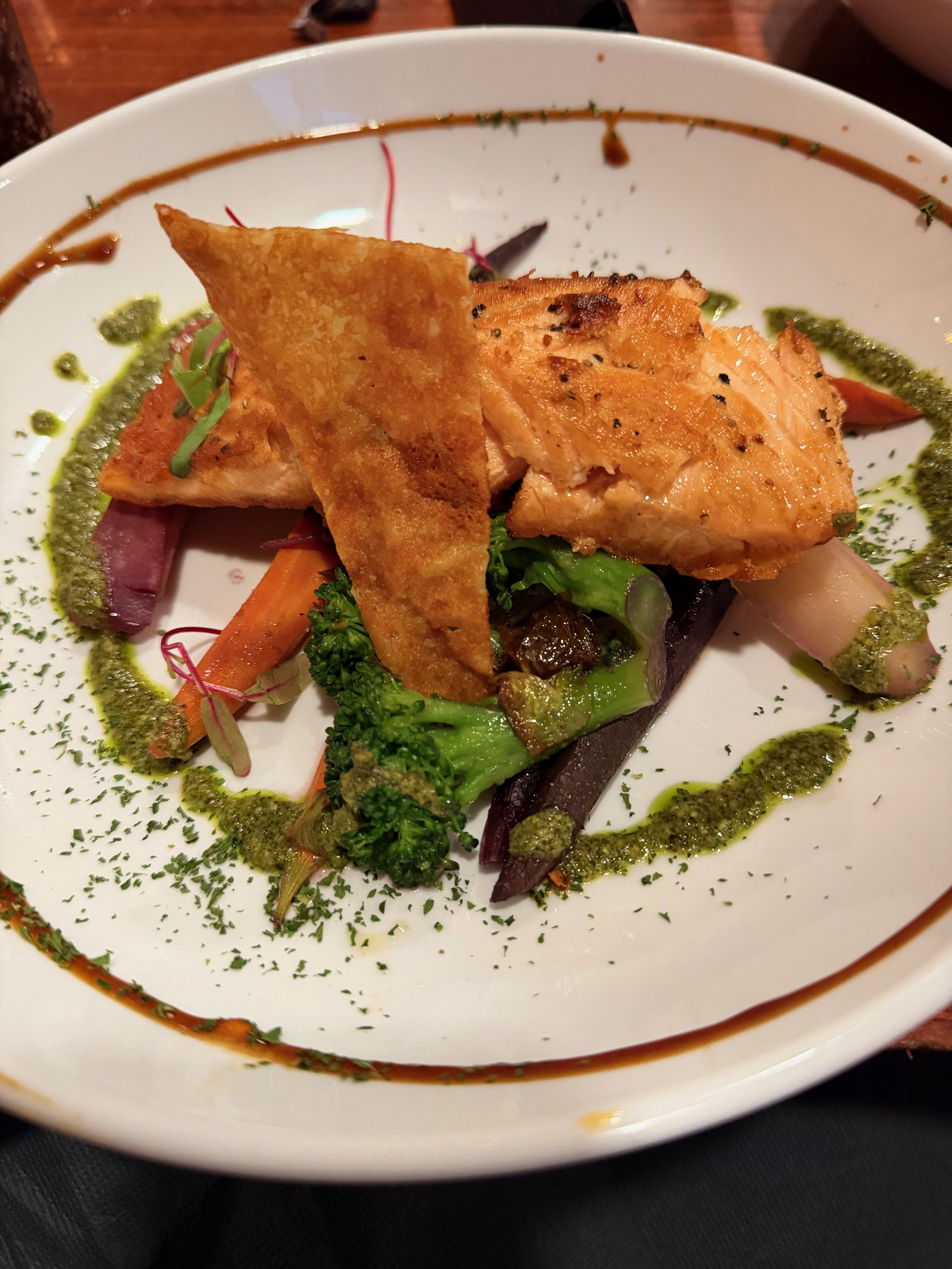
Salmon with vegetables
One of the guys ordered the prime steak.
Holy moly.
That thing was huge!
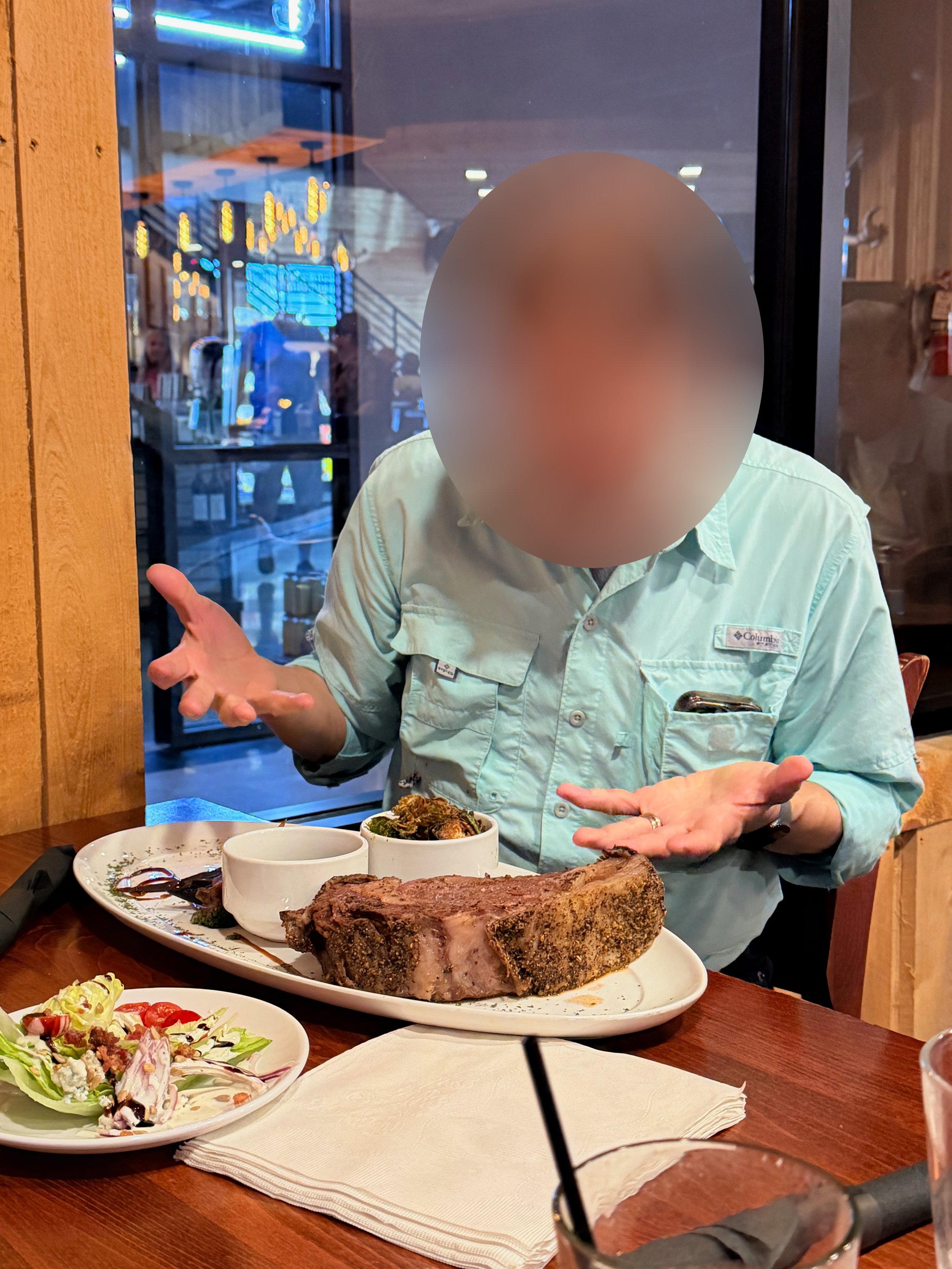
Prime rib steak
After dinner, we returned to the motel to gather our gear. Then it was off to the sunset location we had discussed that morning.
WHEN THINGS GOT A LITTLE TOO REAL
–––
We all arrived at our location after driving down a gravelly dirt road. I was just hoping my windshield wouldn't encounter any flying rocks.
A costly repair for a rental car.
Anyway...
We parked and were given snake gaiters. Although the chances of encountering a rattlesnake were pretty small, you just never know, and it wasn't worth taking the chance.
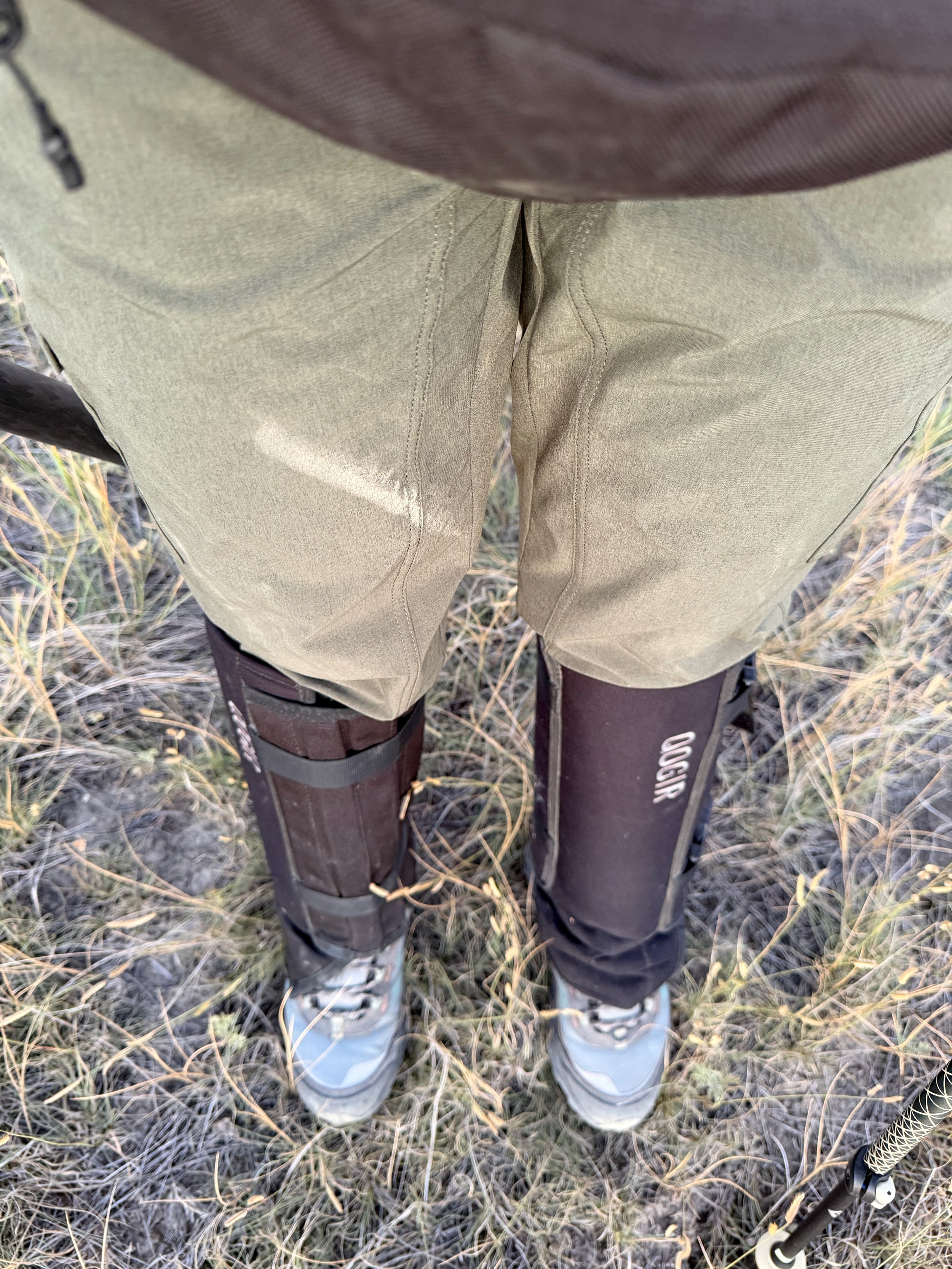
Snake gaiters
Loaned to us by the instructor. Not taking any chances.
We walked a little farther to where we were going to shoot. There were some crevasses in the area, some shallow and some surprisingly deep.
Ian pointed out a few places where we could stand and compose our shots. I have a slight fear of falling and can get vertigo, so some of the narrow pathways across the small hills made me a little nervous. The dry dirt could also be a little slick, even with hiking shoes.
We were being careful.
Then we heard it.
A sliding sound, followed by words I can't remember.
We all turned around and saw one of the women photographers on the ground.
She was angled head-down, and her camera had taken the fall with her.
You know how something traumatic can suddenly make everything feel like it's happening in slow motion?
This was one of those moments.
We held onto the instructor's tripod while he and her brother went over to help her up. Fortunately, she hadn't hit her head.
I was about 30 feet away, and from where I stood I could see that her right arm was pretty badly scraped up and bleeding.
I later learned that her watch had detected the fall and was trying to call 911. She was trying to stop it from making the call while everyone was getting her back up.
She was assisted back to the car to get her arm cleaned up. Not long afterward, a park ranger arrived.
I couldn't believe how quickly he got there.
It turned out he was also an EMT, so he was able to help clean and assess her arm.
As scary as it was watching it happen, it could have been so much worse. Thankfully, she wasn't seriously injured.
Thank goodness.
WAITING FOR THE NIGHT
–––
As the rest of us got back to photographing, we worked on our foregrounds and waited for the sun to go to sleep for the night.
A little while later, the injured photographer returned with her arm all bandaged up. Thankfully, she was okay and was able to continue with us.
We captured what we could and took as many foreground shots as possible while we still had some light. Then we made our way back toward the parking lot.
One of the other photographers and I had brought our star trackers, so we set those up.
I was really excited to finally get some practice using mine again.
A star tracker is basically a portable device that rotates your camera at the same rate as the Earth is rotating. When you take longer exposures, it keeps the stars from turning into little streaks—or what I like to call long light worms—across your photos.
It also allows you to gather more light, which can really help when you're photographing something like the Milky Way.
FINALLY, DARK SKIES
–––
The two guys and I were standing around joking with each other when, finally, it was dark enough to really start shooting.
And there they were.
Stars.
They were sparkling like diamonds, and there wasn't a cloud in sight except along the southern horizon. Fortunately, there weren't enough clouds there to interfere with the Milky Way.
After all the clouds we'd been dealing with, this felt like a small victory.
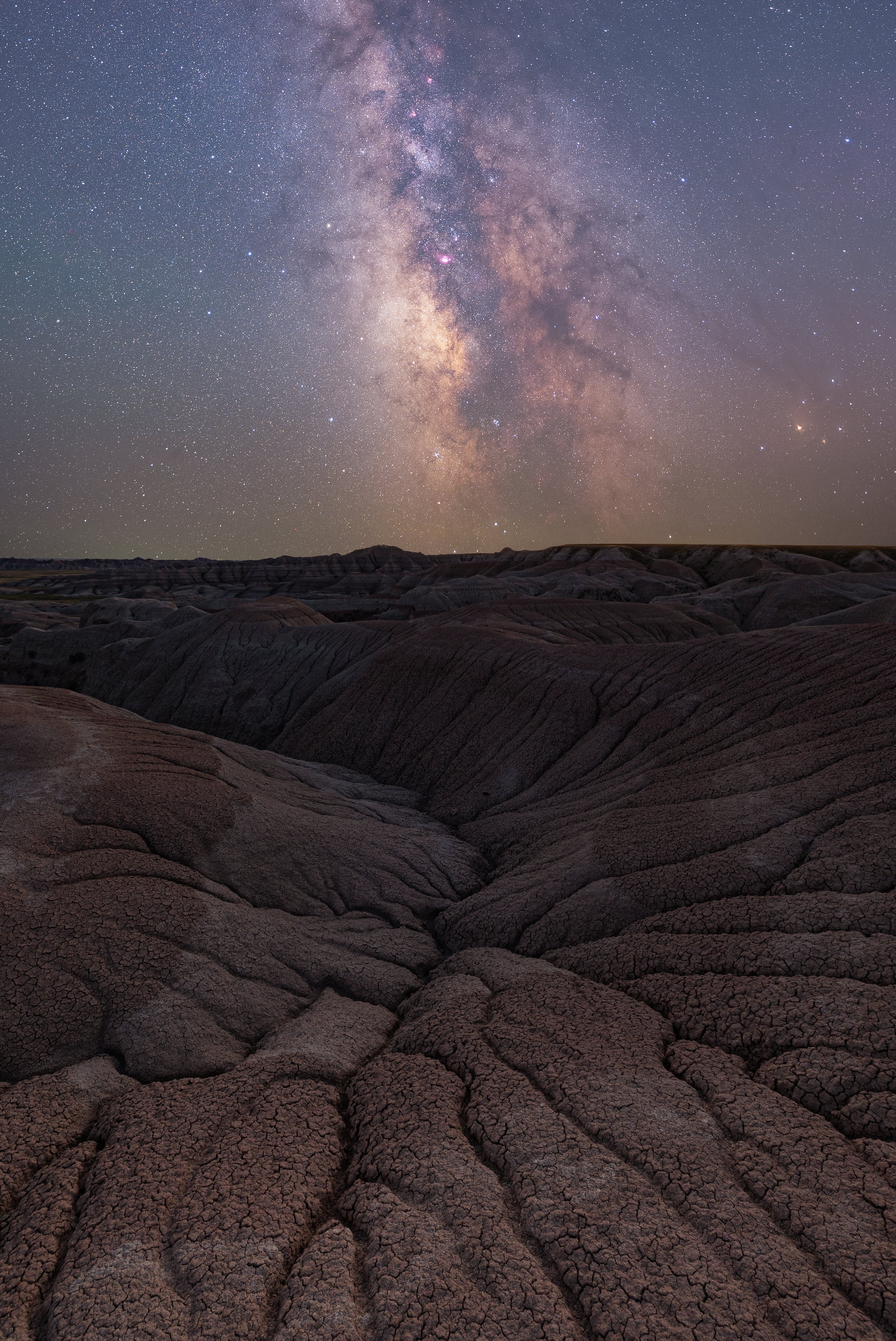
Where the Cracks Lead
Cracked clay ridges leading up to the Milky Way core over the Badlands. Foreground and sky captured separately the same evening.
Composite
Milky Way (Tracked/Stacked)
Canon R6 (astro-modified)
Canon RF 15-35mm at 15mm
ISO: 3200
Shutter speed: 60 sec
Aperture: f/2.8
iOptron Skytracker Pro
10 stacked
Foreground at golden hour
Canon R6 Mark II
Canon RF 15-35mm at 15mm
ISO 400
Shutter speed: 1/125 sec
Aperture: f/11
A Path to the Stars
A dry creek bed winds through the Yellow Mounds toward a lone peak, with the Milky Way core rising right above it.
Composite
Milky Way (Tracked/Stacked)
Canon R6 (astro-modified)
Canon RF 15-35mm at 21mm
ISO: 1600
Shutter speed: 120 sec
Aperture: f/2.8
iOptron Skytracker Pro
10 stacked
Foreground at morning golden hour
Canon R6 Mark II
Canon RF 15-35mm at 35mm
ISO 200
Shutter speed: 1/40
Aperture: f/11
We clicked away.
I decided to try a filter I'd brought with me. An H-alpha filter helps capture the special red glow from hydrogen gas in space, making those colorful clouds within nebulae easier to see in photographs.
I reached for the filter case and noticed something.
It hadn't been opened yet.
What the...?
I knew I'd used the filter during my February trip to Moab.
Then it hit me.
I brought the wrong filter.
I'd brought a stronger one, which makes focusing more difficult.
Well, there wasn't much I could do about it at that point. I had it with me, so I decided to try it anyway and hope for the best.
Long story short...
I wanted to pull my hair out.
It was tough.
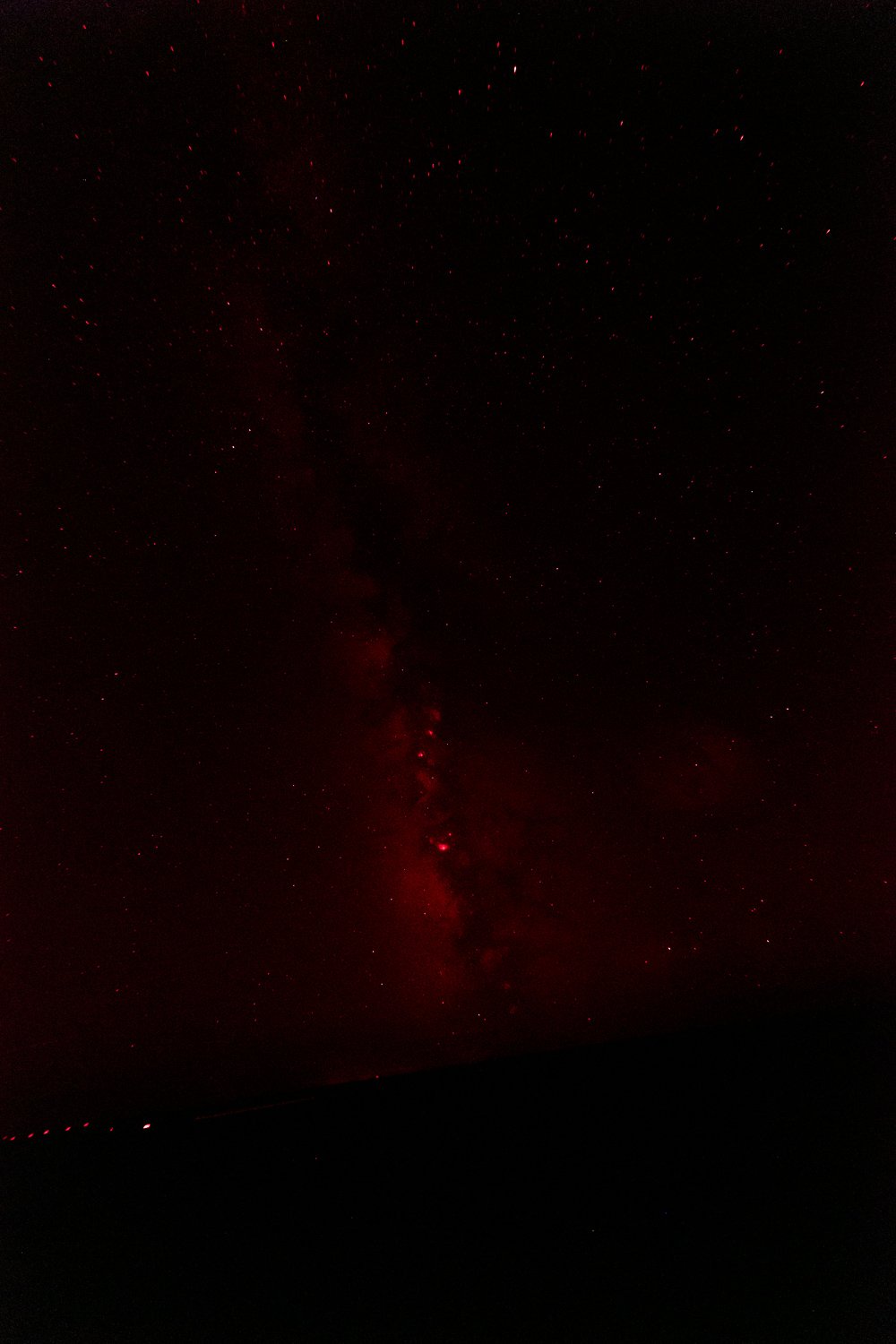
This is what I was dealing with.
Canon R6 (astro-modified)
Canon RF 15-35mm F/2.8 L IS USM at 15mm
H-alpha 6nm filter
Shutter speed: 60 sec
iOptron Skytracker Pro
I will work on editing these later on.
And honestly, I hate wasting time on nonsense, especially this time of year. The Milky Way isn't up for very long in September, so there is a relatively short window to photograph the core—the brightest part of the Milky Way.
I didn't want to spend that limited time fighting with the wrong filter.
But that's photography.
Sometimes the problem isn't the sky.
Sometimes it's the person standing behind the camera who brought the wrong piece of equipment.
TIME TO CALL IT A NIGHT
–––
Eventually, it was time to wrap things up.
I didn't want to leave yet. The sky was finally cooperating, and I could have stayed out much longer.
But I had to get up early again for sunrise.
All in all, it had been a productive evening.
We headed back to the motel, and I prepared everything for the following day.
Another early morning was coming.