
The Badlands Had Other Plans
ERROR IN JUDGMENT
–––
The weather didn't look great that first morning, so I skipped sunrise.
Big mistake.
Looking back, I should have gone out anyway. Stormy skies can make for some of the most dramatic photos, and I'll never know what I missed. Lesson learned: bad weather isn't a reason to stay in. Sometimes it's the shot.
BEFORE THE WORKSHOP
–––
The previous night wasn't a late one. It was too cloudy to practice any night-sky photography.
Honestly, I wished I would have had more opportunities to practice on this trip, but we can't control the weather. We just have to go with the flow.
Don't get me wrong—frustration creeps in. Trying to practice night-sky photography at home can be extremely difficult. The light pollution where I live is a surrealistic nightmare. You wait for clear skies, and if it's not the oil refinery lights lighting up the sky, it's the moon. If those are interfering, you have the neighbors with their Batman spotlight lighting up the driveway into your backyard.
People really don't know what they're missing if they've never experienced dark skies. It gives you an entirely different perspective about where we are in this universe.
After a week on the road, I'm still on Central Time. I keep waking up around 5:30 a.m. Mountain Time—6:30 a.m. Central. I had decided to get up and start my day. There was no point in sleeping in, even though I might be out late since my photo workshop started later that afternoon.
I gathered my things and made my way east on I-90.
THE VASTNESS OF SOUTH DAKOTA
–––
It was fun to drive the 85-mph speed limit and I don't know if anyone has ever noticed, but even driving that fast, it just seems as though your destination still takes forever to get there.
Maybe it's due to the vastness.
I had forgotten all about the Minuteman Missile facilities while I was there, and the reason it was off my radar was because I couldn't get tickets. As soon as they released them, they were already sold out.
Only six tickets per tour per day.
I was disappointed, but I'm sure that happened for a reason. Such as focusing my time on the Badlands itself.
And that's exactly what I did.
THE BIG BADLANDS OVERLOOK
–––
My first stop was the Big Badlands Overlook.
This was actually my favorite. I just thought it was really beautiful.
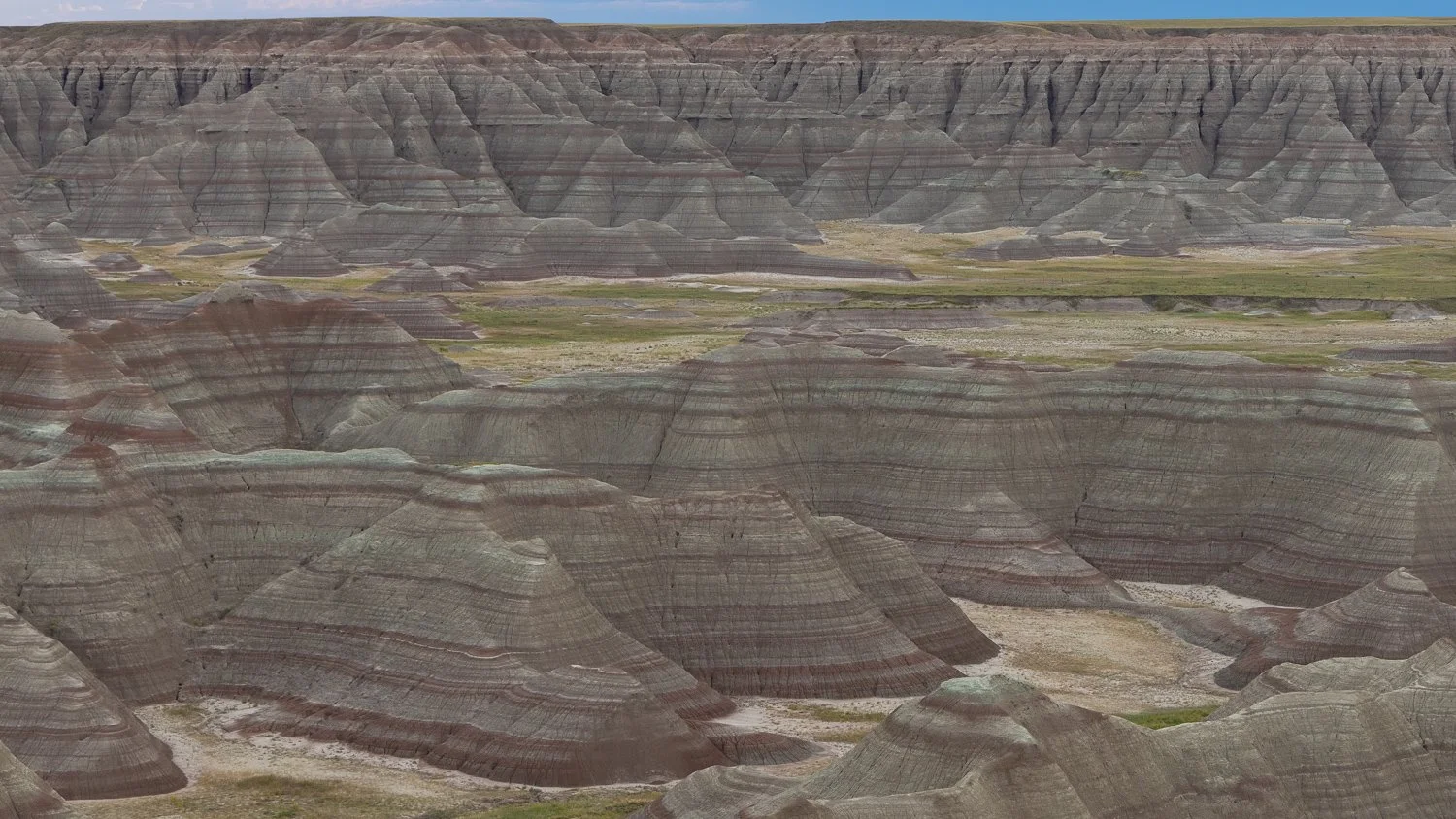
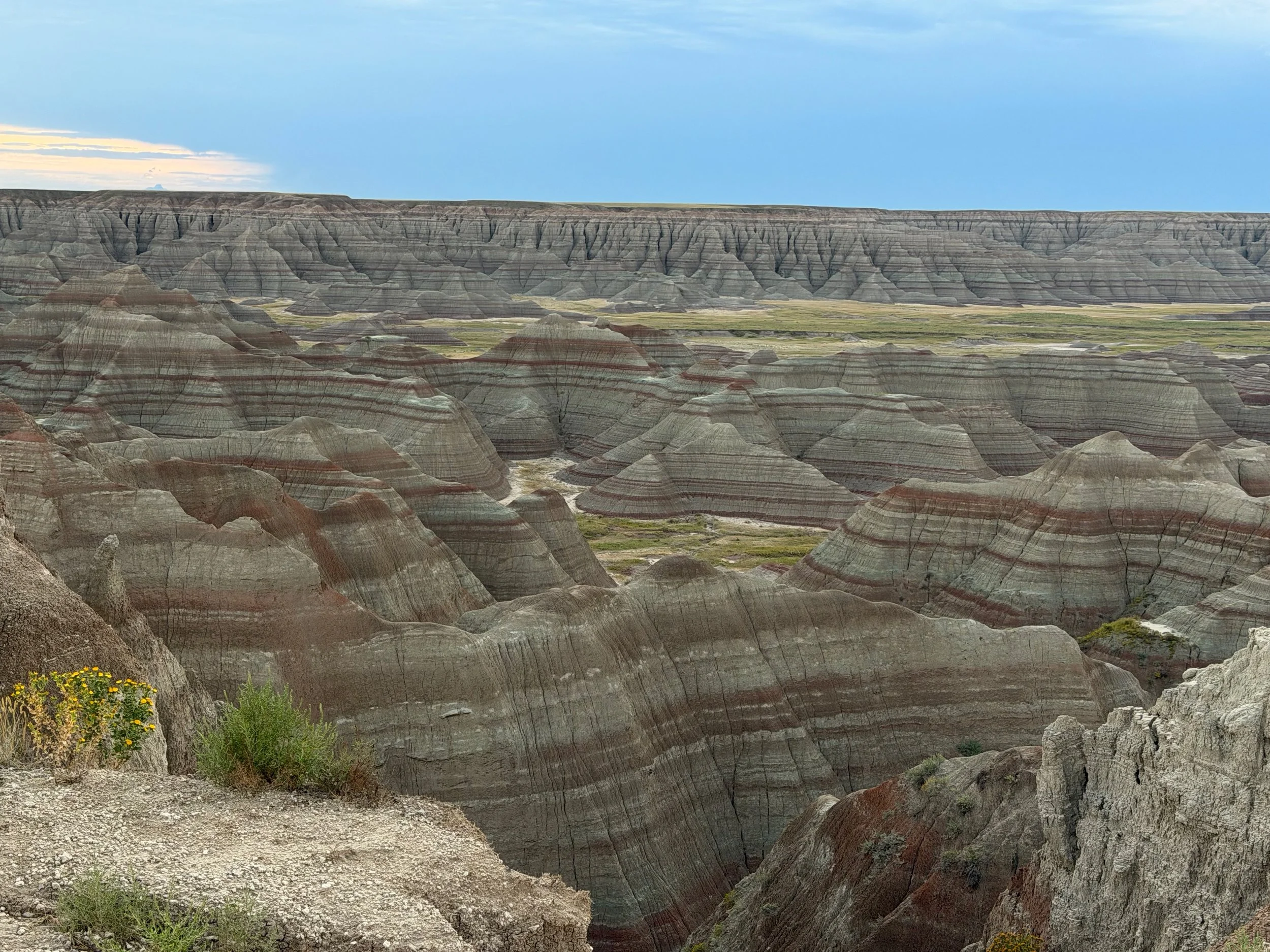
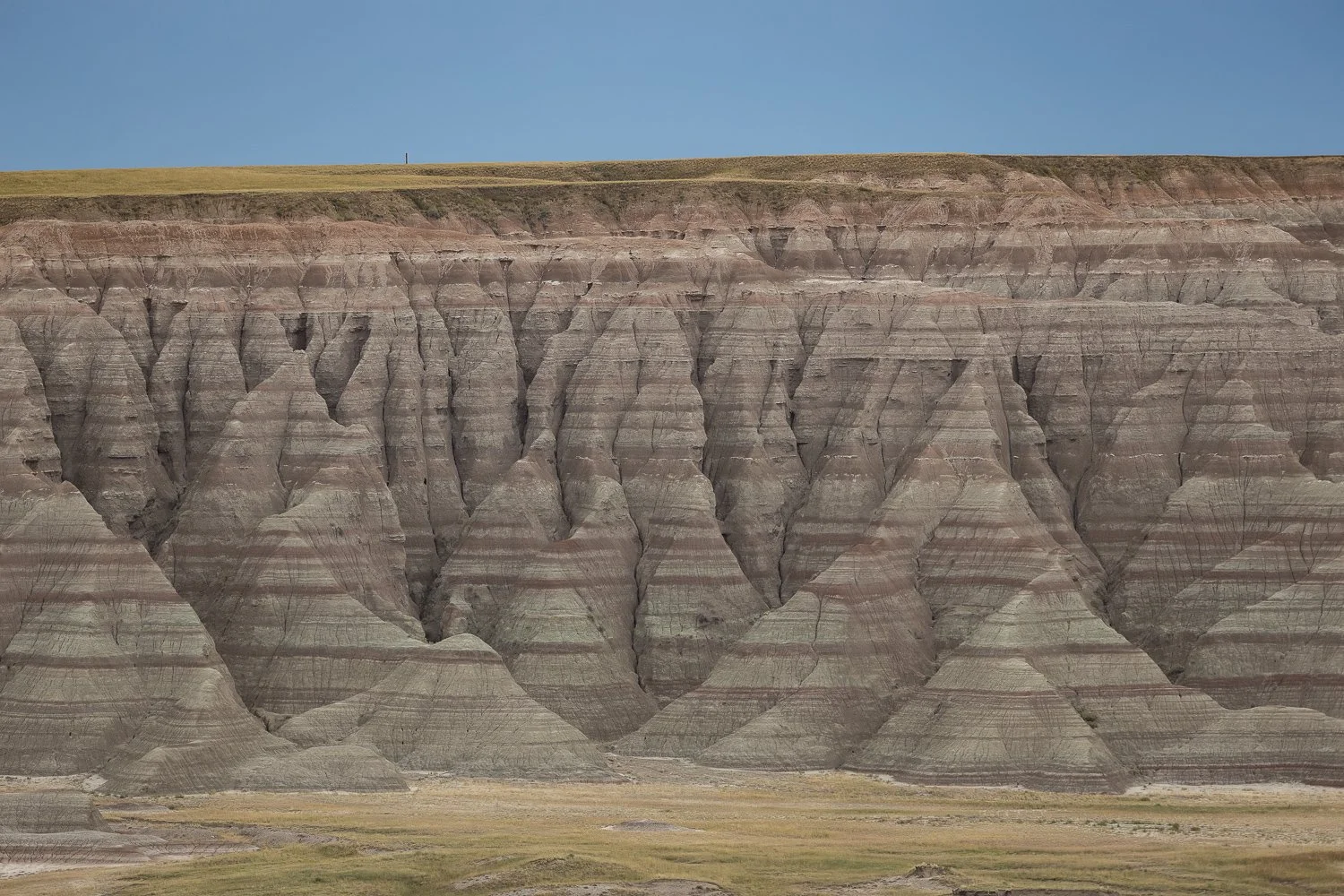
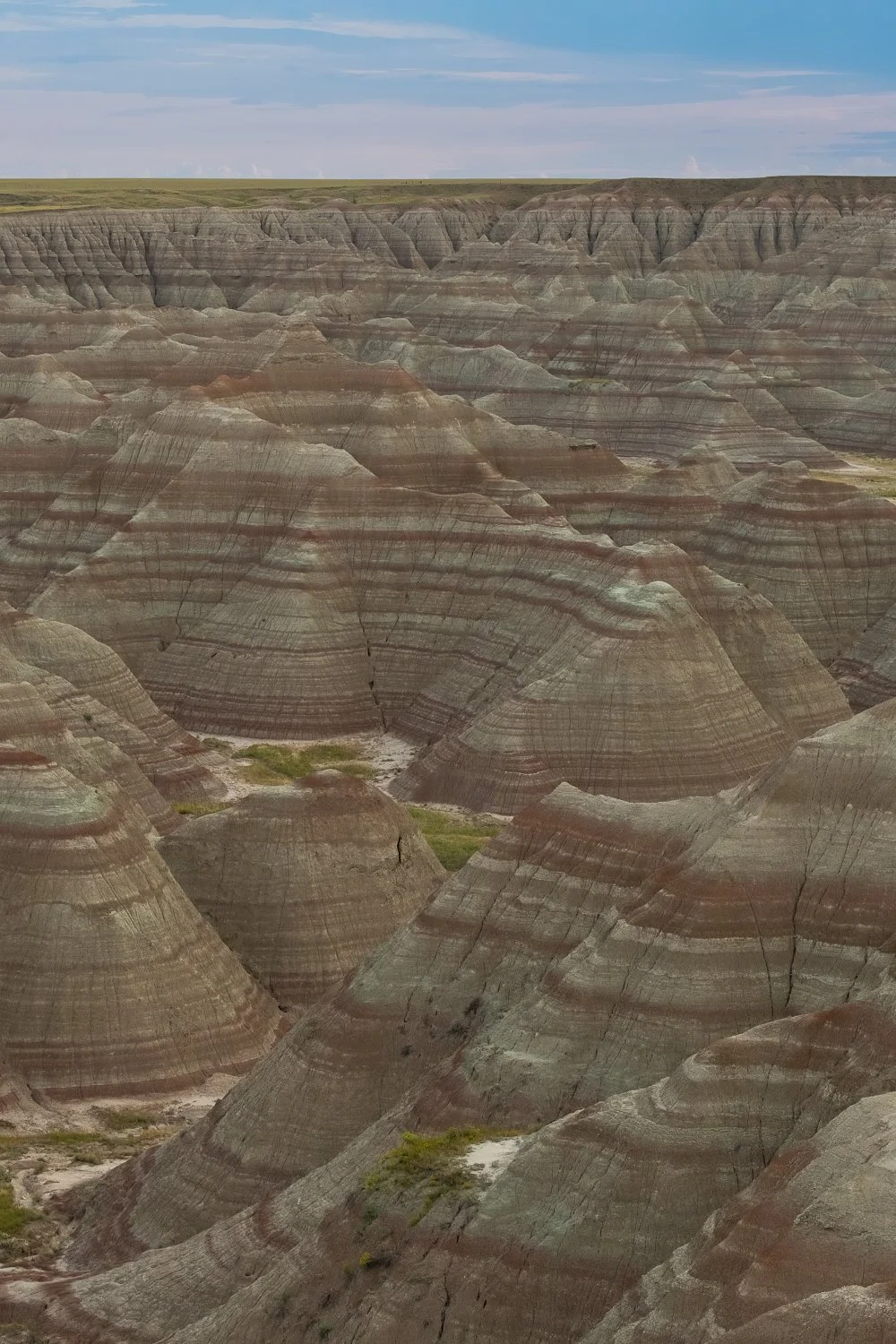
There were storms in the south, and I could see lightning in the distance every so often, but I couldn't get the timing. I also didn't want to spend time trying to figure out my MIOPS, which I have yet to figure out after having it for a number of years.
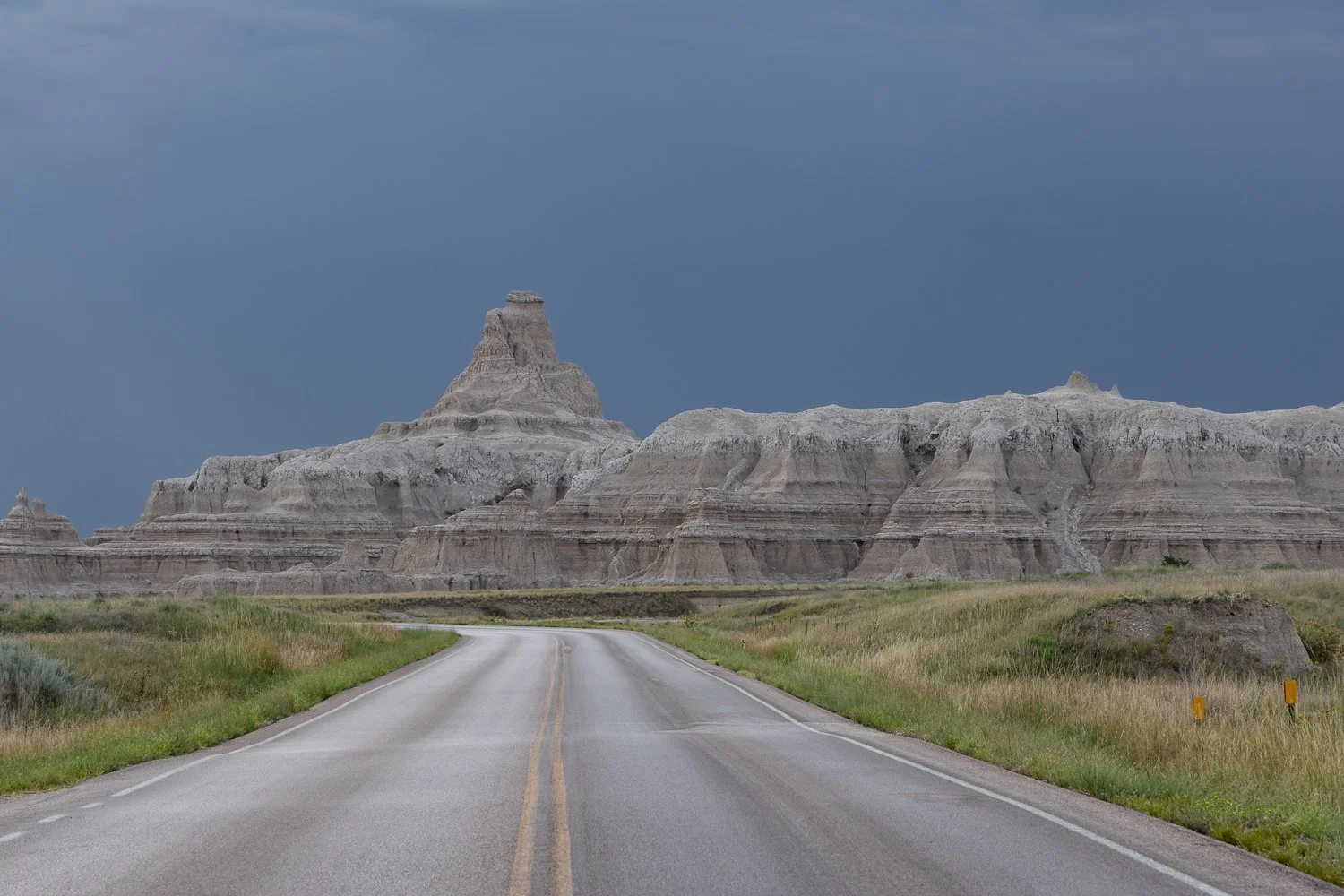
For those who aren't familiar with it, MIOPS is a lightning trigger that detects sound or light and triggers the shutter of the camera to capture lightning. It has other options too, like timelapse, but I only got it for the lightning.
Then I went further down 240 and made some stops here and there.
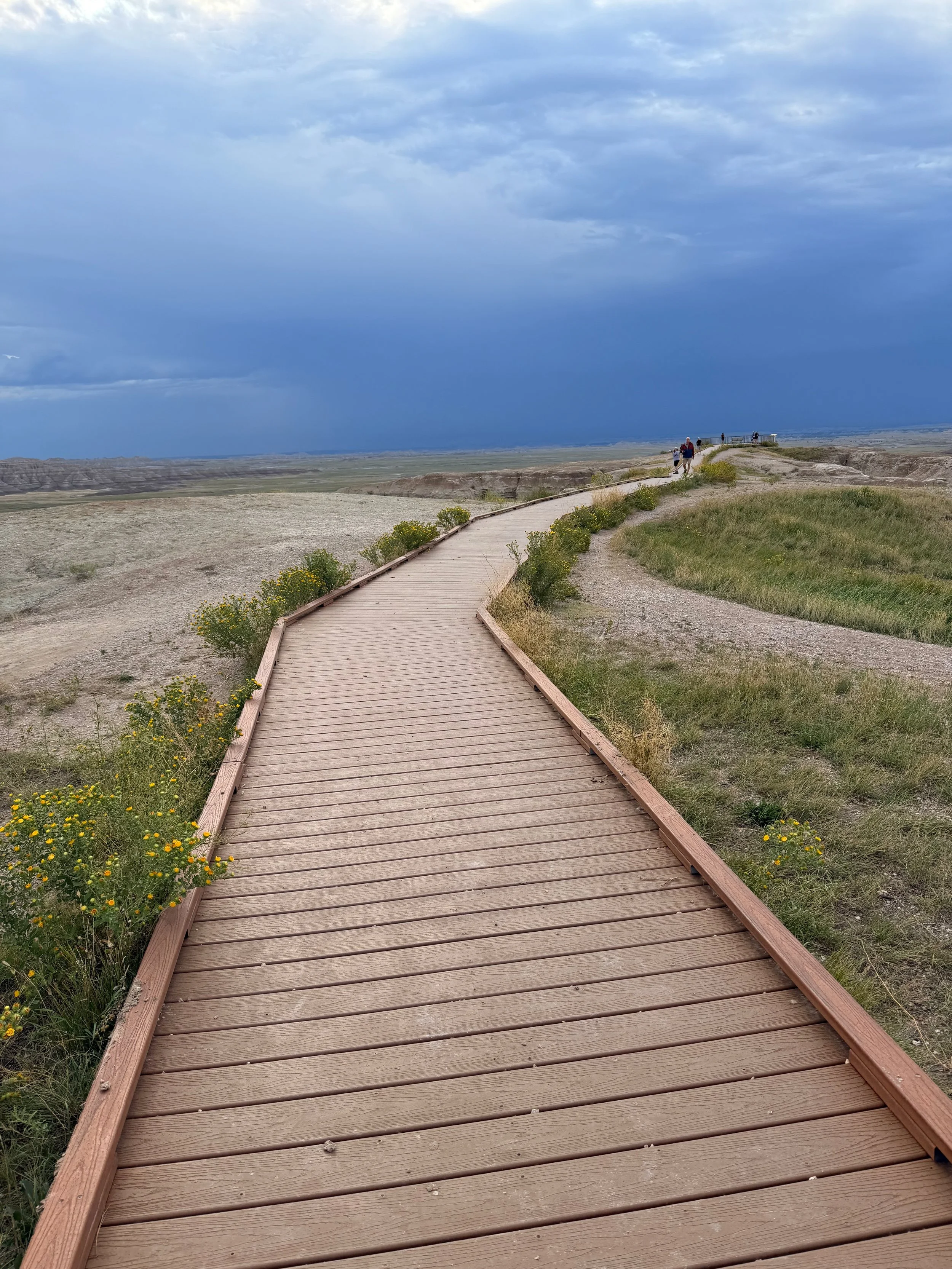
A Walk Towards the Storm
A boardwalk trail under heavy skies, with lightning flickering to the south.
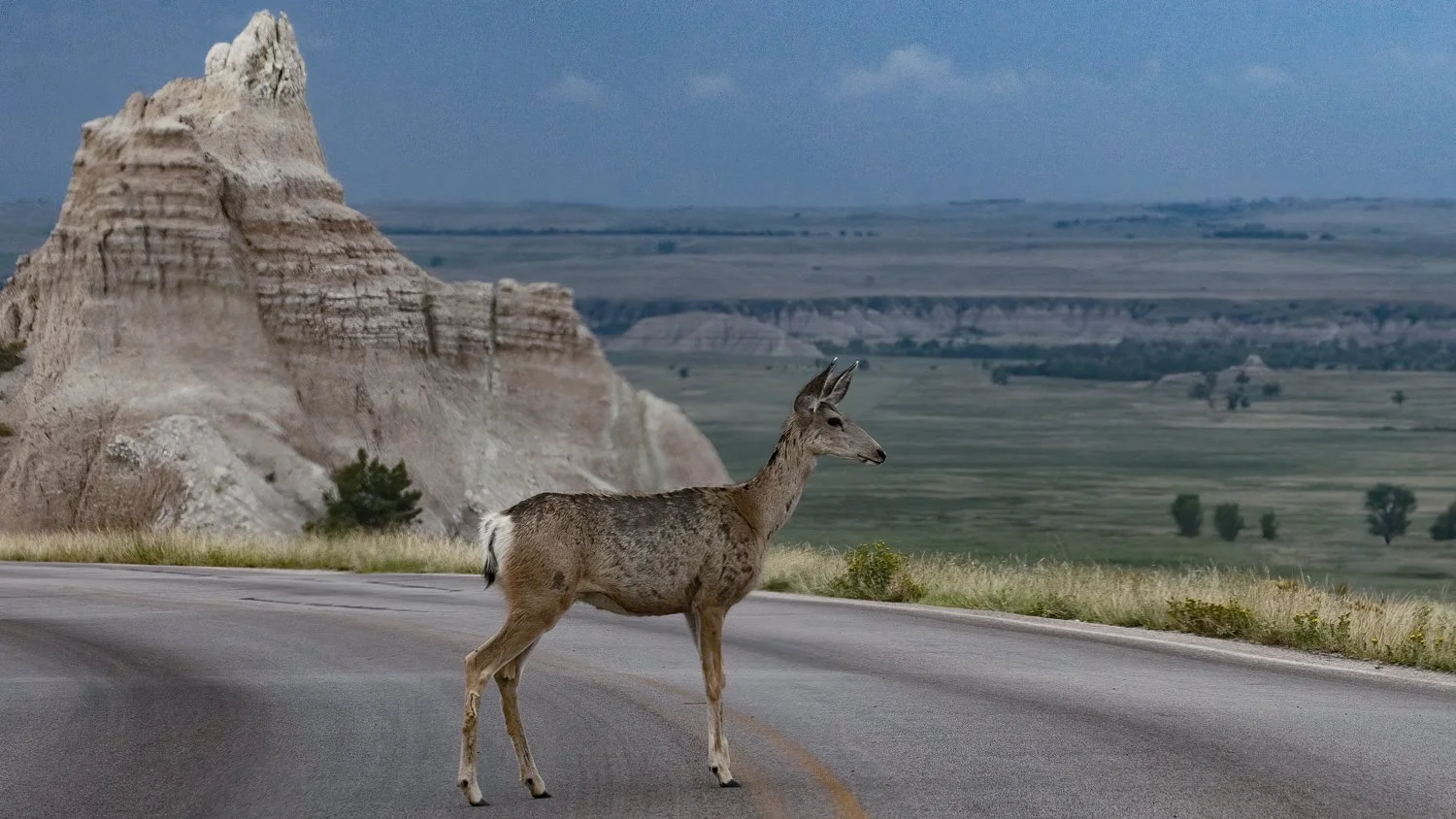
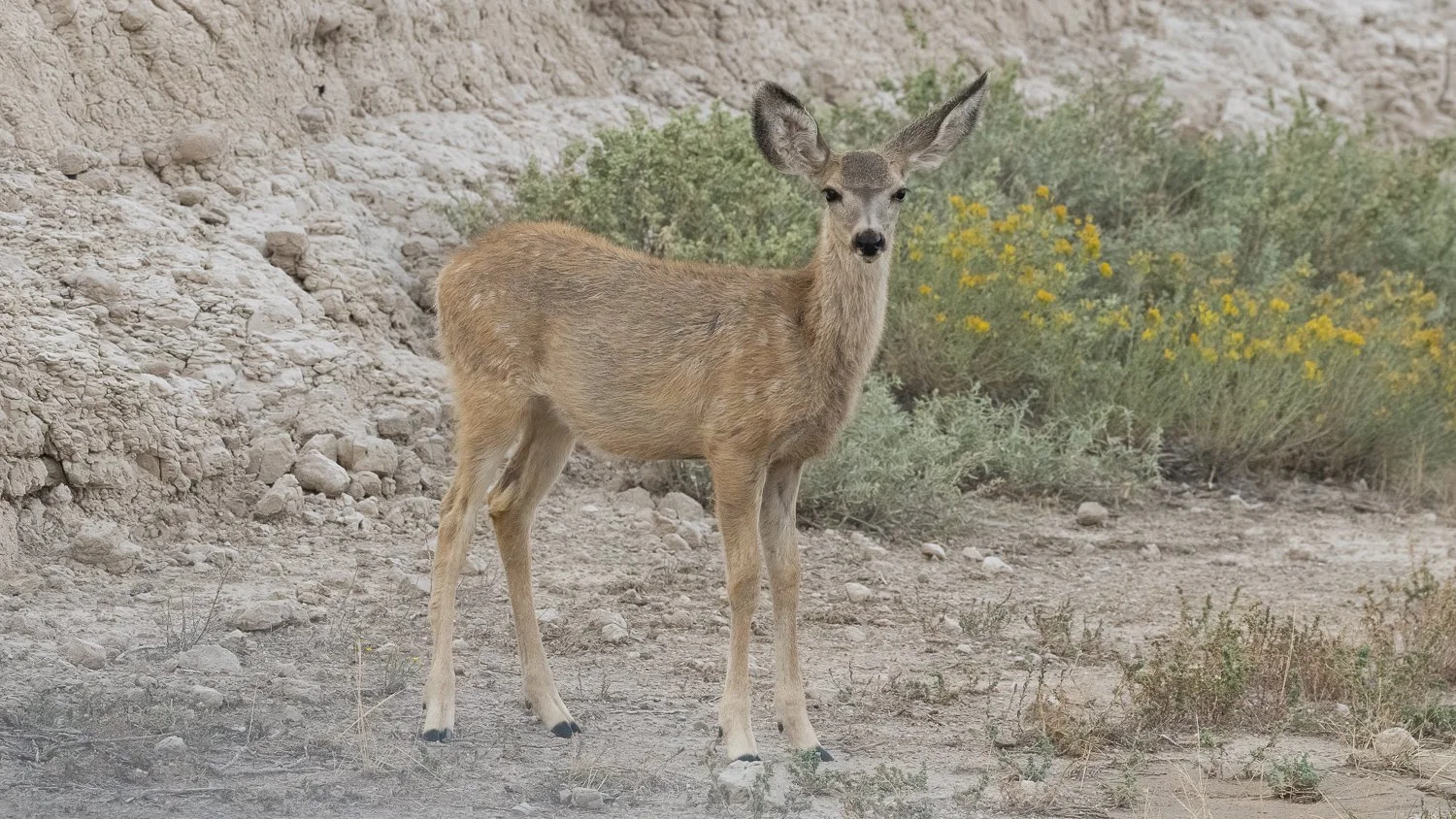
At one point, I got stopped by a doe and her baby.
The mom looked at me, almost as if she were wondering whether I would stop long enough for her and her calf to cross.
I wasn't in a hurry.
So I turned on my hazards to alert other drivers and waited.
Once she crossed, her fawn looked at me and eventually decided it was safe. Once the little one crossed, it wanted to get some milk, but Mom wasn't having it. She nudged the fawn away.
Then both of them were frightened off by a barking dog in an oncoming vehicle.
I grabbed a few shots as they crossed, and luckily caught the nudge on video.
MY FIRST BADLANDS STAMP
–––
I headed over to the Ben Reifel Visitor Center to get my first Badlands park stamp.
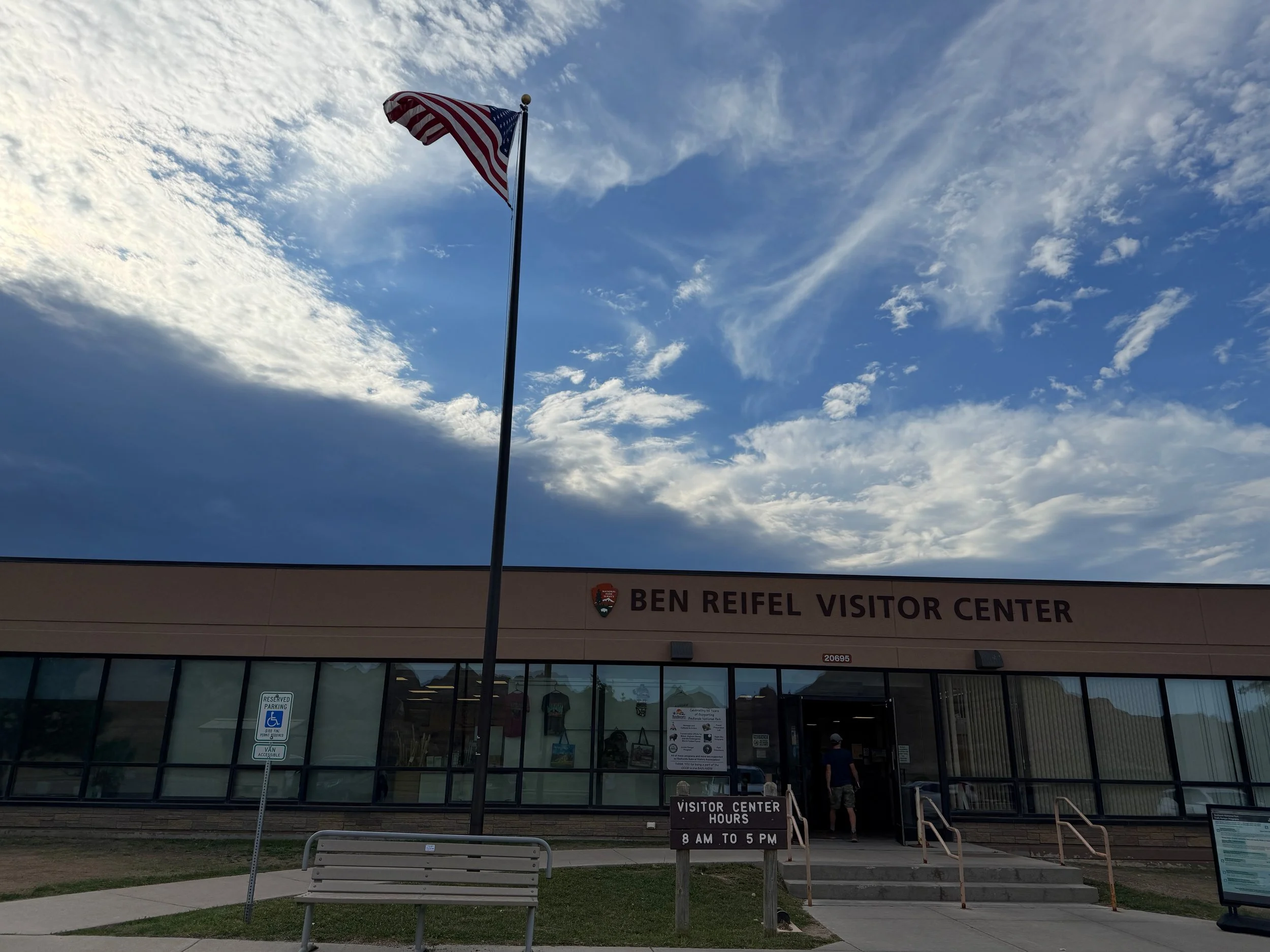
Photographing the inside wasn’t allowed for some reason.
The other one is way out yonder in the White River area, nearly an hour away.
I wasn't 100 percent sure if I was going to make that drive because there aren't any services once you pass the town of Interior, South Dakota.
I had topped off my tank before I entered the park, so I was all set there.
Once I grabbed all the souvenir knickknacks, I headed west on 240 for a quick look, since I'd decided to make the trip to White River and could drive the full road on the way back.
I once again stopped here and there, snapped some photos and then U-turned at White River Valley Overlook.
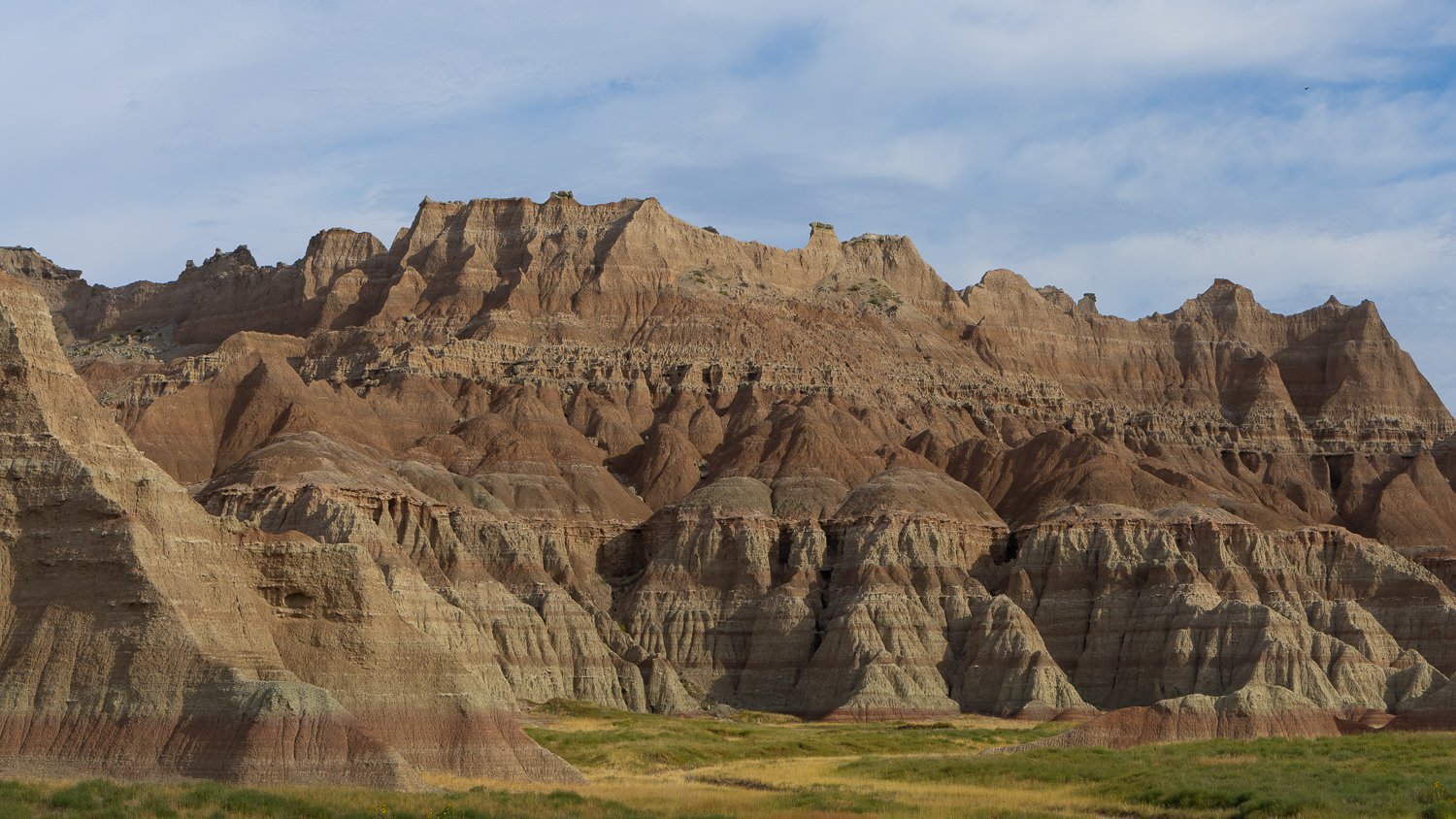
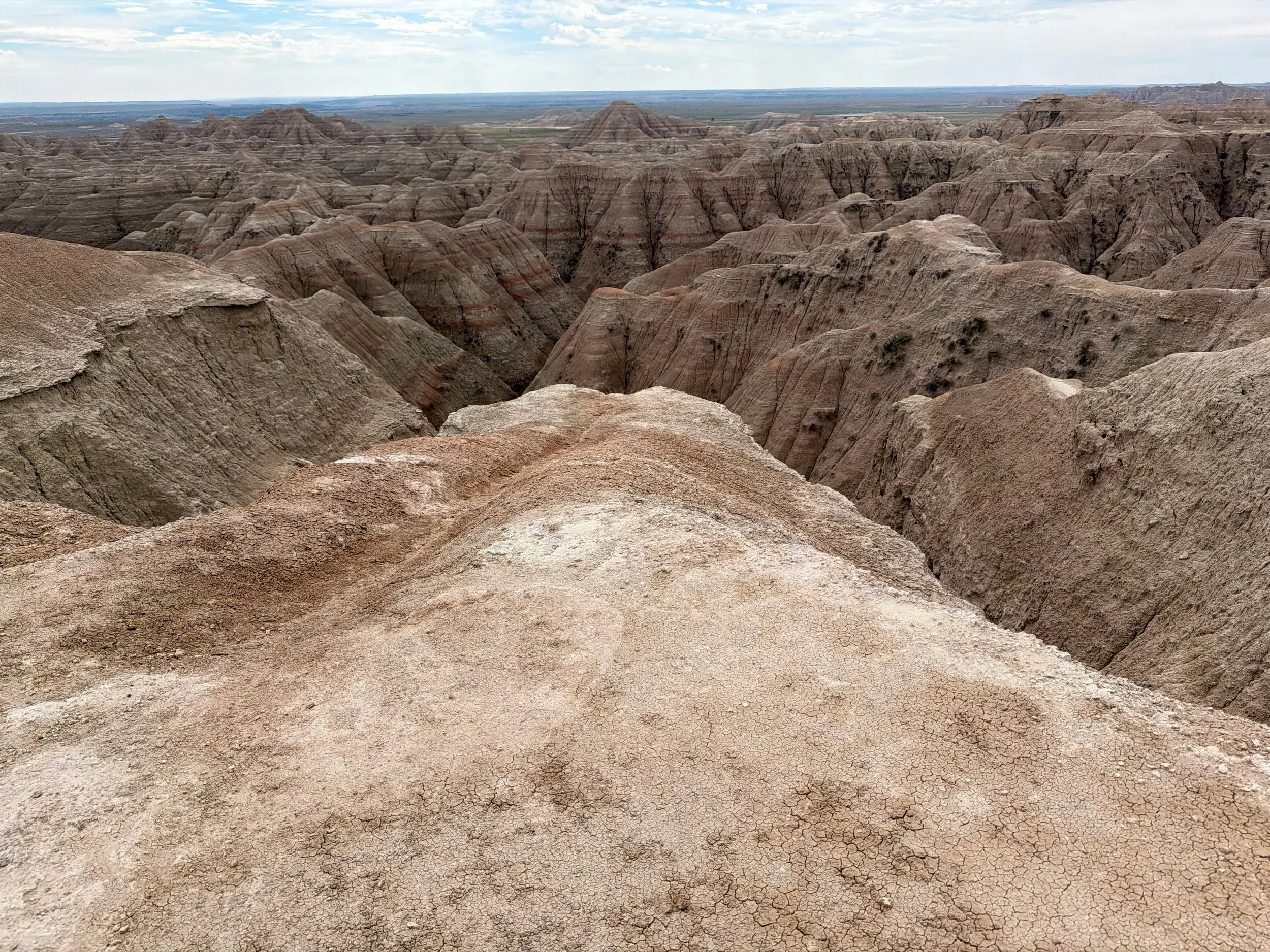
I could drive all the way through once I returned from visiting White River.
HEADING INTO THE REMOTE COUNTRY
–––
I then turned right onto 377 and started my one-hour drive to the next visitor center so I could get my second park stamp.
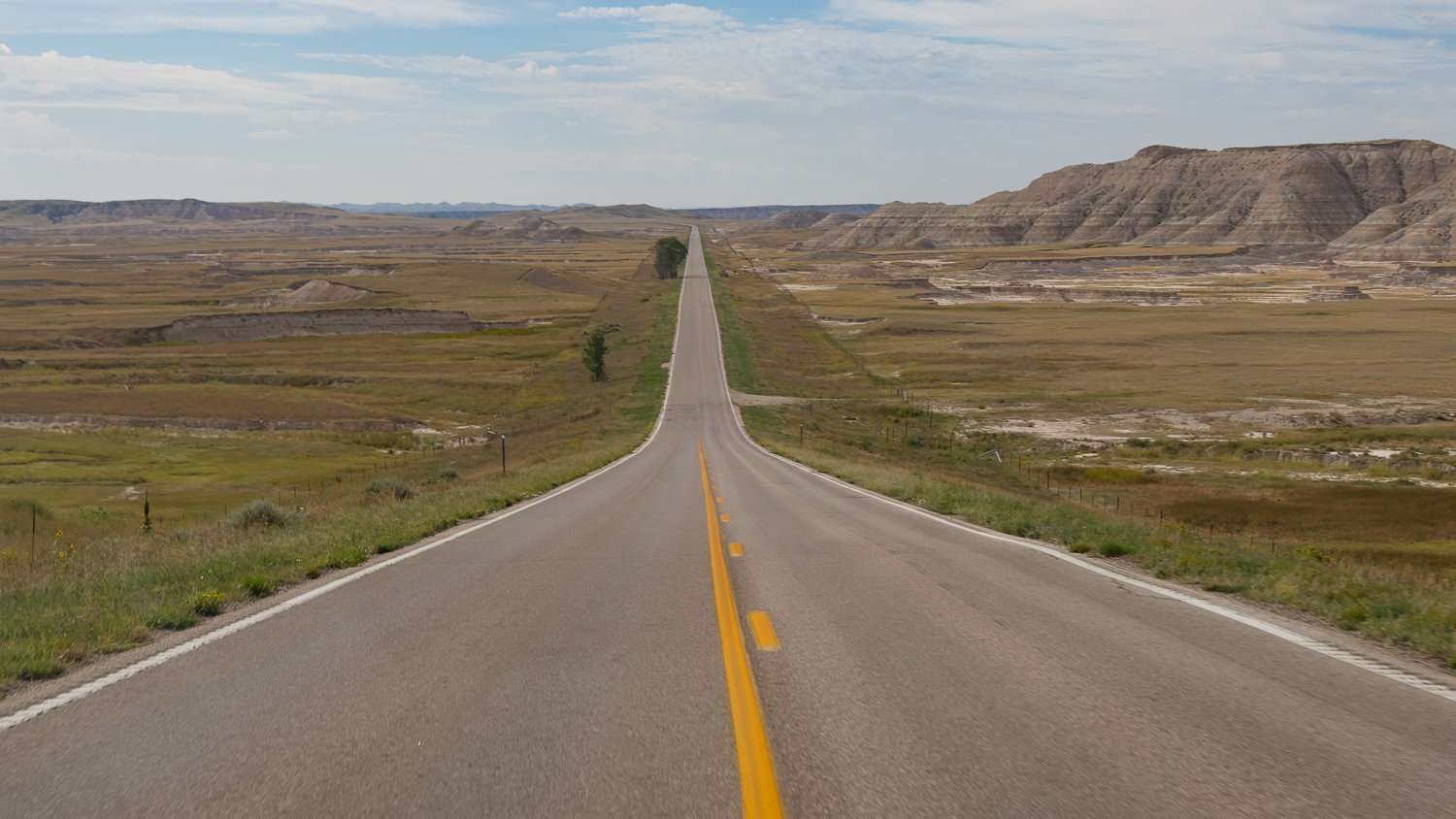
Passing through Interior, a couple of horses were grazing in a field. Click.
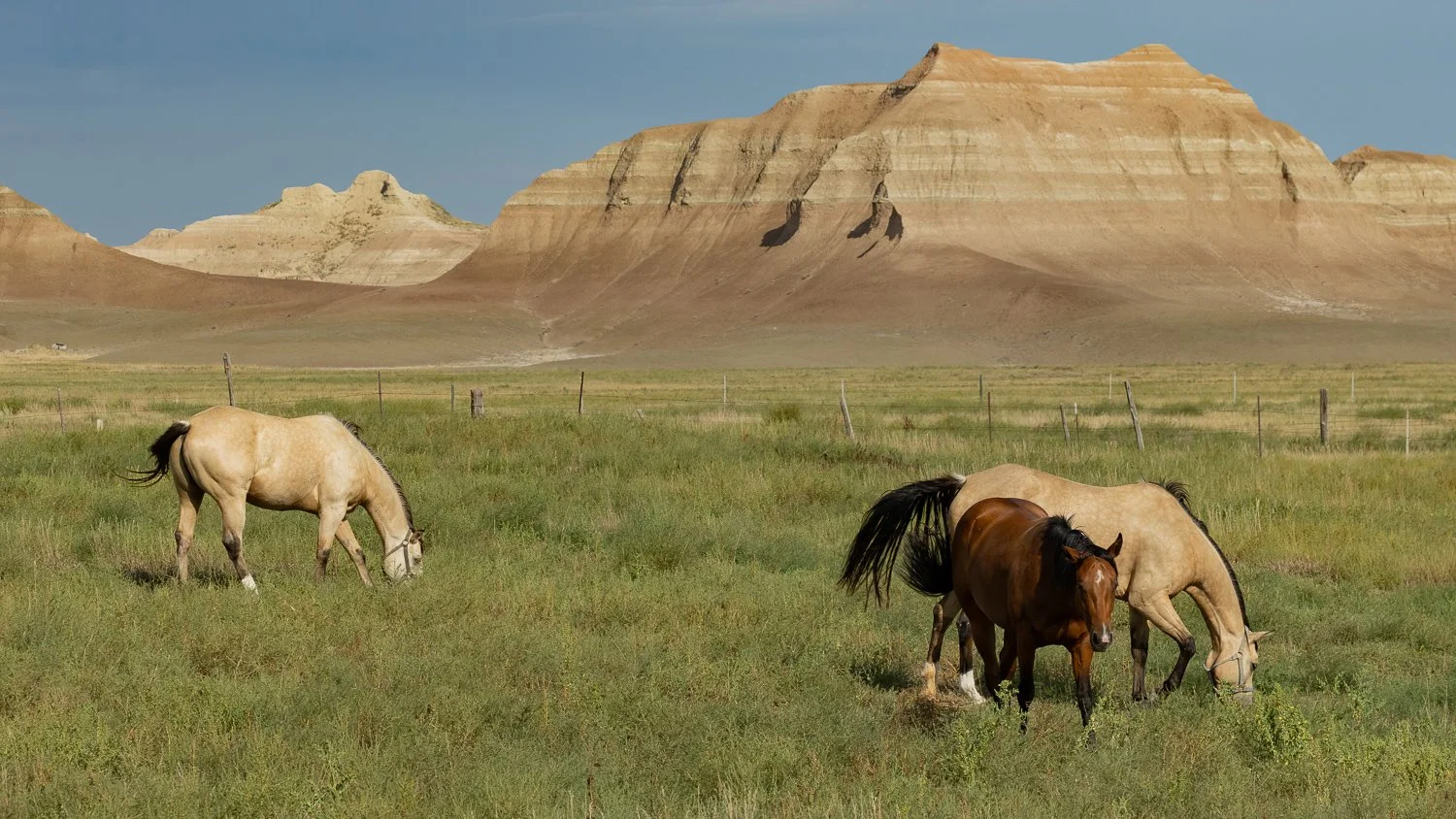
Oh...a white horse. Click.
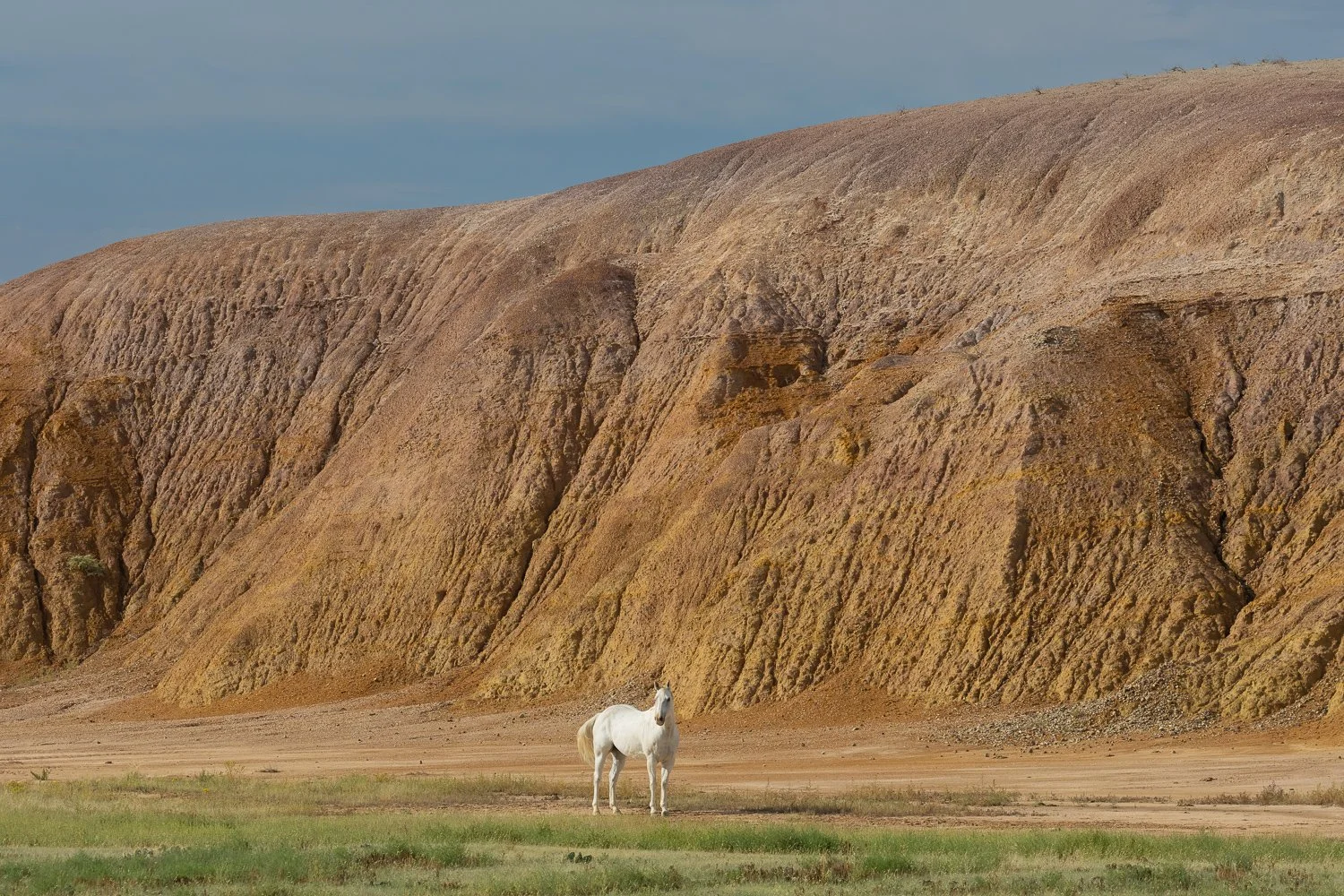
Moving on.
It's actually quite pretty out here.
It started off mostly cloudy, but I could tell the clouds were starting to thin out.
That's a good sign for later.
I kept going and saw cattle here and there.
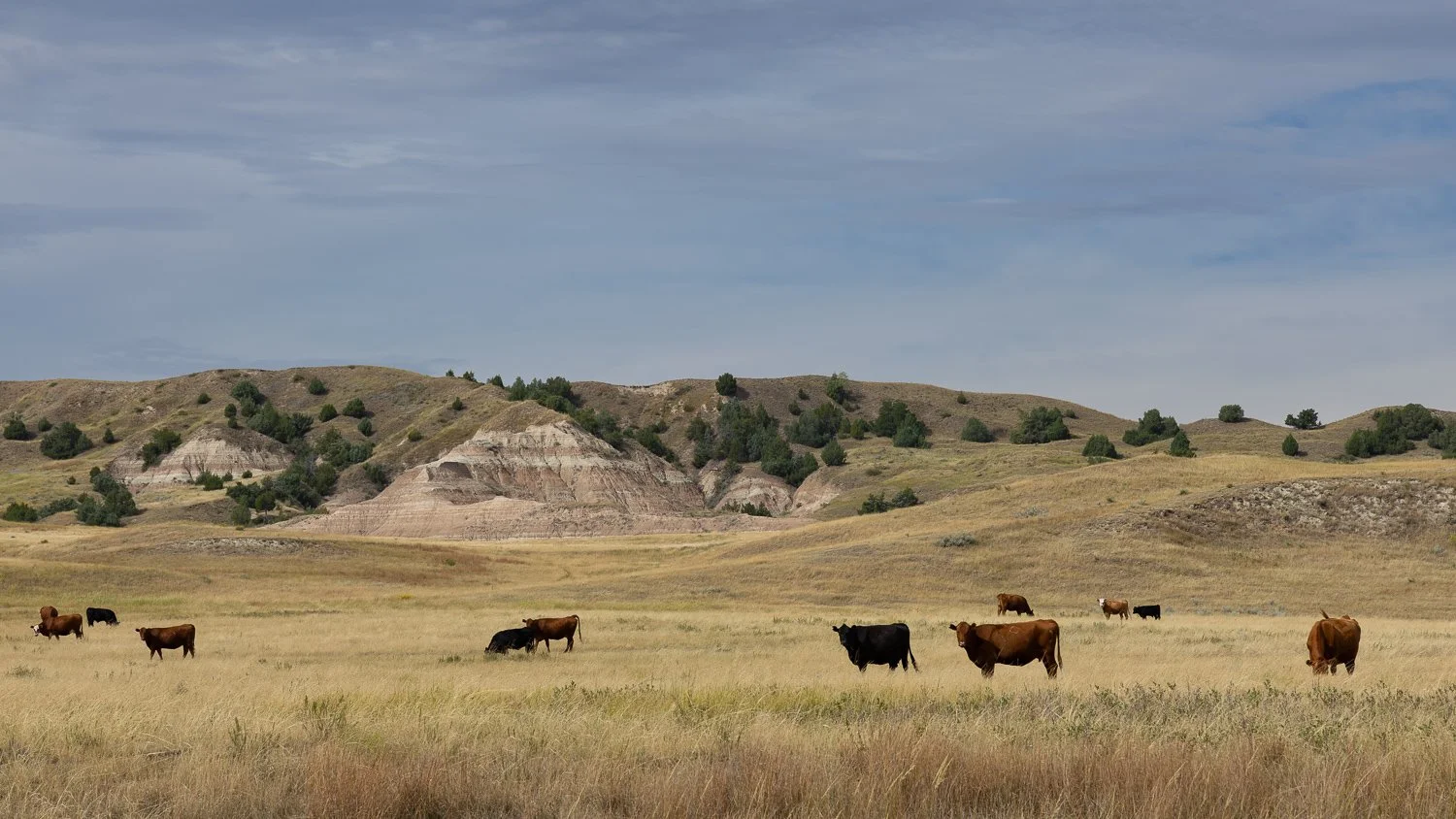
Then I looked over to the right and saw more cattle.
Wait.
That isn't a cow.
That's a bison hanging by itself in the middle of nowhere.
I guess he wanted his alone time.
Who doesn't, right?
Then I finally made it to the turnoff to the town of Scenic.
DO PEOPLE LIVE HERE?
–––
Do people actually live here?
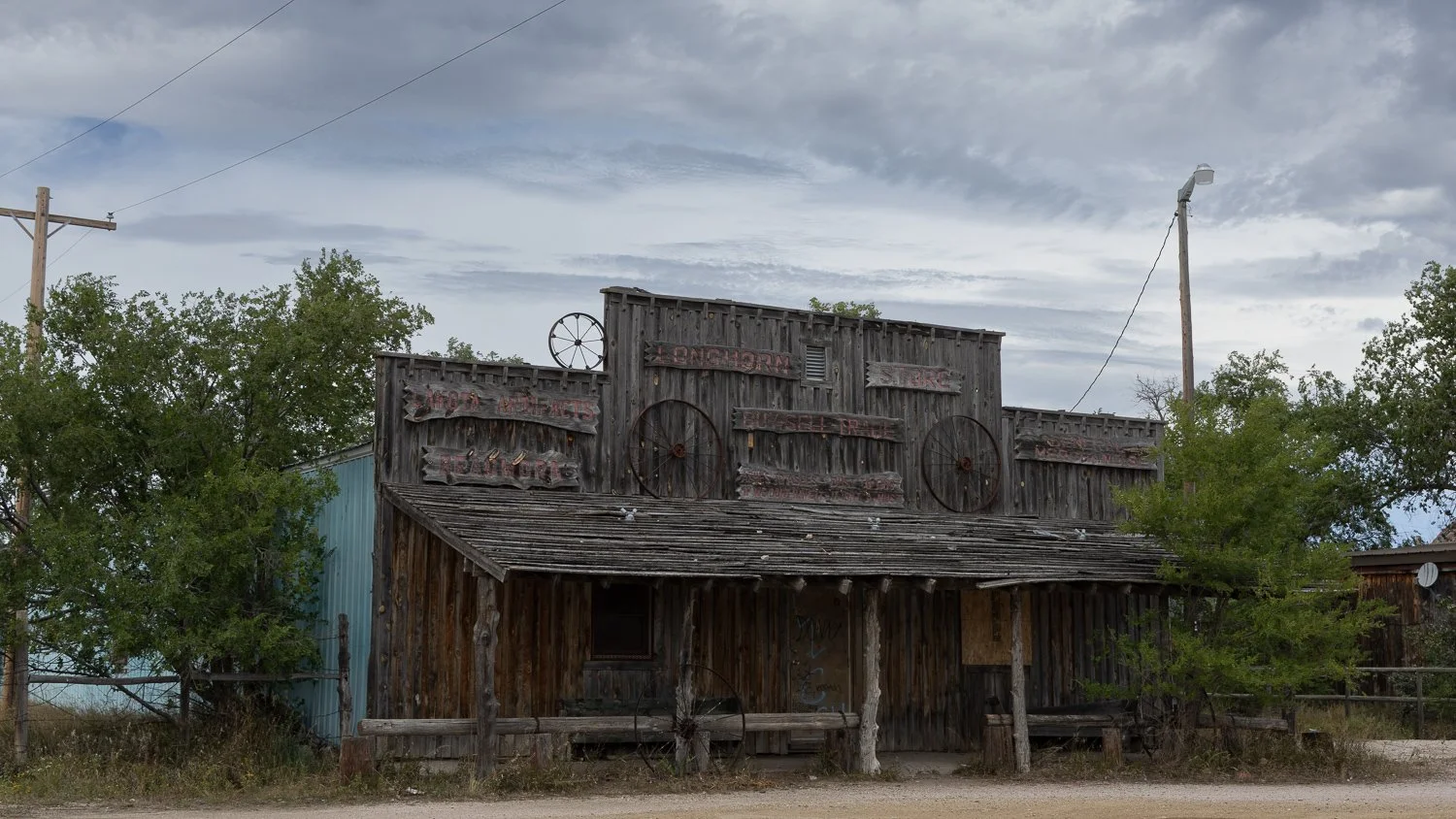
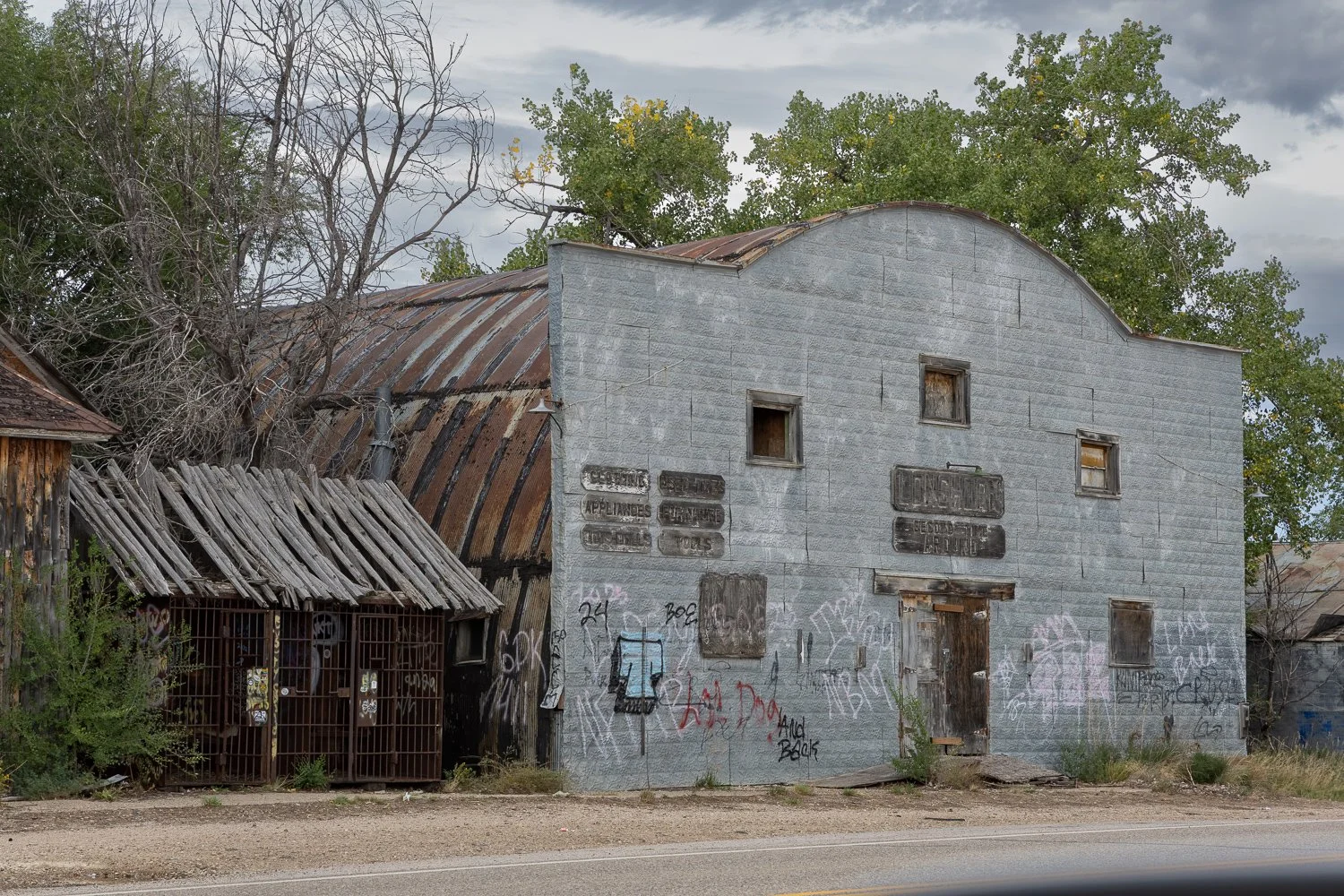
There were uninhabited, old buildings scattered around, and the whole place was kind of creepy.
I kept driving and wondering how close I was to the visitor center.
Finally, a small building.
There was only one other car and some tribal people selling handmade jewelry.
I went inside and was greeted by a volunteer. He showed me where we were on the map and explained how they co-administer with the Oglala Lakota (Sioux) Nation. They also have a couple from the Nation who work at the visitor center.
Unfortunately, they weren't there when I visited.
He relayed some information and told me that they get significantly fewer visitors per day than the north entry of the park.
I thought that was so unfortunate because that area of the park has its own unique beauty.
I hung out for about 30 minutes and thought I had better get back.
He suggested checking out Sheep Mountain Overlook, but I didn't have a high-clearance or 4x4 vehicle. It had also rained, and I didn't want to encounter getting stuck in the mud.
Getting help out there is like trying to get help while you're on the Moon.
I made it back to Scenic and took some pictures of the old buildings.
There were a few homes around the area, and all I could think about was:
How far is the grocery store?
And how long does it take to get an Amazon package?
The conveniences we have living in a city.
A WHOLE LOT OF BISON
–––
I got back onto 377 and noticed a herd of cattle.
Wait.
That isn't cattle.
That's a herd of bison.
Geez, there must have been like 200 of them.
They were too far away for me to photograph, so I drove on.
More cattle.
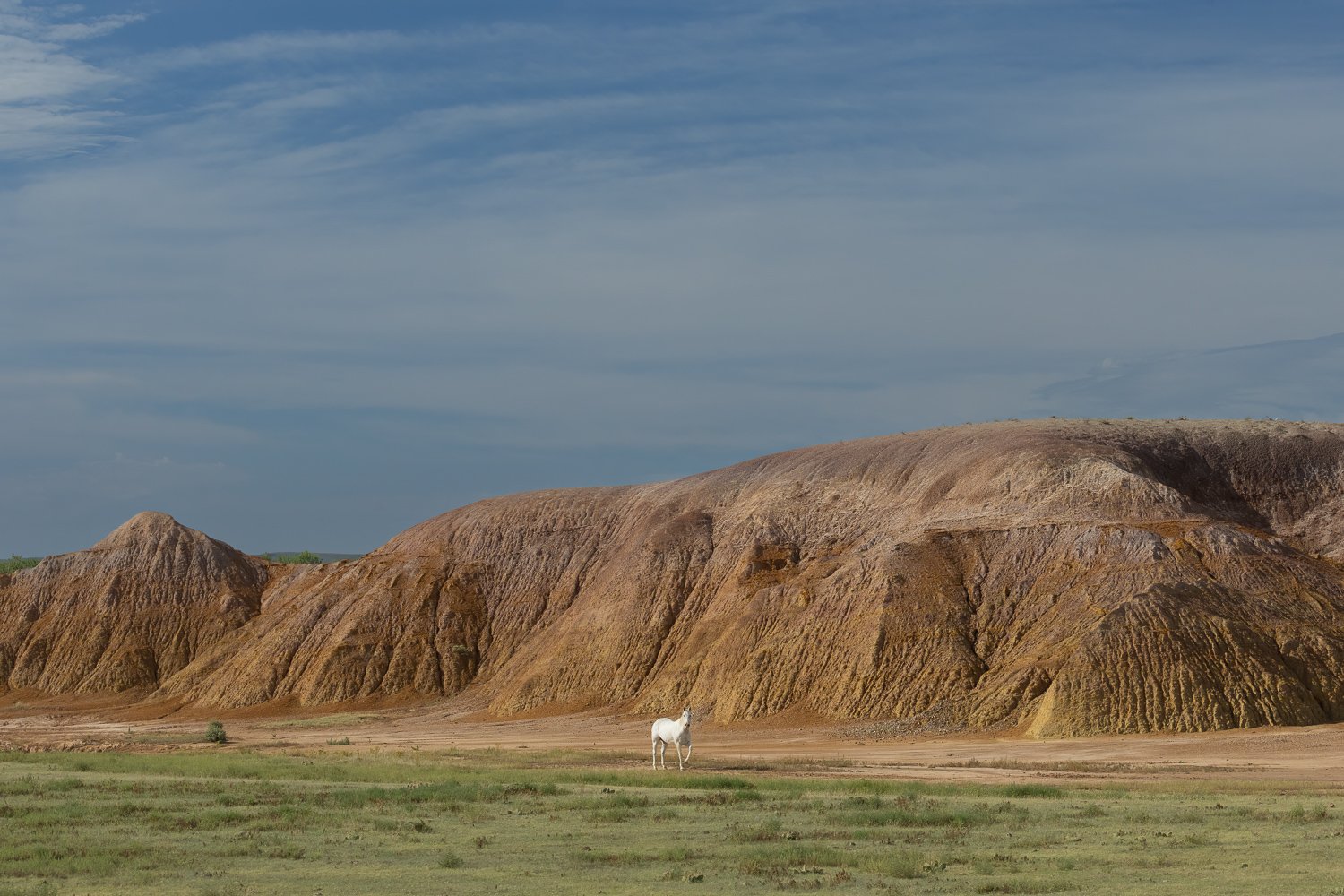
I was near Interior again when I drove past the white horse.
I was going to keep going, but then decided to turn around and capture a few more shots of her.
She looked like she wanted some company, and I so much wanted to visit with her, but I didn't want to go walking around in the high grass knowing there was a possibility of rattlesnakes.
No thanks.
I photographed a few shots since nobody was coming up the road, then went on my way.
BACK THROUGH THE BADLANDS
–––
The park entrance kiosk was closed by the time I returned.
Maybe the ranger went to lunch.
So I drove in and went west on 240 like I did earlier.
This time I kept going.
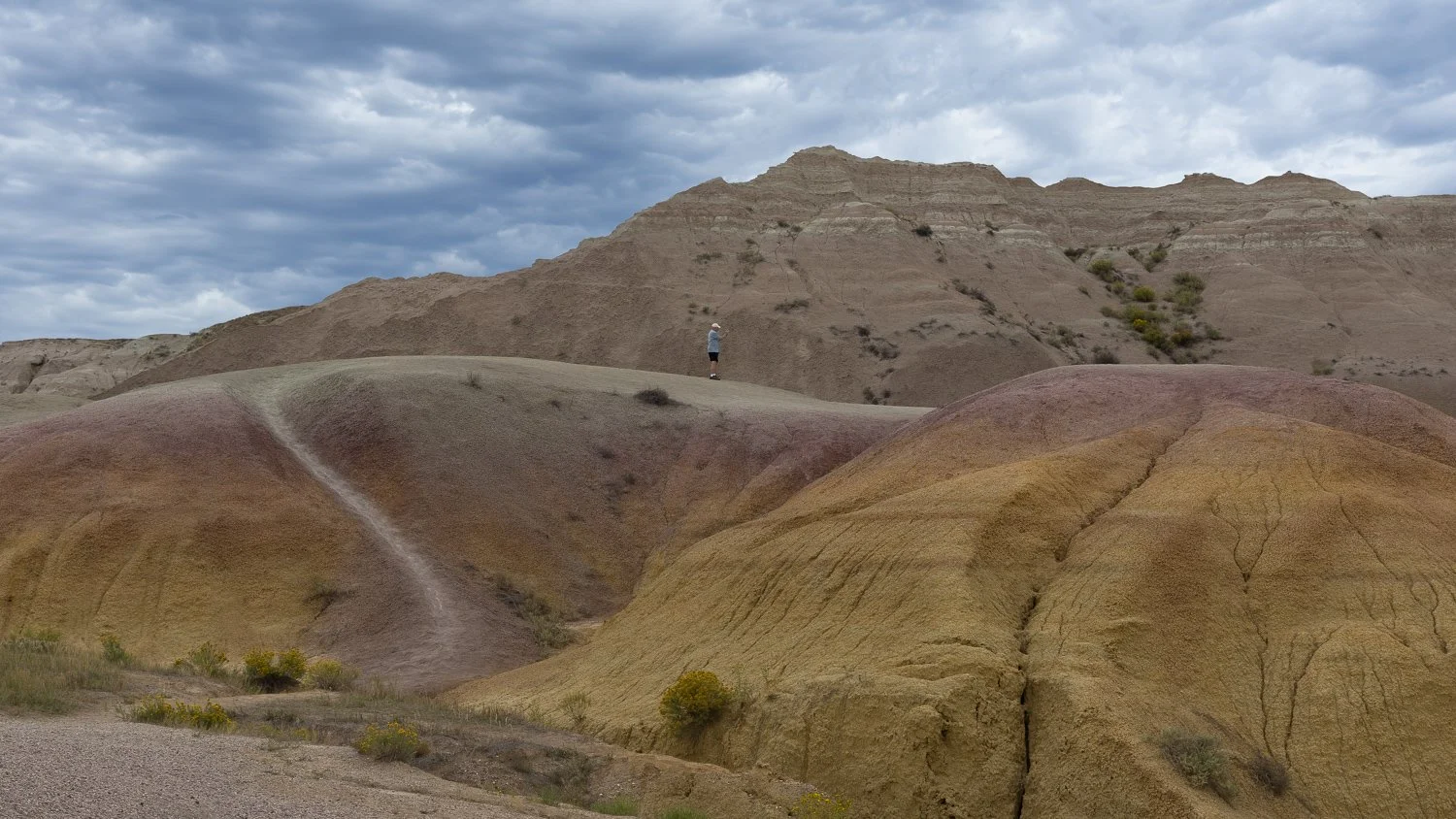
I visited Yellow Mounds and several other locations, making stops along the way and taking photographs.
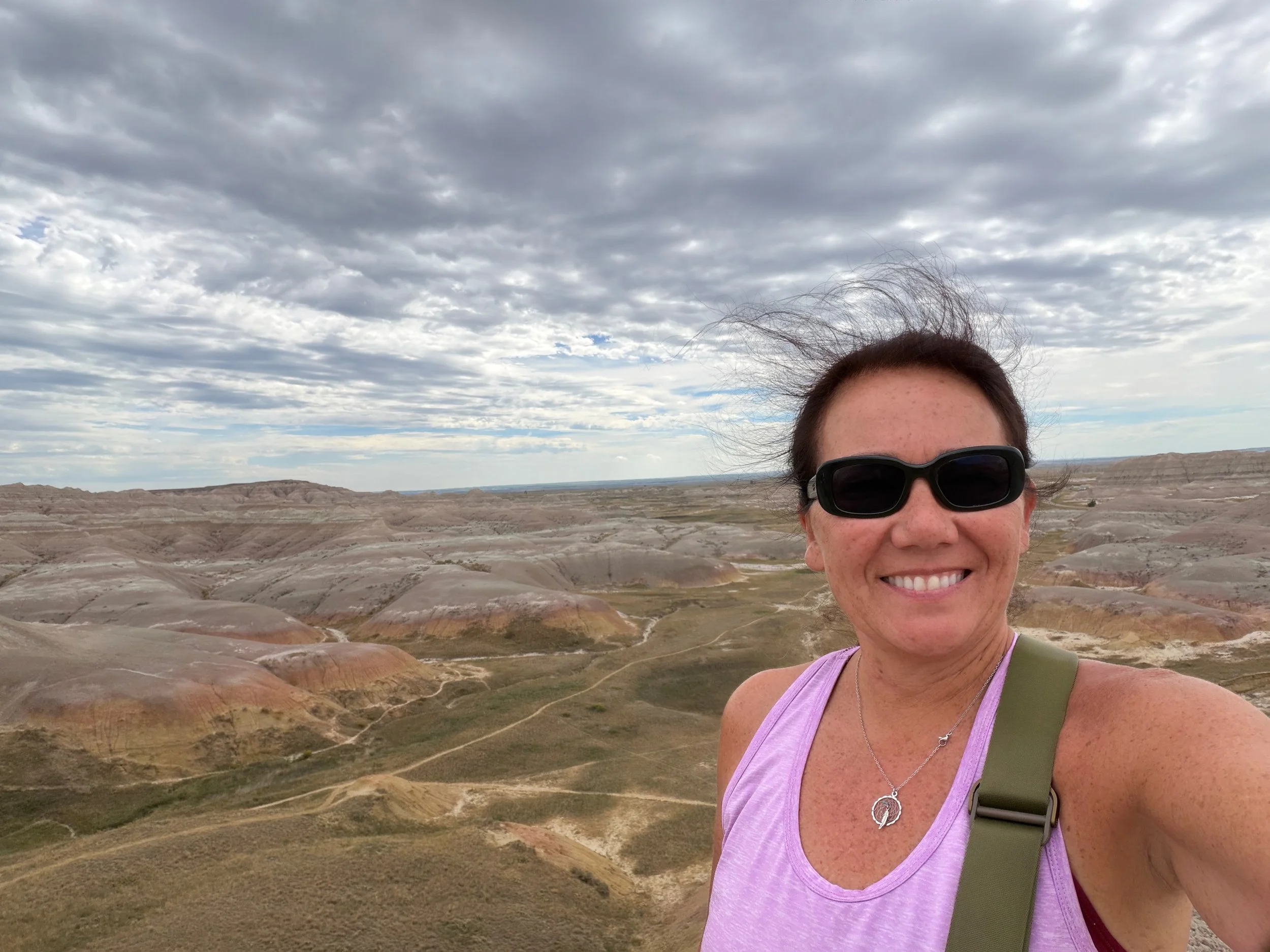
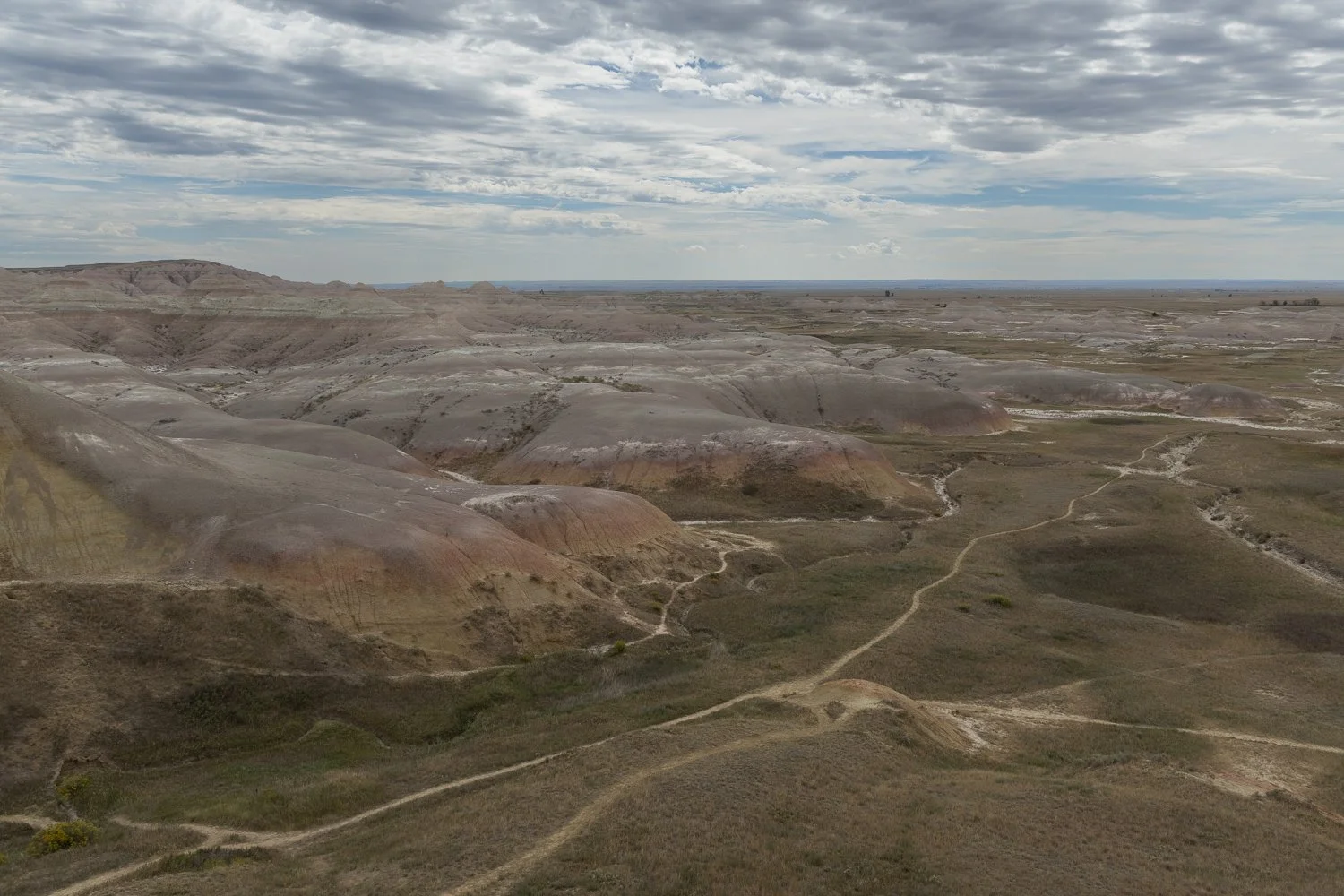
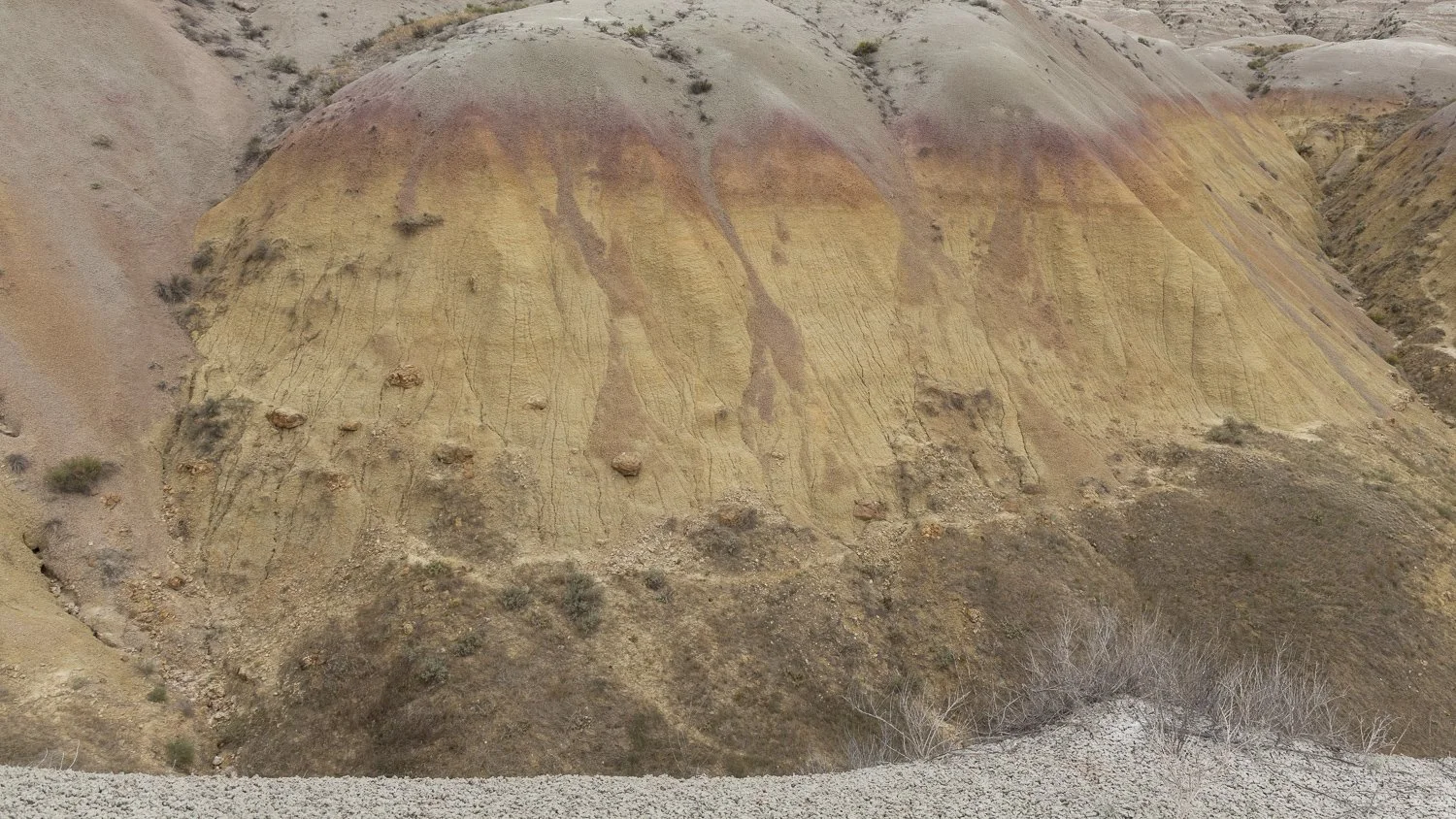
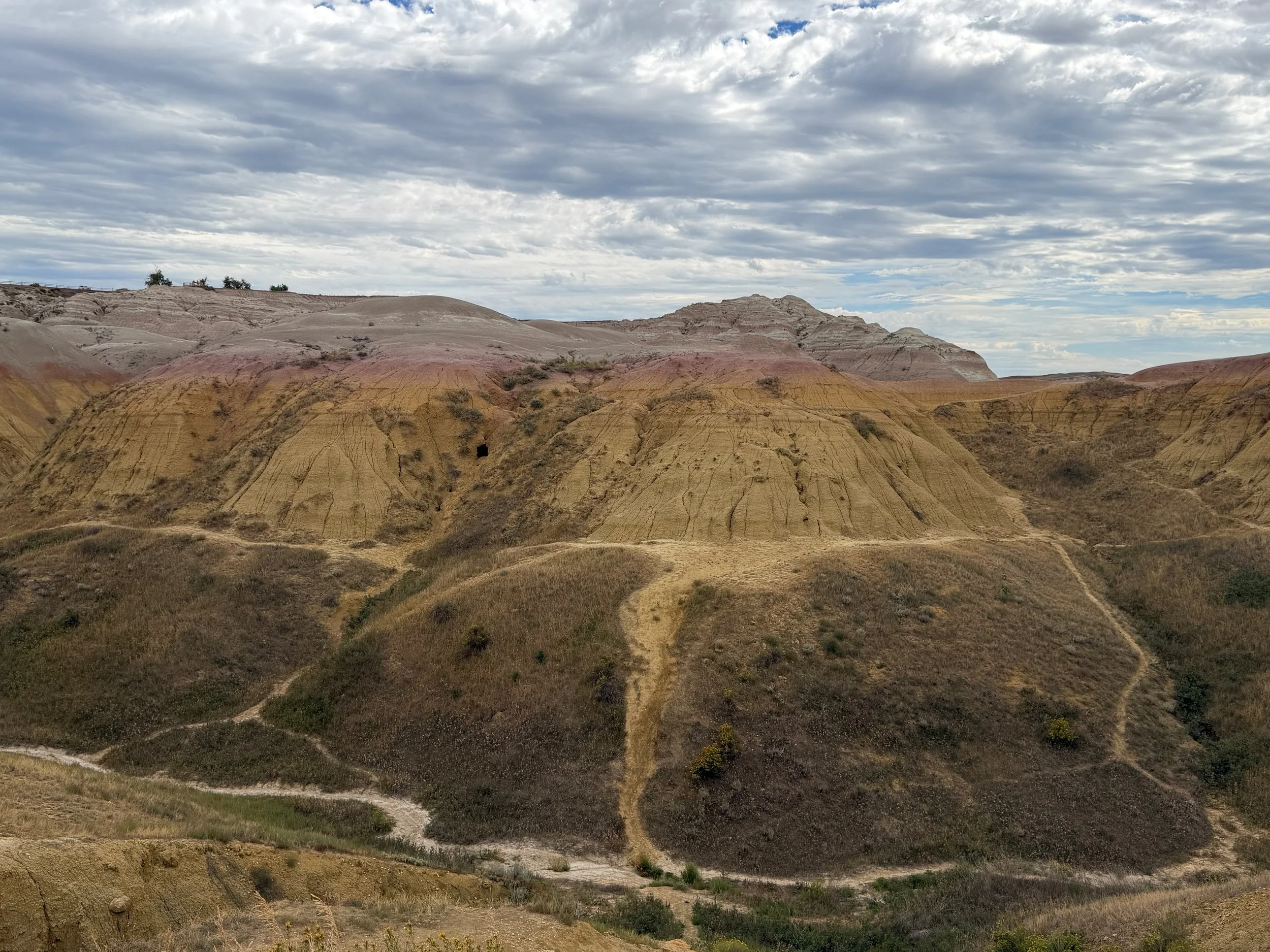
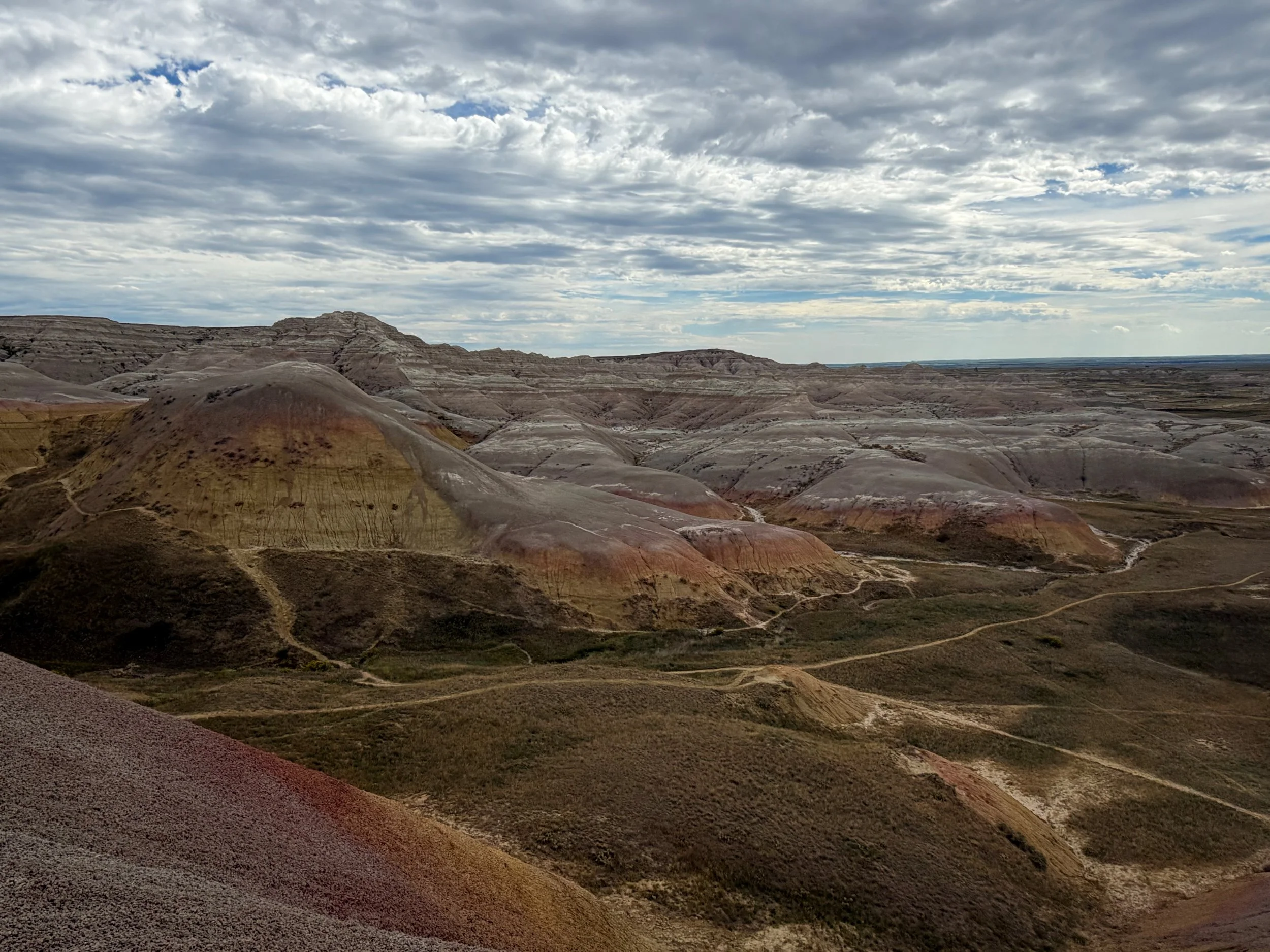
I kind of wished I would have come a couple of days earlier to do more exploring and some hikes.
I just didn't have time this trip.
Eventually, I had to make my way back to the hotel to get ready for the evening.
I wasn't sure about our food situation, such as lunch or dinner. I had chicken in the fridge that needed to be cooked, so I took out my handy portable cookpot and made teriyaki chicken fried rice.
Something simple, but it actually turned out really good.
A LITTLE GROCERY STORE SURPRISE
–––
I walked over to the small grocery store down the street and was surprised by how many items this place actually had.
They even had fresh fruits and vegetables.
If you're looking for specialty items, then you may be out of luck, but for a common diet, they pretty much have what you would need.
I returned to my room and got all of my gear ready for the evening.
Clothes.
Camera gear.
Everything.
MEETING THE WORKSHOP GROUP
–––
By 4 p.m., it was time to meet up with the group for my Badlands Nightscape workshop with Ian Plant.
A friend had invited me to join, and I thought it would be a great opportunity to spend several days photographing the Badlands while learning from someone who knows the area and could help me improve my photography.
We had decided to eat at the Badlands Saloon & Grille at 4:30 p.m., located on the main strip in Wall.
It was quite busy with cars, but I was able to find a spot.
Did I tell you that it was hot?
I mean temperature hot.
I so much wanted to wear my shorts, but I thought I should just wear my hiking pants since they had extra pockets.
Photographer logic.
Because whenever you have a camera cap, extra battery, lens cloth, memory card or whatever else you're carrying, you have a tendency to throw it into whatever empty pocket you can find.
Then five minutes later, you're standing there wondering which pocket you put it in.
We sat down in the restaurant and had a server who was actually from South Africa.
He seemed a bit nervous, but we later found out that he had been in the States for only three months.
After some time, we got our food.
Except it wasn't our food.
Wrong table, I guess.
I ordered a chicken wrap with French fries. The wrap normally comes with ranch dressing, but I can't stand the stuff, so honey mustard it is.
A STORY WE DIDN'T EXPECT
–––
A few of the photographers started asking him about his background because of his unique accent.
How did you end up in Wall, South Dakota?
It was actually an interesting, but sad story.
He came as a refugee and was assigned to Wall, South Dakota, by the government.
His sister and mother applied to come as well, but they were denied entry.
We asked if he ever wanted to return to see his family, but I noticed he began to get teary-eyed.
Just by the conversation, you could tell he missed them dearly and was lonely.
Can you imagine?
Coming here alone.
I can't remember how old he was, but he was pretty young.
After completing our meal, we said goodbye and wished the server well in his future.
BACK OUT INTO THE NIGHT
–––
We headed back to the hotel to gather our things for the evening.
We began convoying and carpooling our way to the park.
Although I wouldn't have minded having someone in the car with me, I just had so much crap strewn about everywhere.
I also relayed the fact that if we shot that evening, I would most likely stay out most of the night if the clouds cooperated.
I've been in that situation before where the group was ready to head back to the hotel, but I thought:
You have got to be kidding!
The Milky Way is still up and we have a lot of the evening left.
So I wanted to be sure I had the choice to stay if I wanted.
THE UNEXPECTED BISON
–––
We got to our sunset location a little later than expected and had to rush to get set up.
However, I couldn't focus on my composition because walking around by our vehicles was a gigantic bison.
He was scratching his body on a road reflector and sniffing the instructor's car.
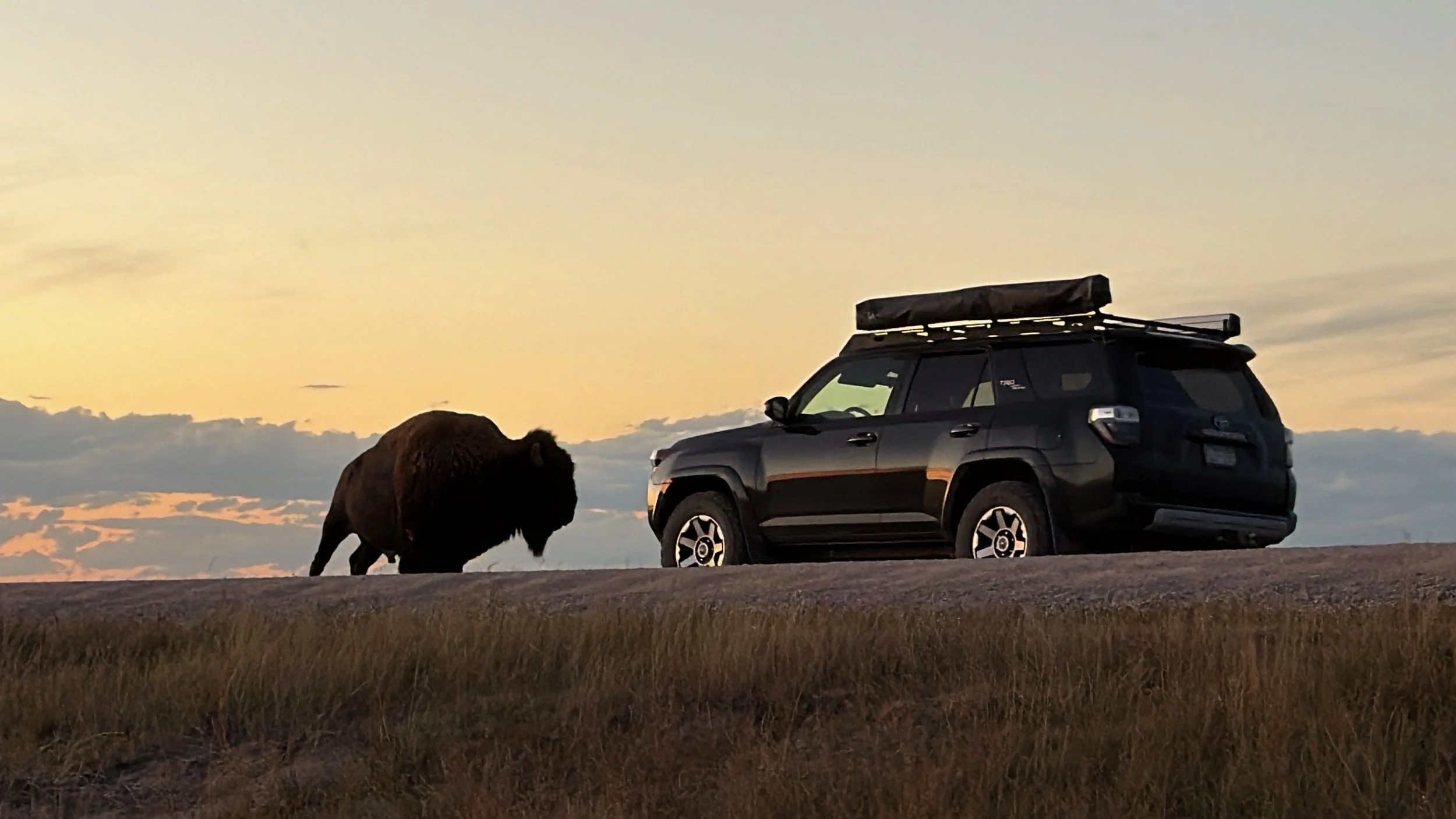
I had decided to record the beast because there was no way I was going to take my eyes off this behemoth.
My phone was my camera of choice at that moment—not my Canon. That was set up to capture compositions.
If I needed to run for the hills, I wanted to know exactly where he was.
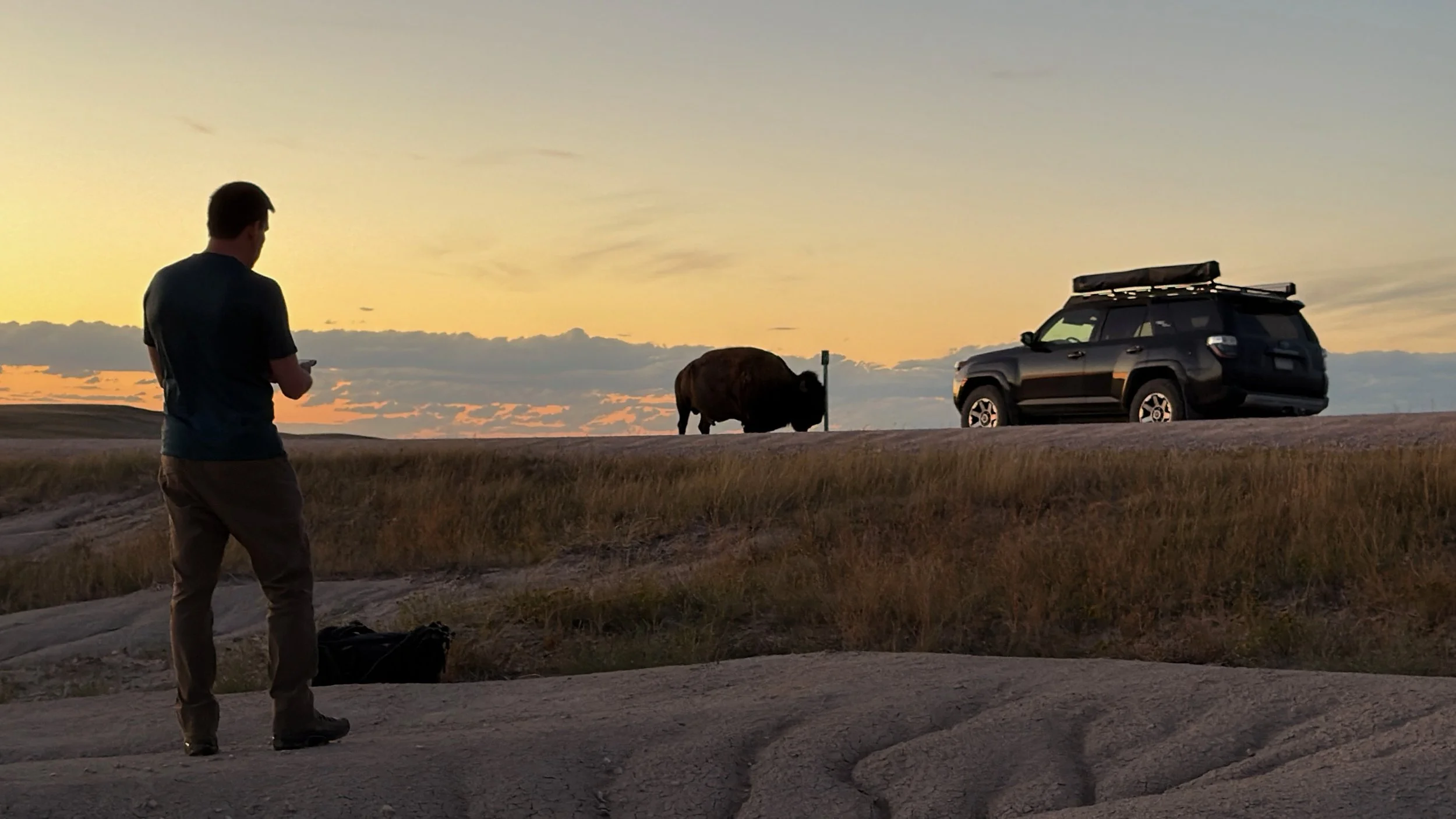
Do you think Ian was about to call Roadside Assistance, or his insurance agent to see if his policy covers bison?
Once he made his way past the cars, he turned and looked straight at me from maybe 100 feet away.
I caught it on my phone.
Then he moved on to hook up with another bison that had been in the field several minutes earlier.
Phew.
I could finally concentrate on my composition.
THE SUNSET...AND THEN THE CLOUDS
–––
I composed my shots.
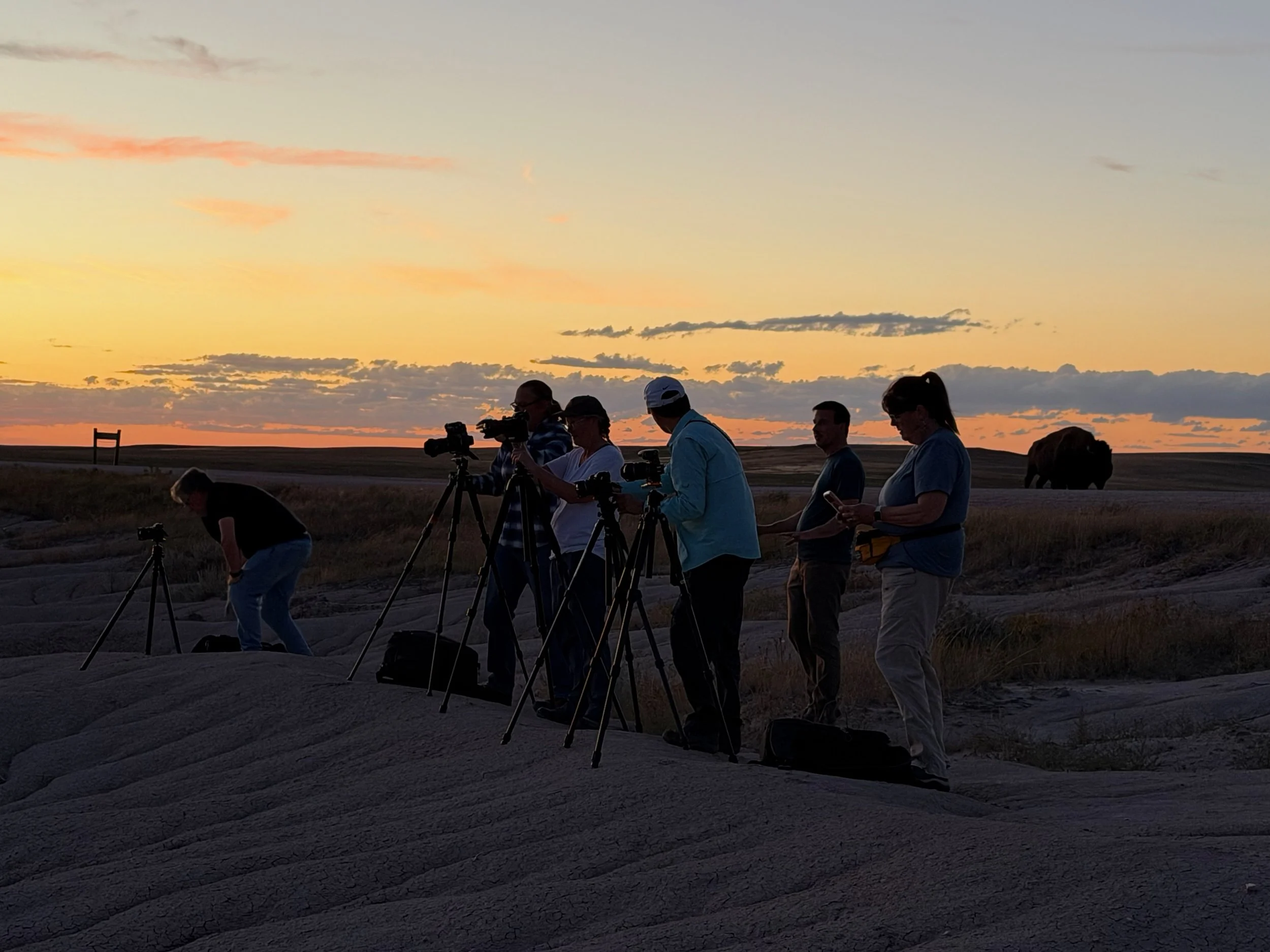
Meanwhile, behind the photographers.
Snap.
Snap.
The sun was setting.
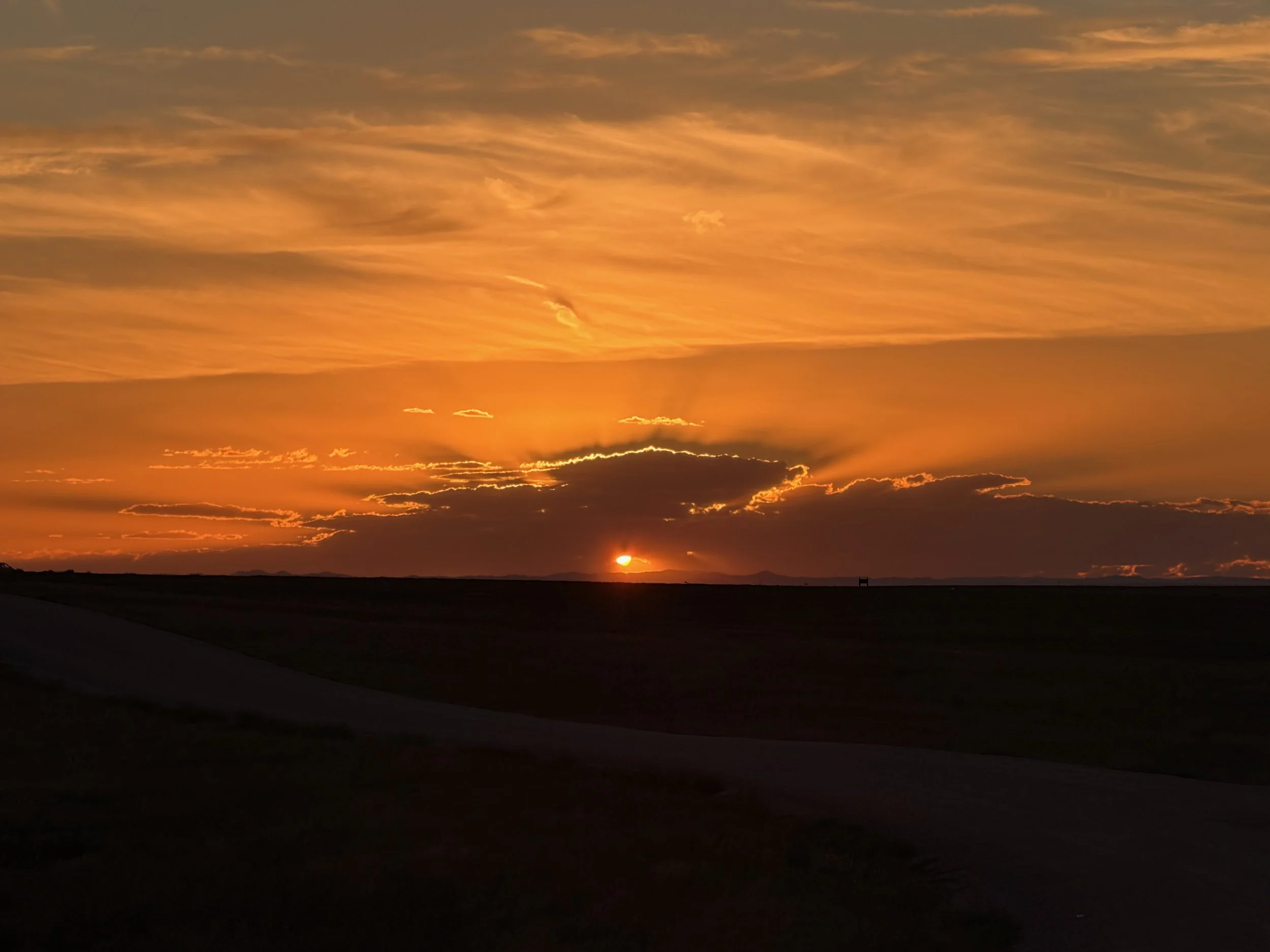
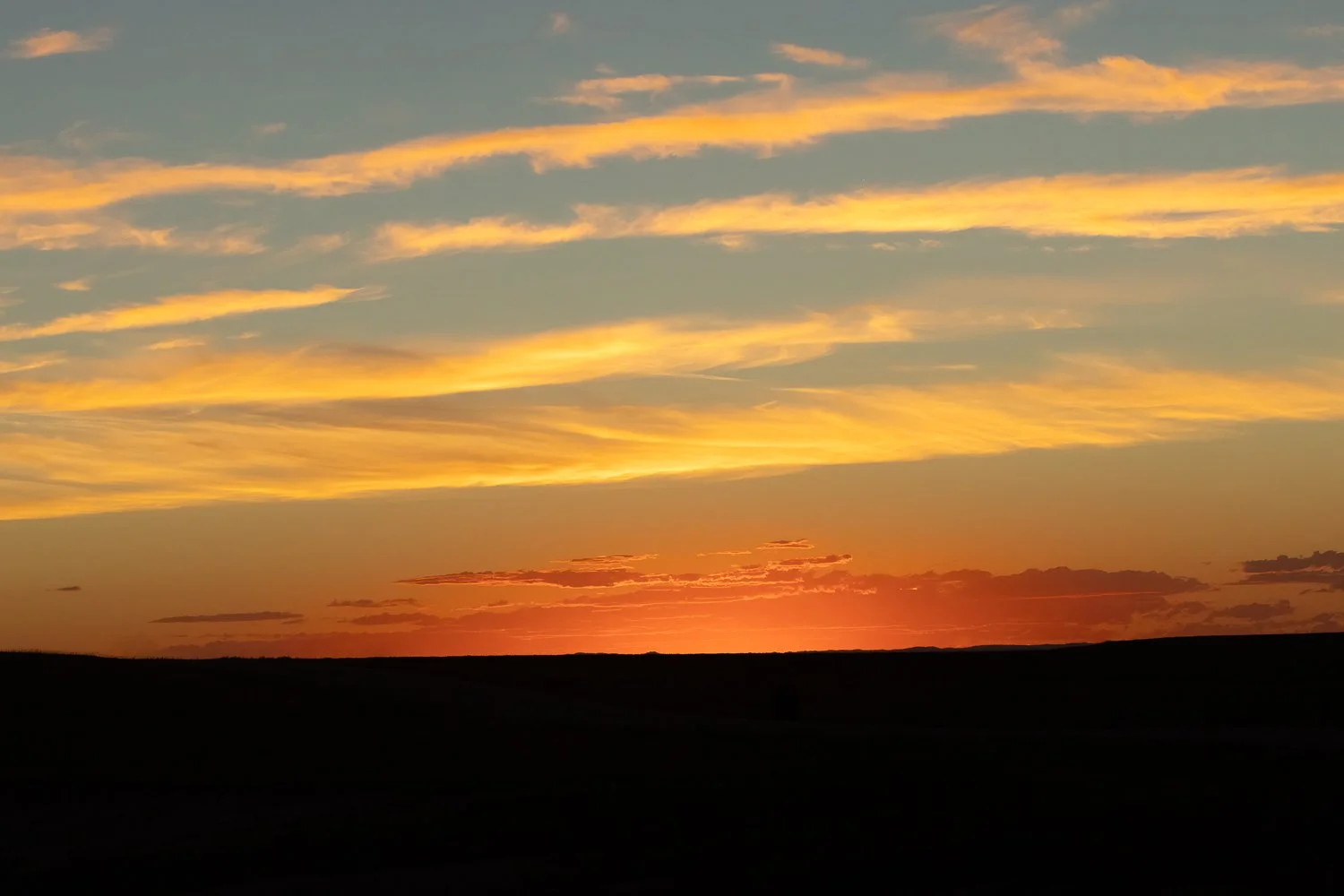
Here we go.
Now came the waiting game for complete darkness.
The sun has set, BUT the clouds. They aren’t going away. This is not looking good.
I had my Canon camera, and I really wanted to get some more practice with it.
To the naked eye, the Milky Way often looks like faint puffs of clouds.
So when I saw something like that, I thought, here we go!
But it wasn't the Milky Way core (the brightest part of the Milky Way).
Ahhhh.
Clouds.
Noooo!
With all those clouds, there wasn't much point in doing much editing.
An hour in, and it wasn't going to get any better, so we packed it up and headed back to the hotel.
We then planned to go out for sunrise the following morning.
THE PART YOU DON'T SEE
–––
The one thing I haven't included in my travelogue is this little religious practice I have every night.
Once I'm back at the hotel, I download my photos to my hard drive and review them on the computer.
Not just to see which ones I like.
I study them.
How can I improve my photography the following day?
Was my shutter speed fast enough, or should I have used a slower one?
Should I have lowered or raised my ISO?
Would a smaller or larger aperture have worked better?
Did I miss focus?
Could I have composed the image differently?
Sometimes the answer isn't about camera settings at all.
Maybe I should have moved a few feet.
Changed my angle. Captured more photos (frames).
Waited a little longer.
Looked at the scene differently.
This nightly review is how I learn from the day while everything is still fresh in my mind.
What worked?
What didn't?
What do I want to try differently tomorrow?
The next day's photography isn't starting from scratch.
It's building on what I learned the night before.
It's a quiet part of the trip that never makes it into the photographs, but it's probably one of the most important parts of my process.
And as for staying out all night for night photography?
I don't really mind.
I can sleep when I get home.