
A Love Affair with Aviation
My love affair with airplanes started when I was four years old. I dreamed of flying jets, but with a family full of doctors and nurses, aviation wasn't exactly the career path laid out for me.
That never stopped me from loving airplanes. I enjoy flying as a passenger, but being behind a camera gives me a different way to experience them. There's something about watching a jet tear across the sky, hearing the roar of its engines, and trying to capture that split second when everything comes together.
This weekend, I headed to Wings Over Houston with my cameras, hoping to bring home some photographs worth remembering.
An Early Start—and an Unpromising Beginning
Before leaving, I checked my gear: batteries charged for both cameras, power bank ready, and phone fully charged. With rain in the forecast, I packed sunscreen, a hat, hearing protection, and camera covers. I left my tripod at home. At roughly three pounds, it was one more thing to carry, and with my back giving me trouble, I decided it wasn't worth it.
My husband and I headed to Ellington Field early, hoping to get in and find our spot before the crowds built up.
Getting through the entrance turned into an adventure of its own.
We parked in what appeared to be the vendor area, and a volunteer thought it would be okay. From there, we walked to a gate marked for vendors and asked whether general admission ticket holders could enter at that gate. We were told yes, so we joined the short line with a few other people. We thought we'd found the right entrance.
A few minutes later, another volunteer told us we couldn't use that entrance because it didn't have security scanners.
Wait. What?
We had just asked and been told we could enter there. Now we had to turn around and make the roughly 10-minute walk to another gate. So much for getting in early and avoiding a hassle. Ugh.
Apparently, vendors are trustworthy, but the rest of us need a closer look.
This wasn't the first time the event's entry arrangements had been confusing, and the volunteers didn't always seem to know where to direct people. Eventually, we made it through security, got our tickets scanned, and headed for the Photo Pit.
At least we were finally in.
Claiming Our Spot
The Photo Pit is one of the best reasons to get a photographer's pass. It gives you room to shoot without general-admission crowds standing directly in front of you. The pass also included a box lunch and unlimited water and soft drinks—small things that become important during a long day in the Texas sun.
We found a spot along the fence and settled in with our chairs.
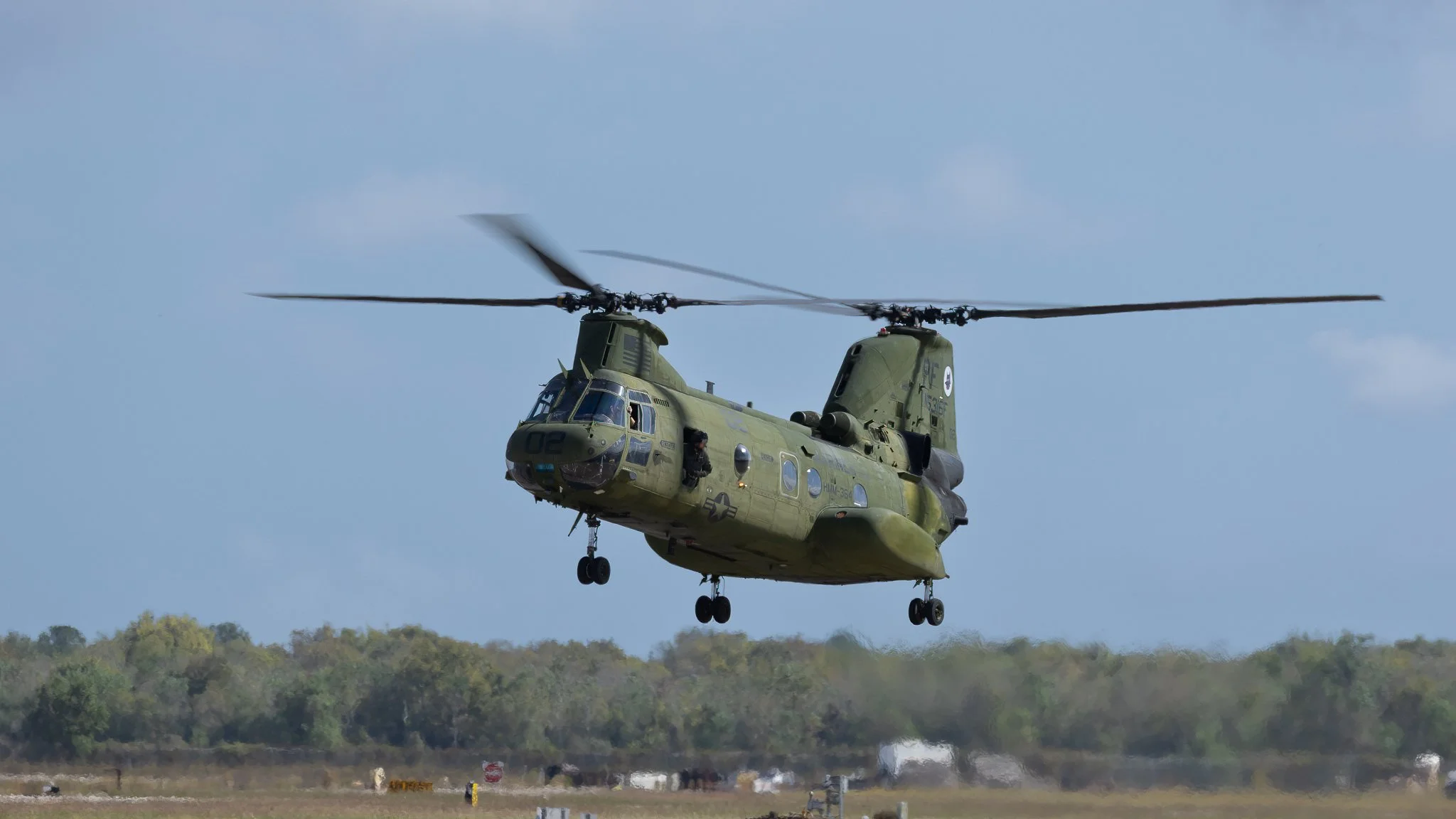
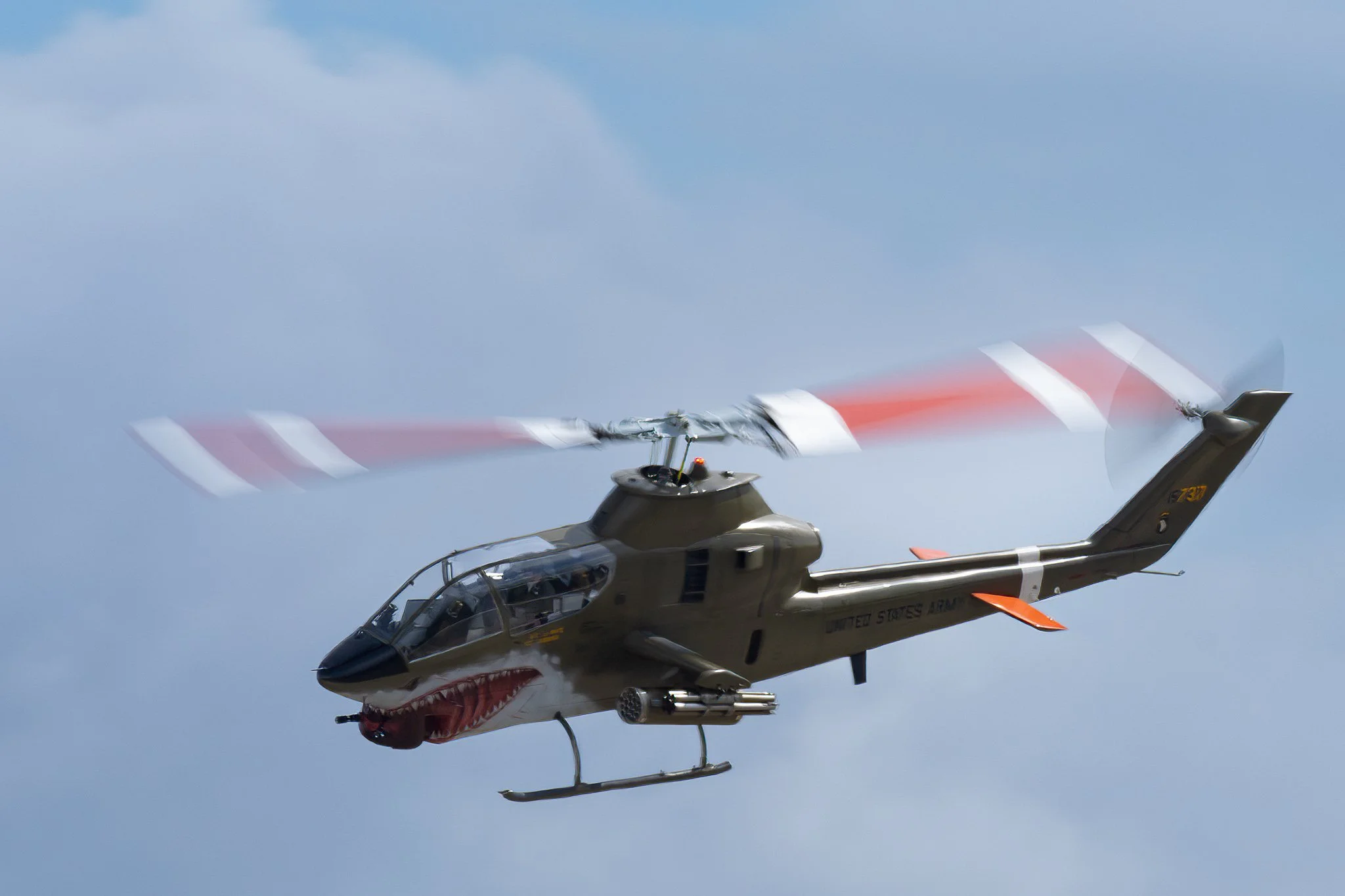
Before the flying demonstrations began, there was plenty to photograph on the ground: Warbirds, helicopters, jets, and other aircraft on display. Vendors and children's play areas filled out the grounds.
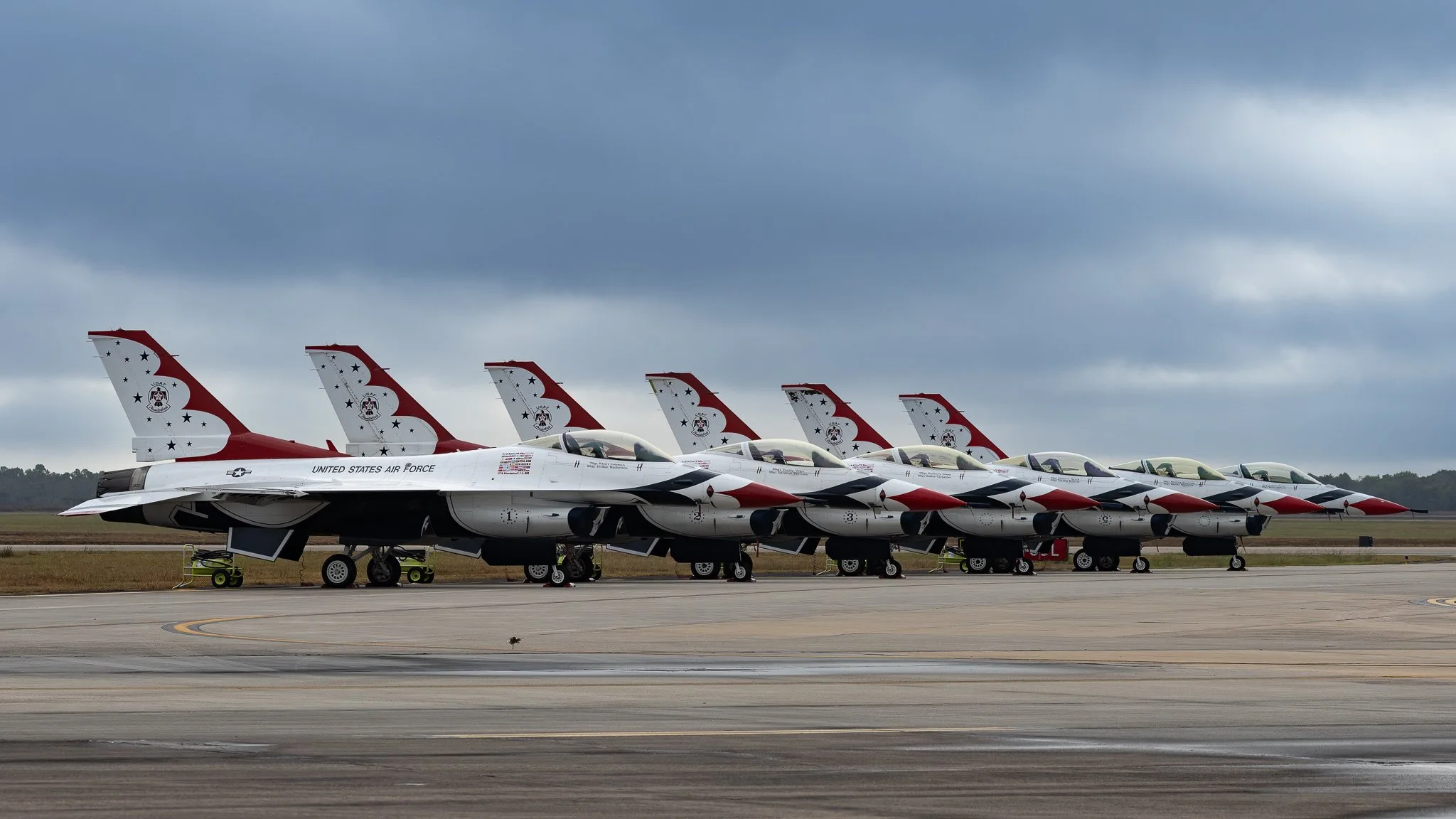
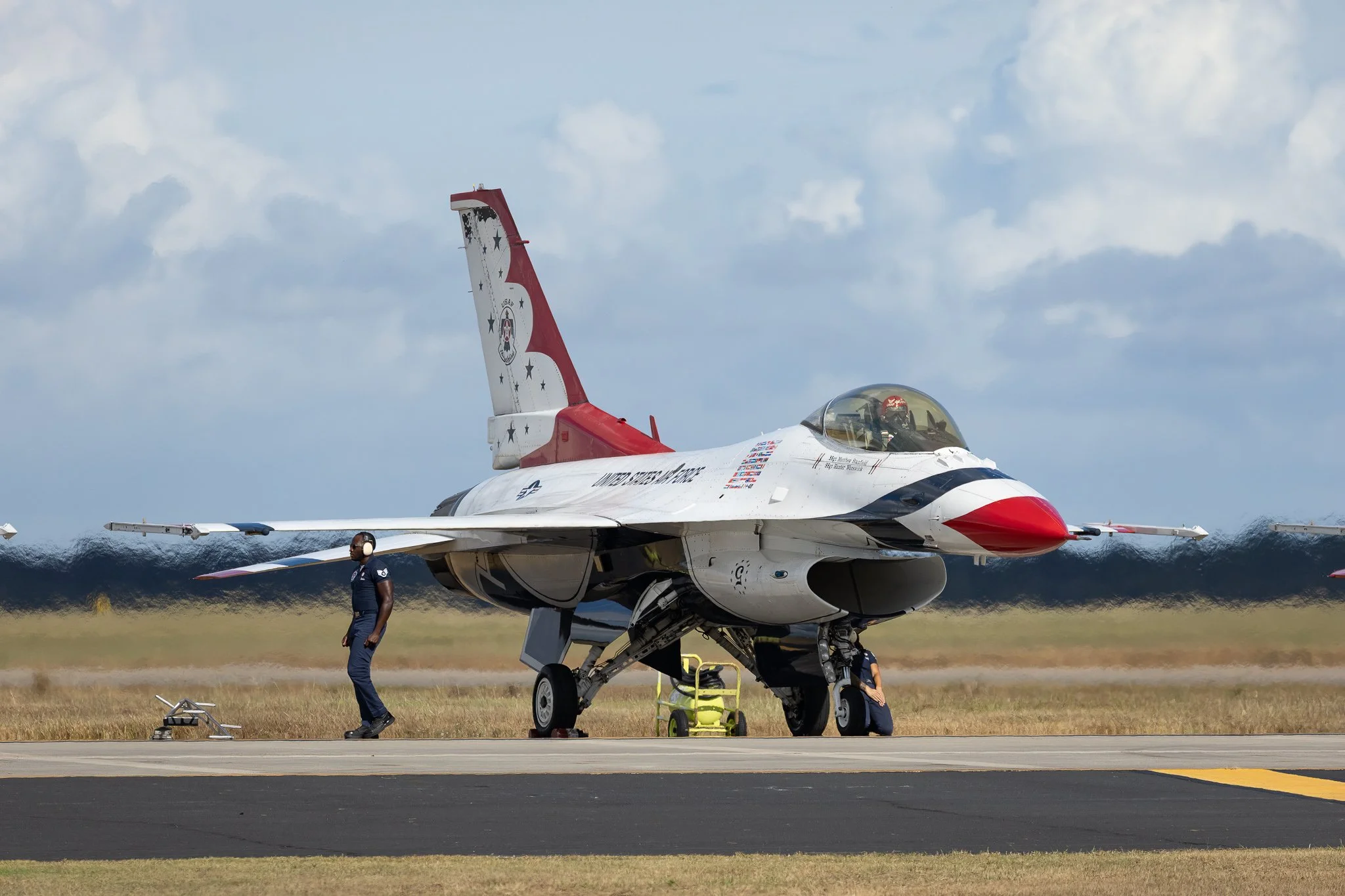
Thunderbirds lined up in the morning light before the afternoon show.
Static displays give you time to slow down and study an aircraft. You can move around, look for interesting angles, and pay attention to details that might otherwise escape you. Sometimes, the surrounding scene adds something to the photograph, too. A jeep parked beside an aircraft, for example, can provide a sense of scale and context.
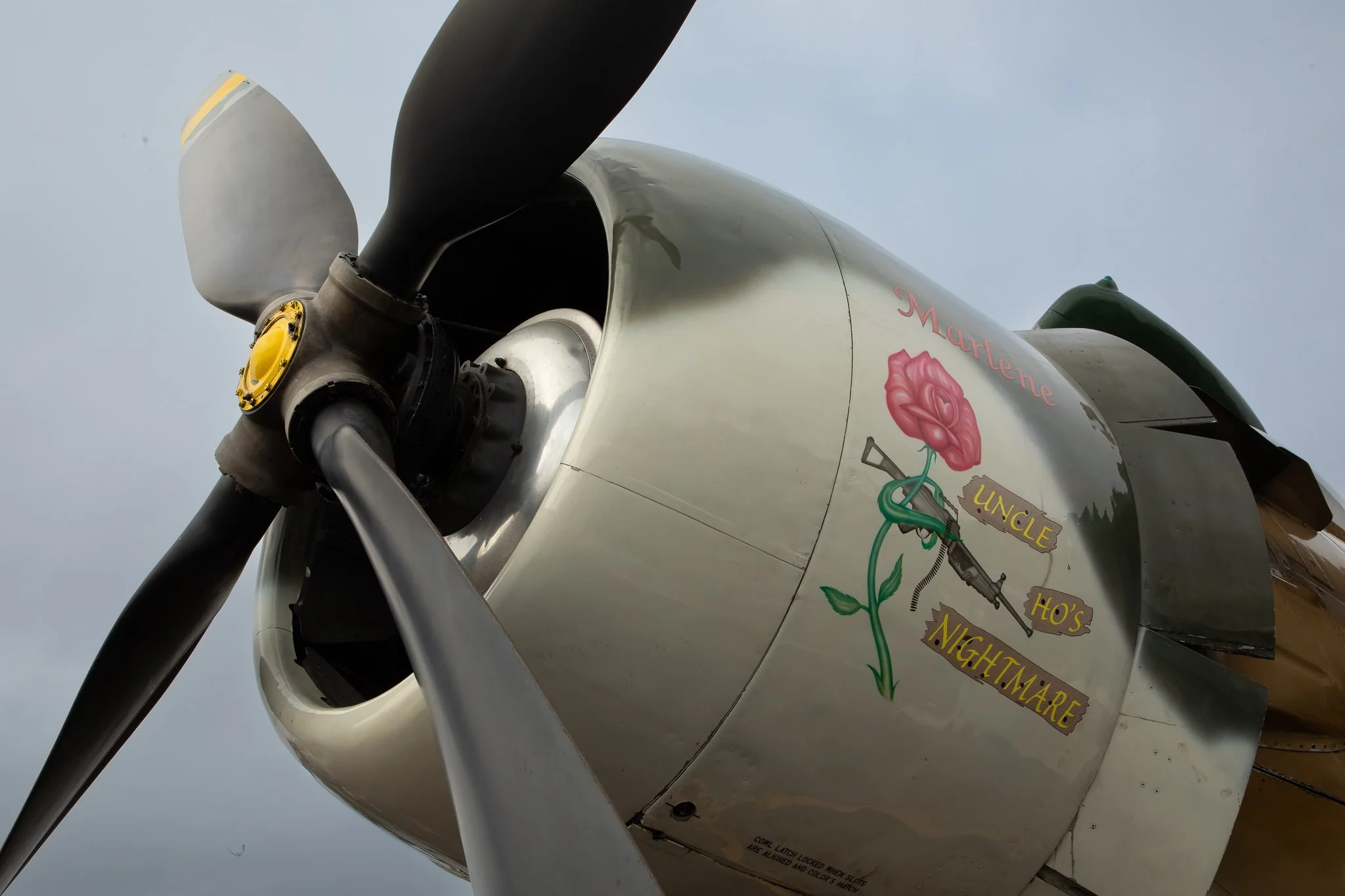
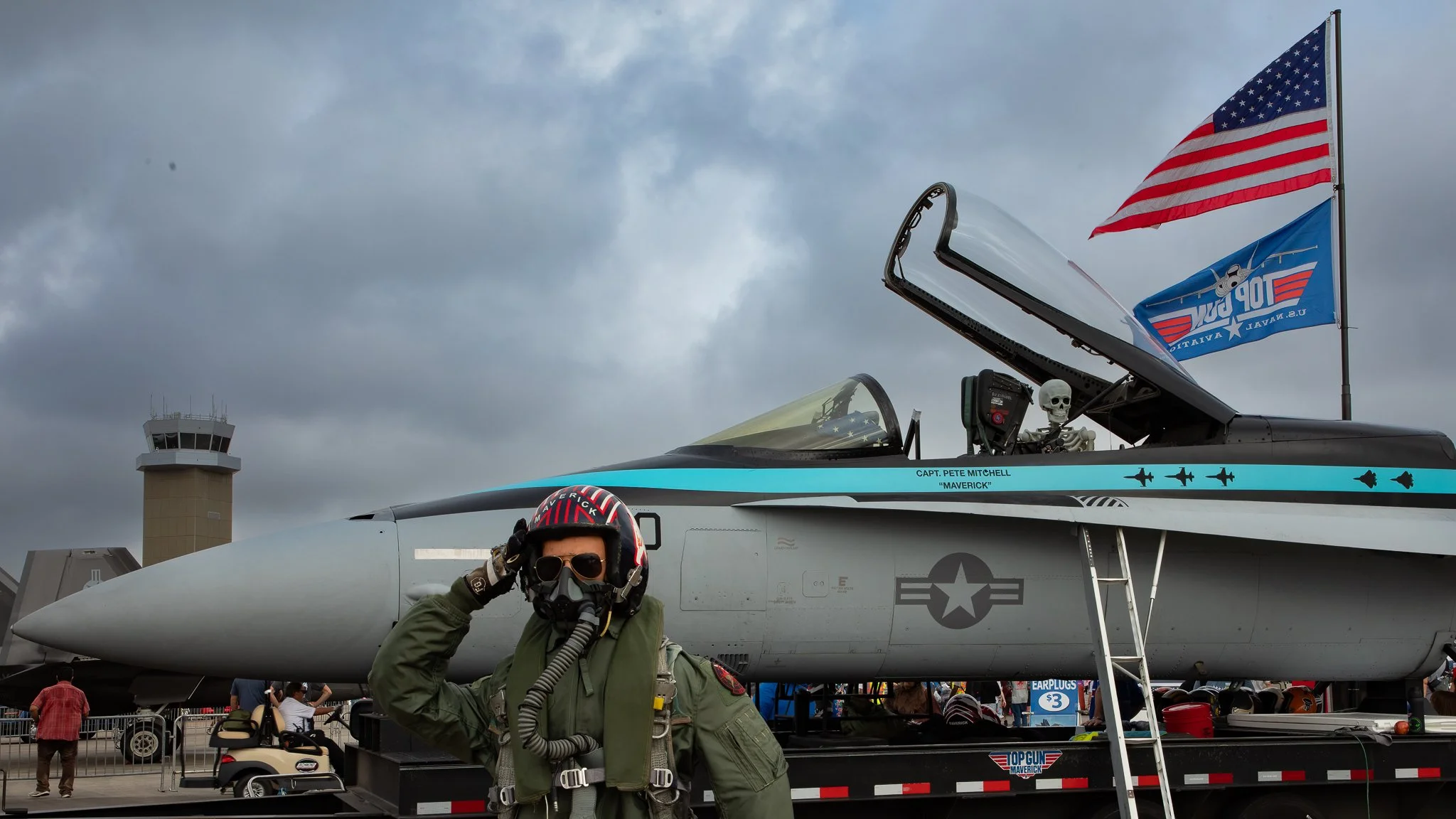
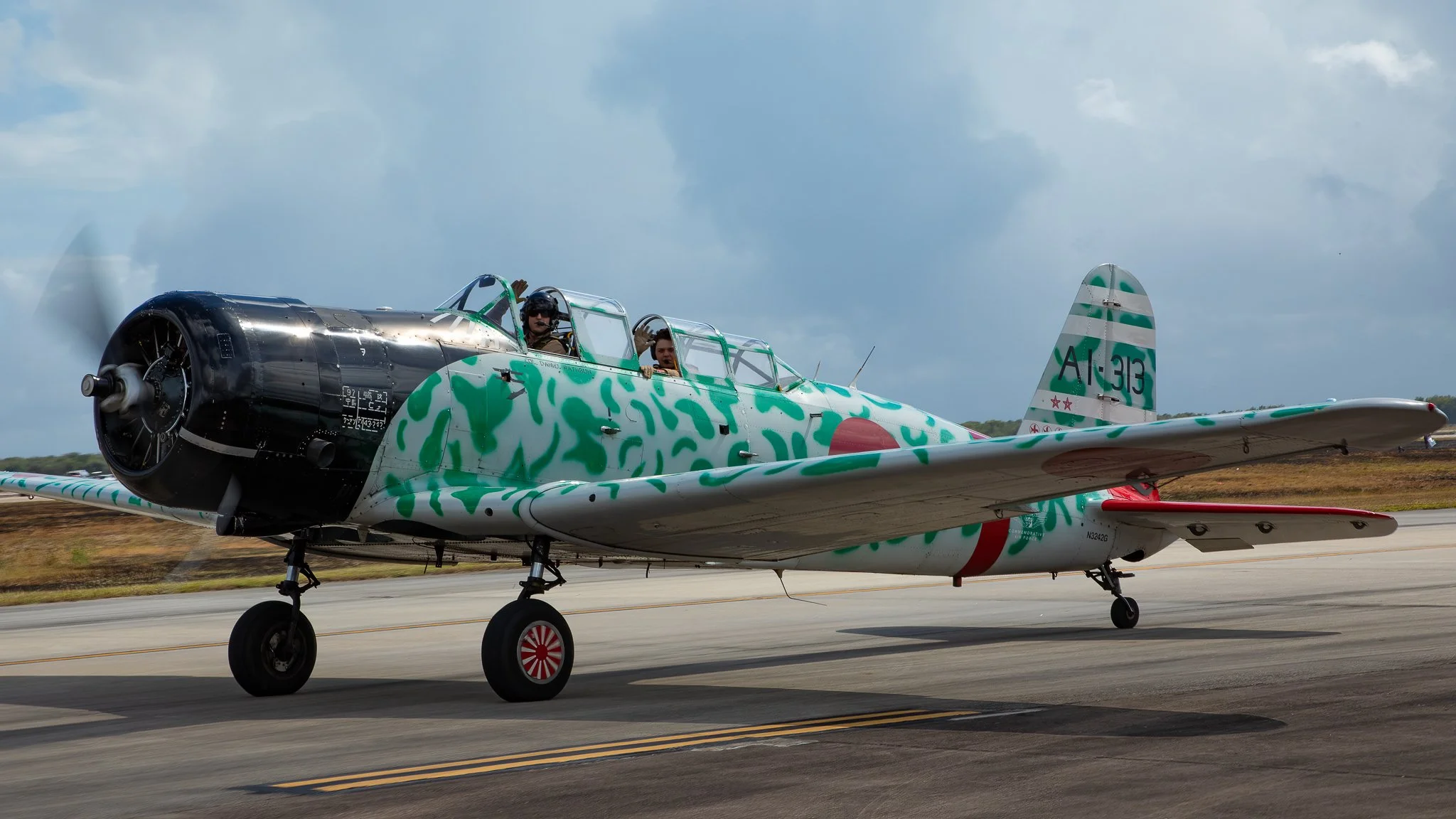
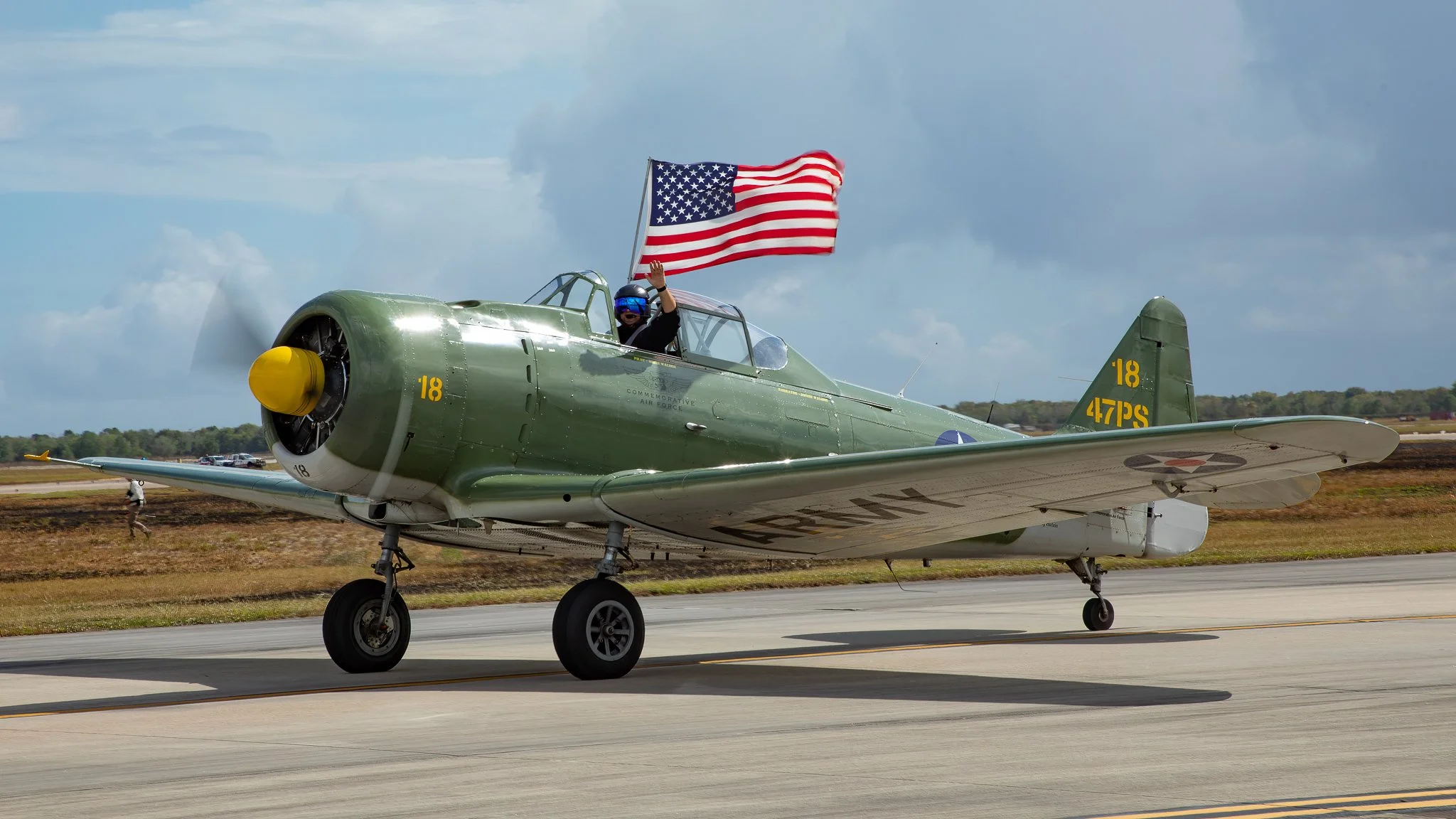
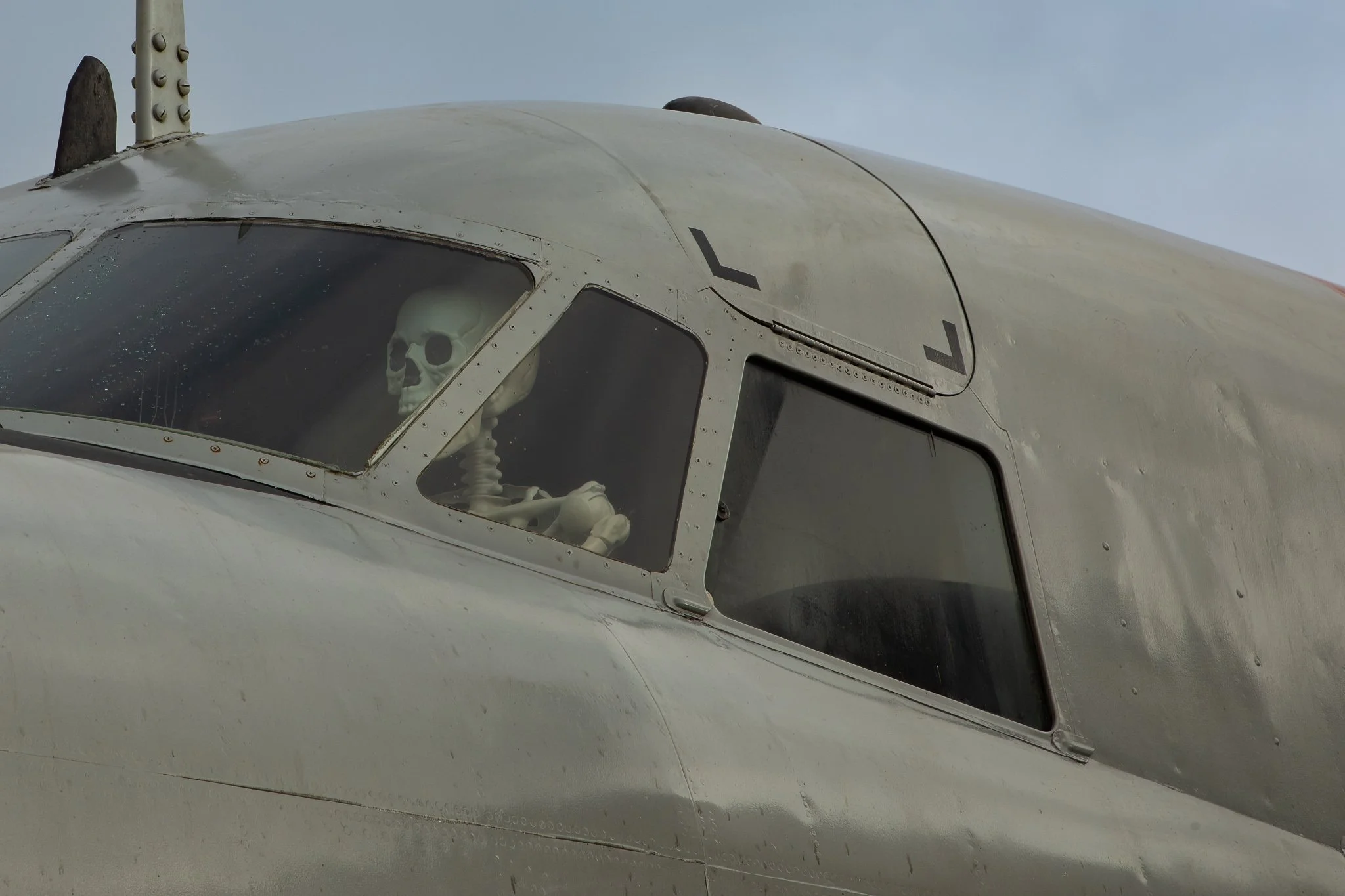
Yes, it’s Halloween, but who invited Michael Myers?
Watching the Weather—and the Skies
The weather was never far from our minds. We kept checking the radar as rain cells moved around the area. We even got a few sprinkles, and at one point, a cell appeared to be heading straight toward us.
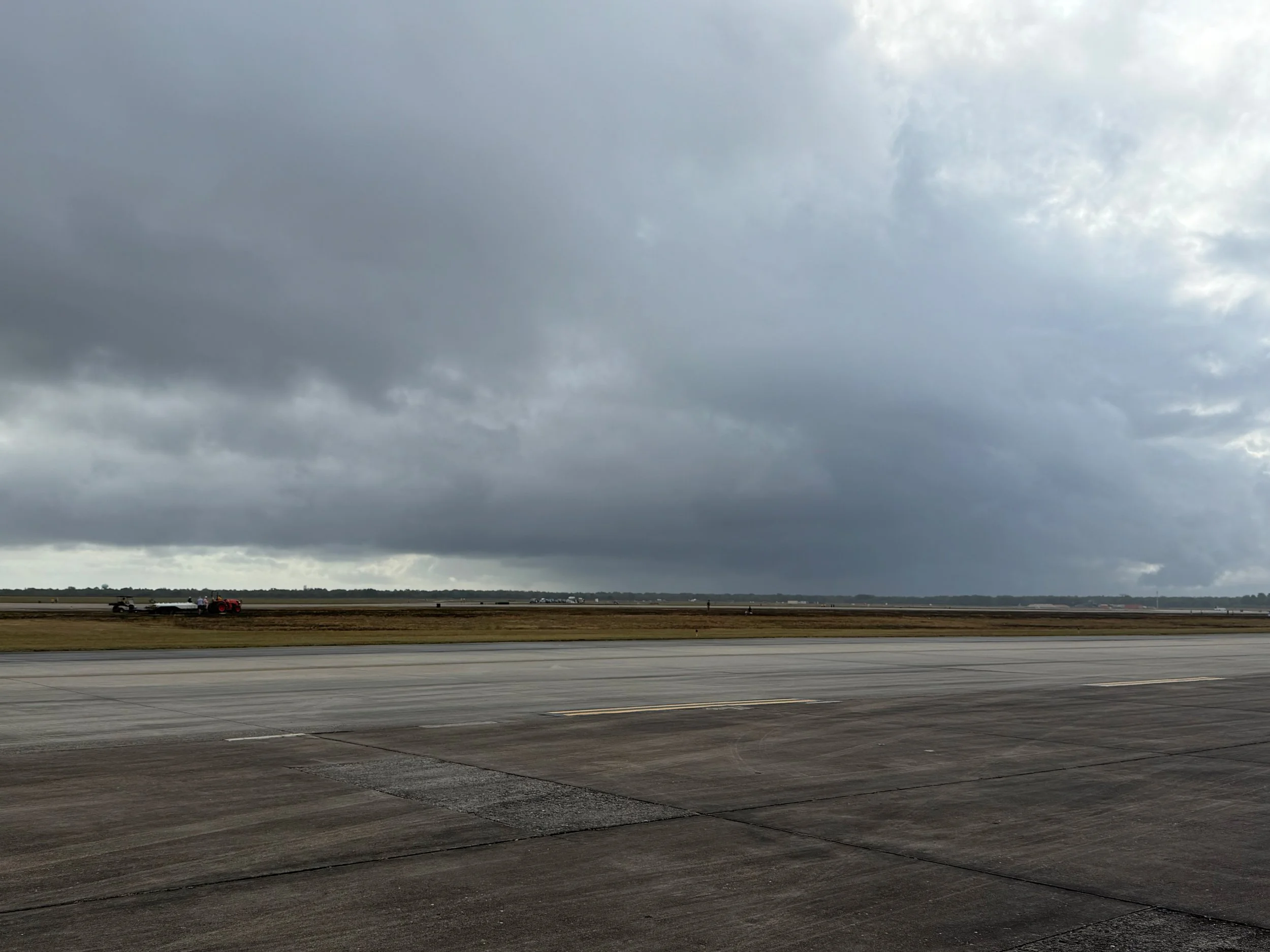
Storm cell heading this way.
My husband wondered whether we should buy ponchos. The vendor had only umbrellas, so we bought one, figuring we could use it for shelter under the platform if the rain arrived.
Warbirds, Pyrotechnics, and the Smell of an Animal Farm
The show usually opens with skydivers and the national anthem, but the low clouds kept the skydivers grounded. After the anthem, the flying demonstrations began with remote-control aircraft.
As the morning progressed, the clouds gradually broke apart, giving us better views of the action.
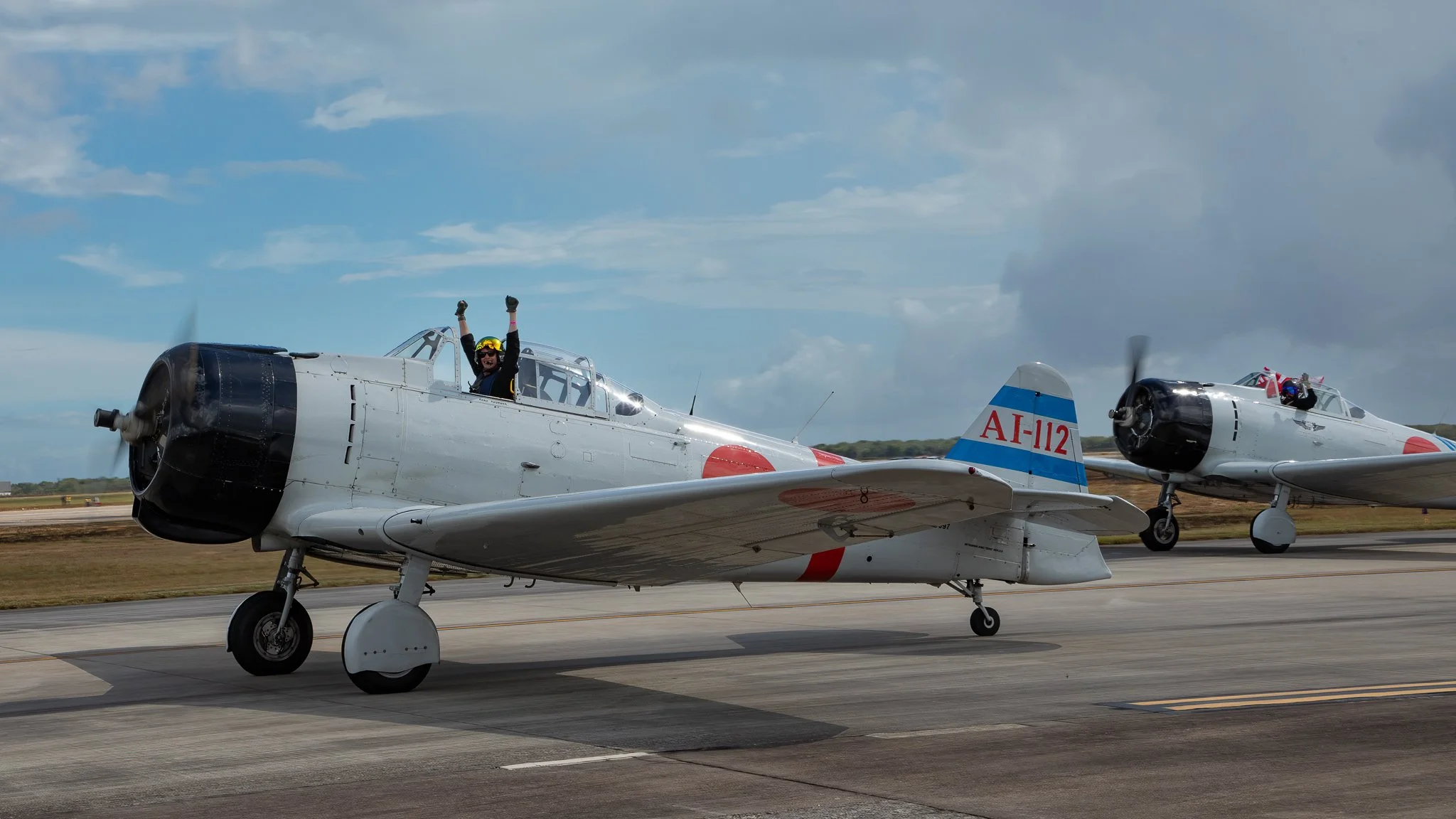
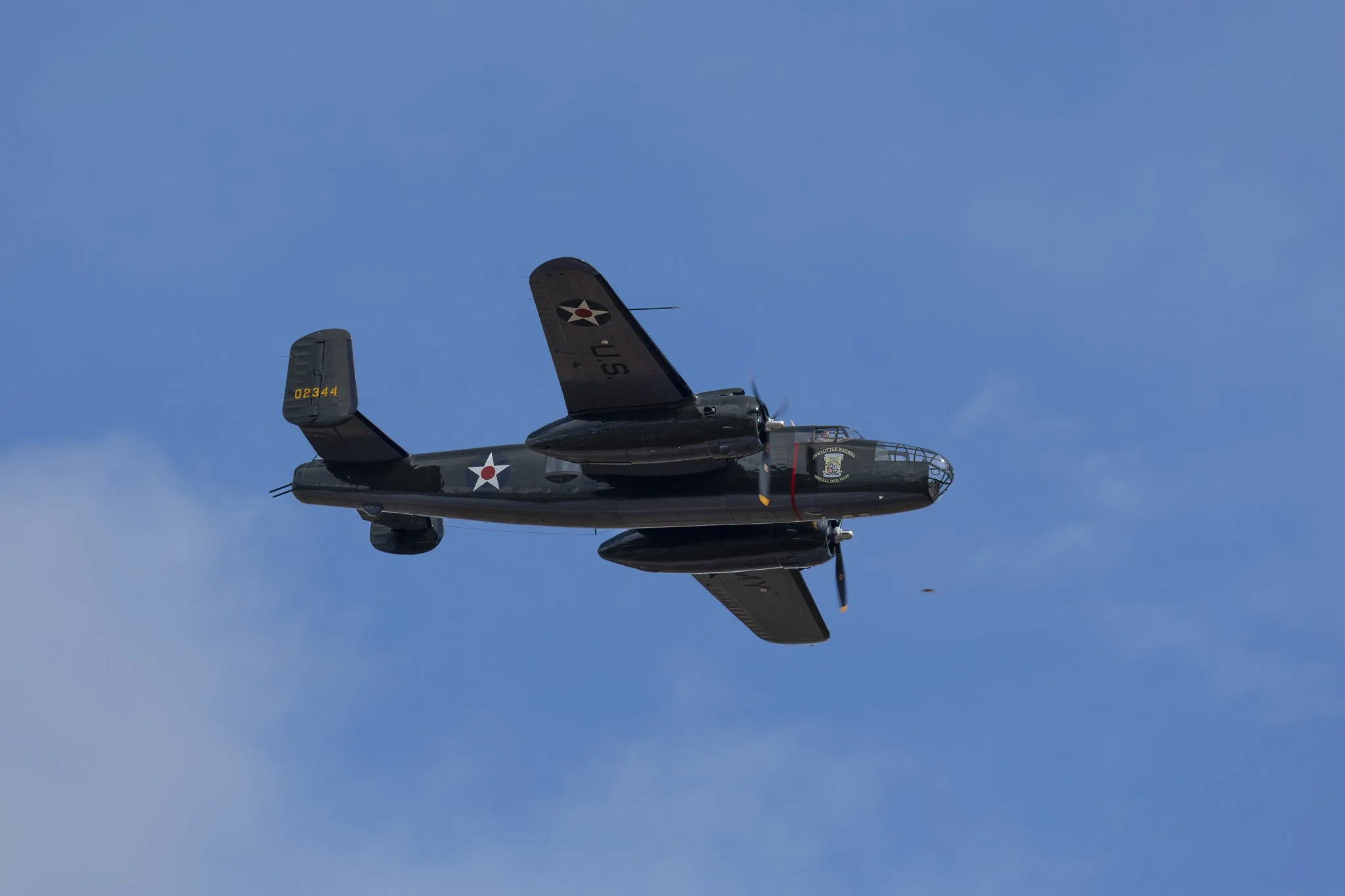
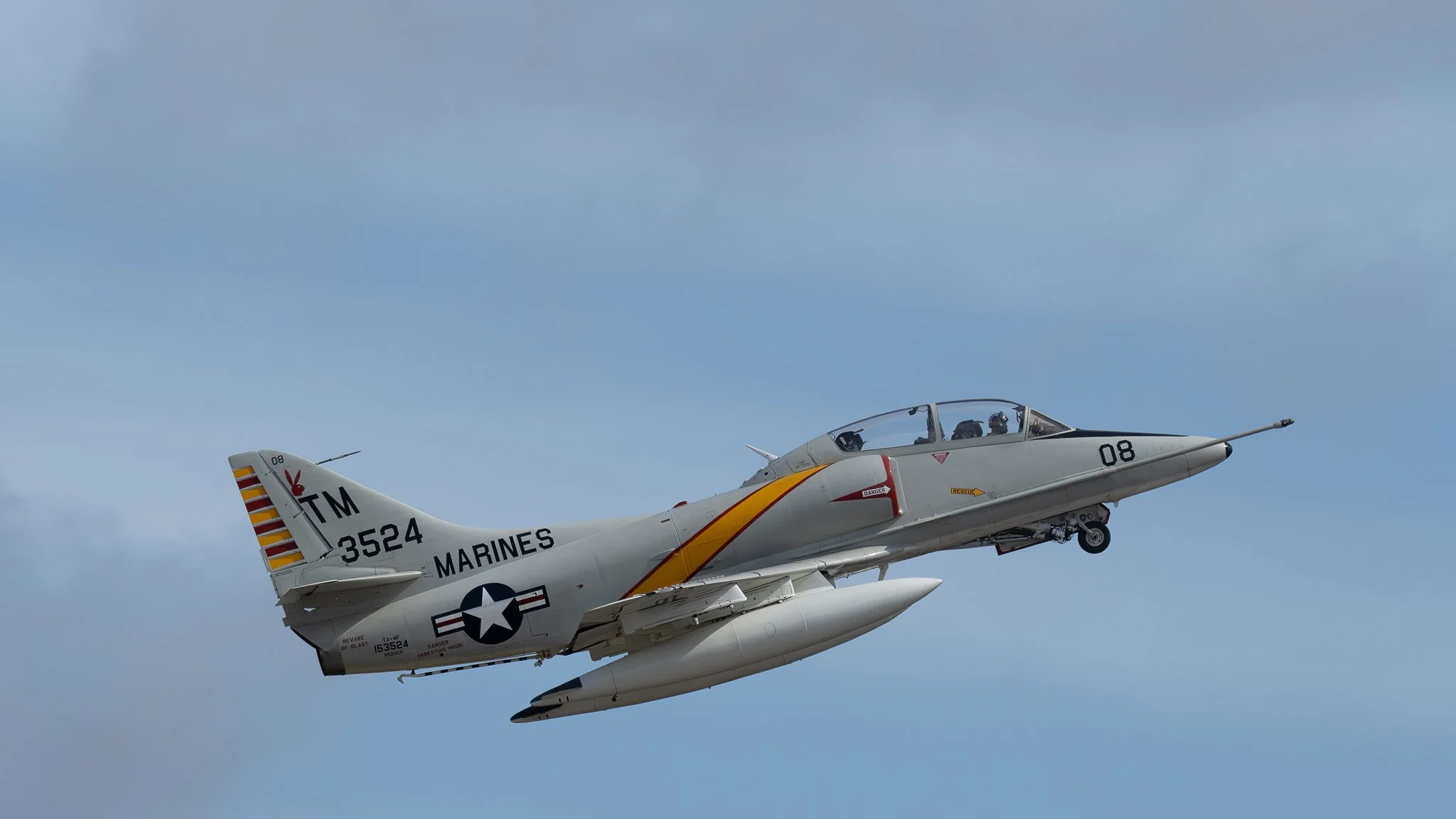
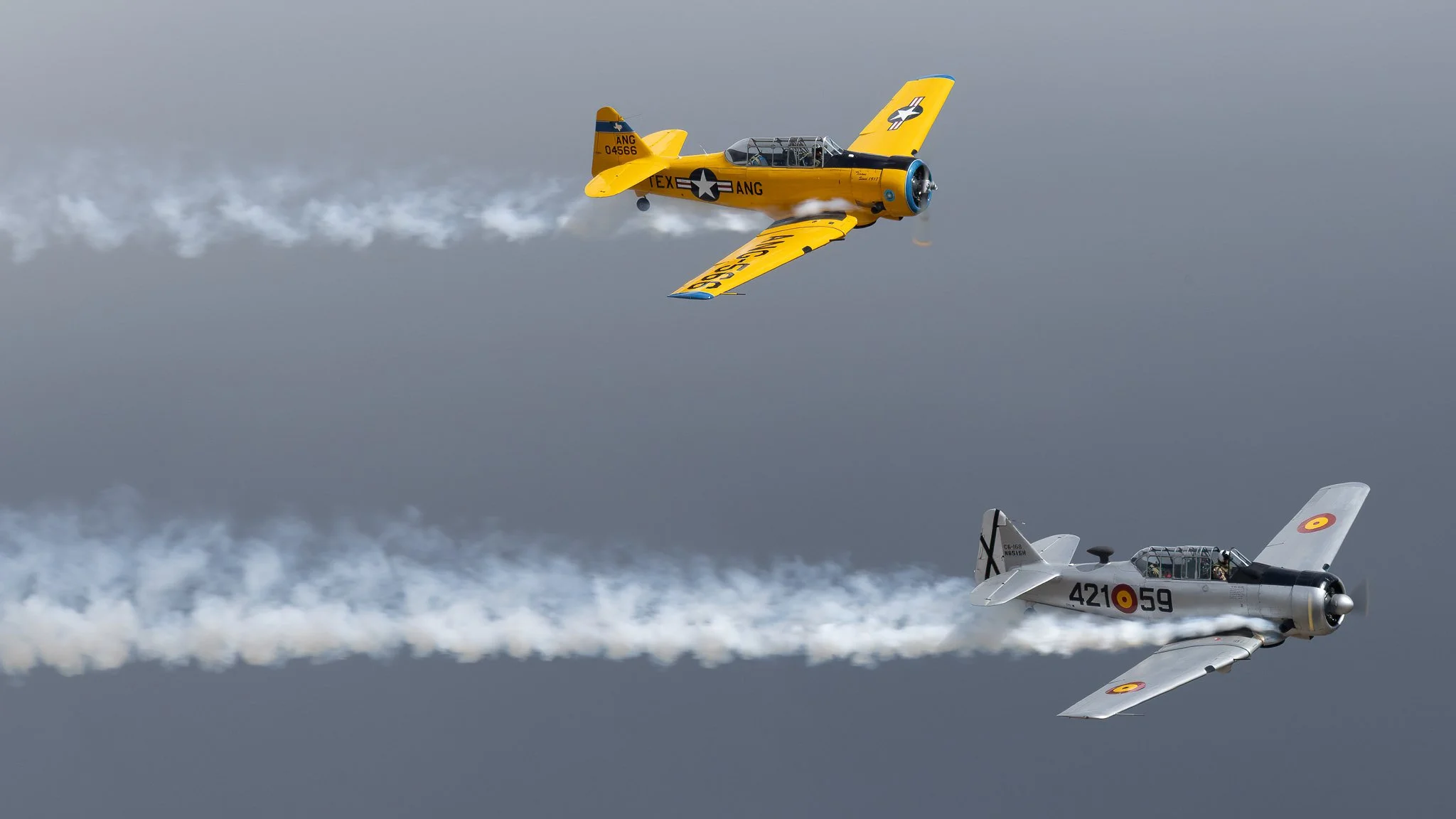
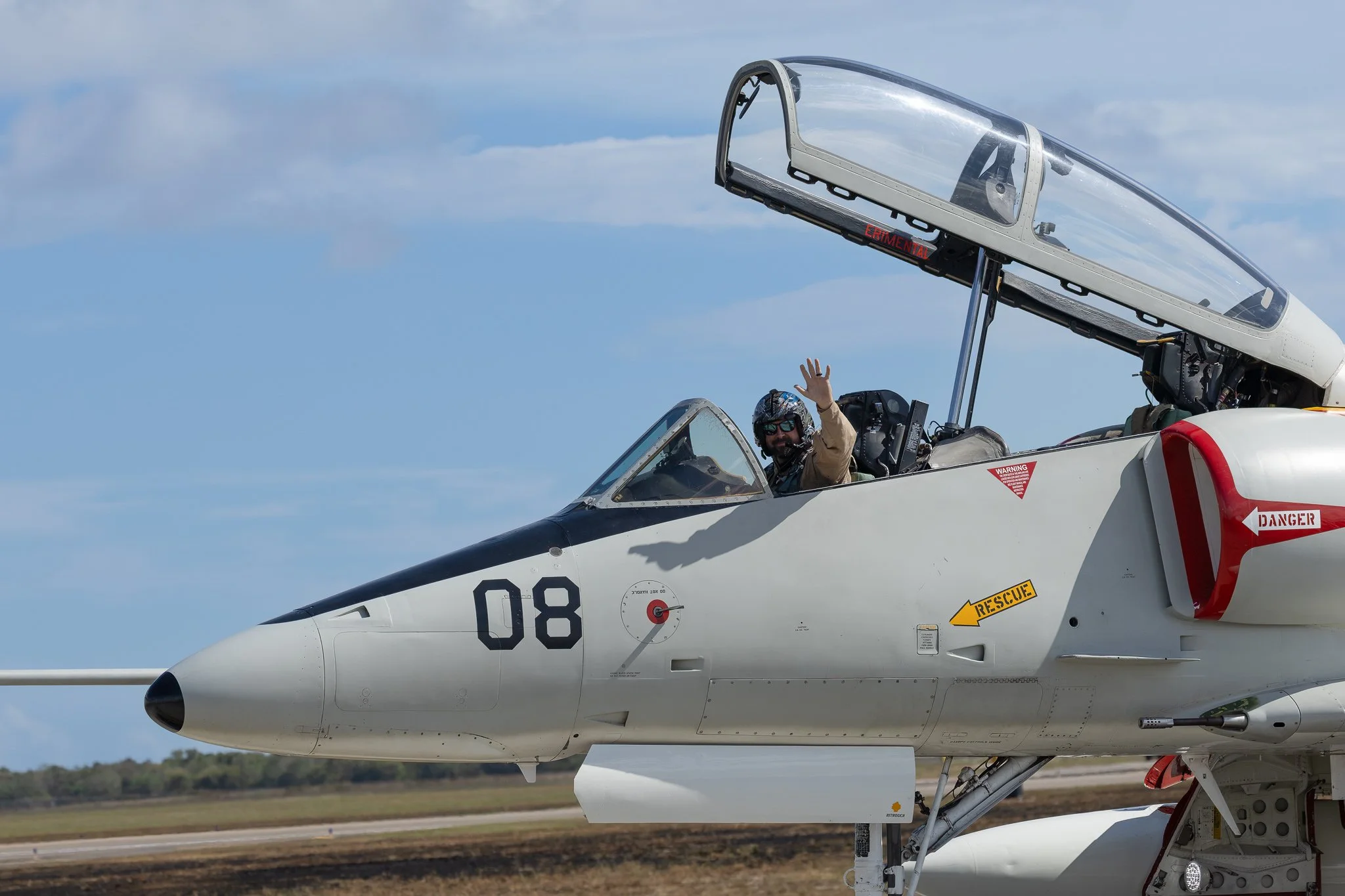
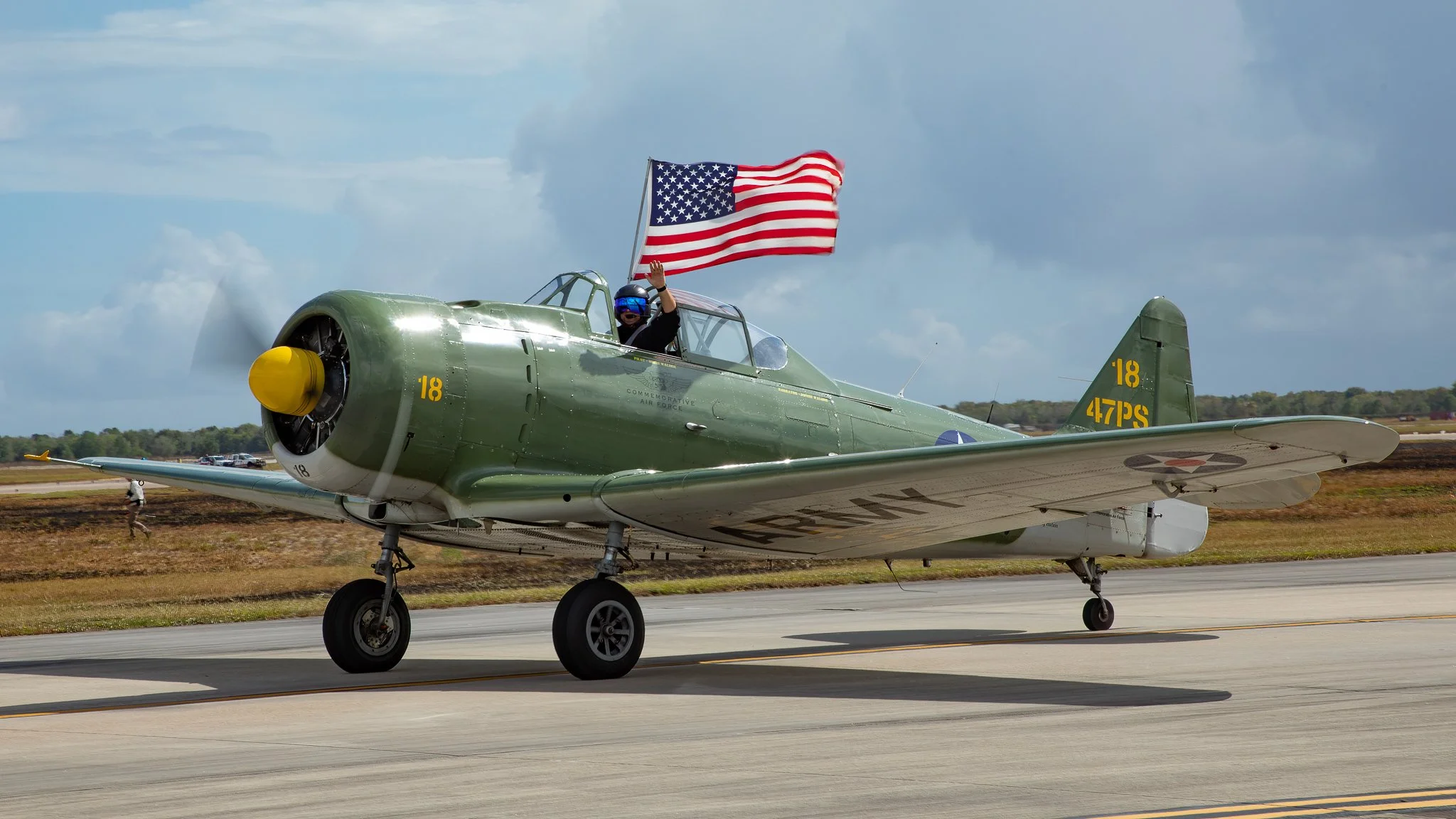
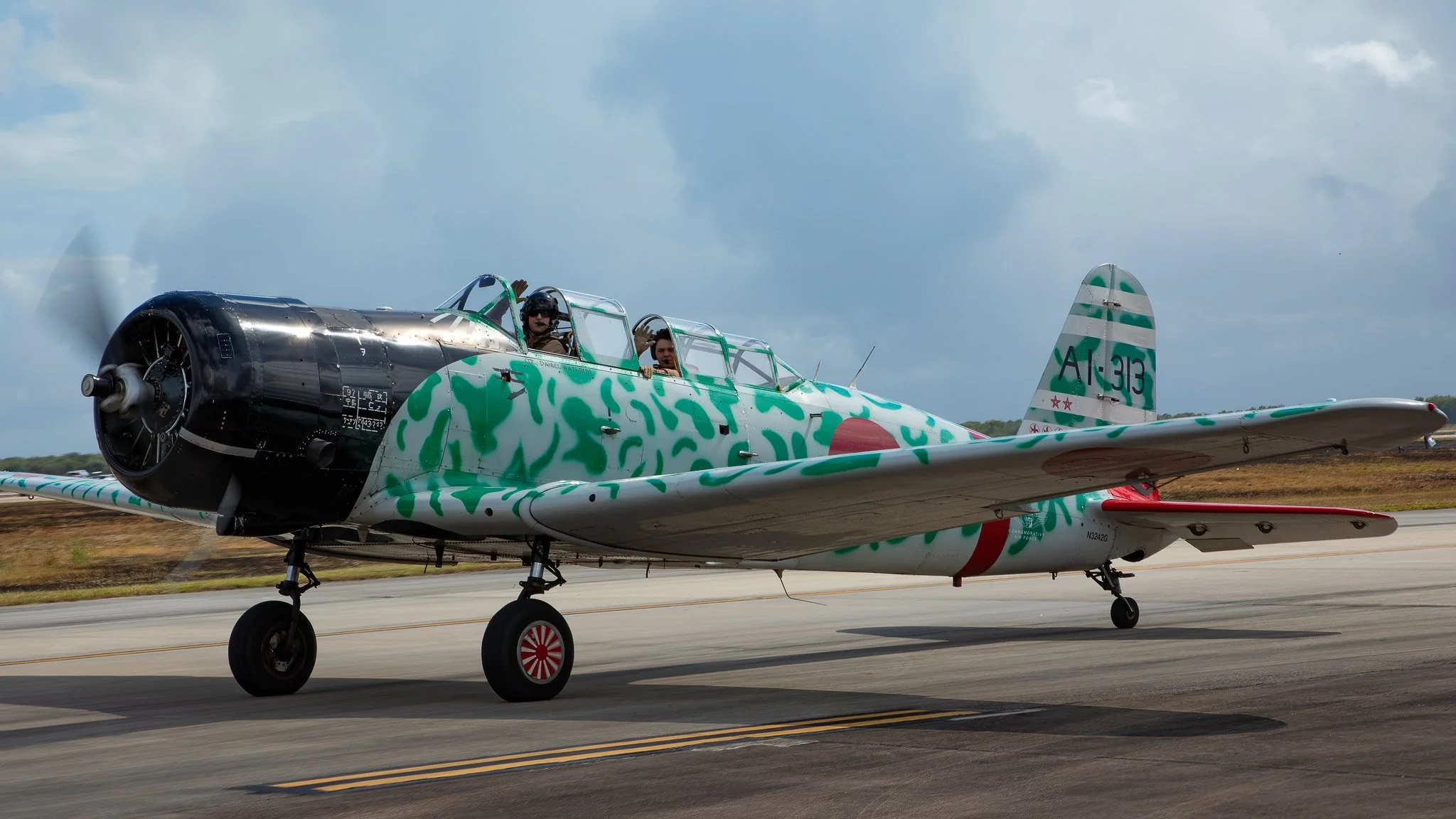
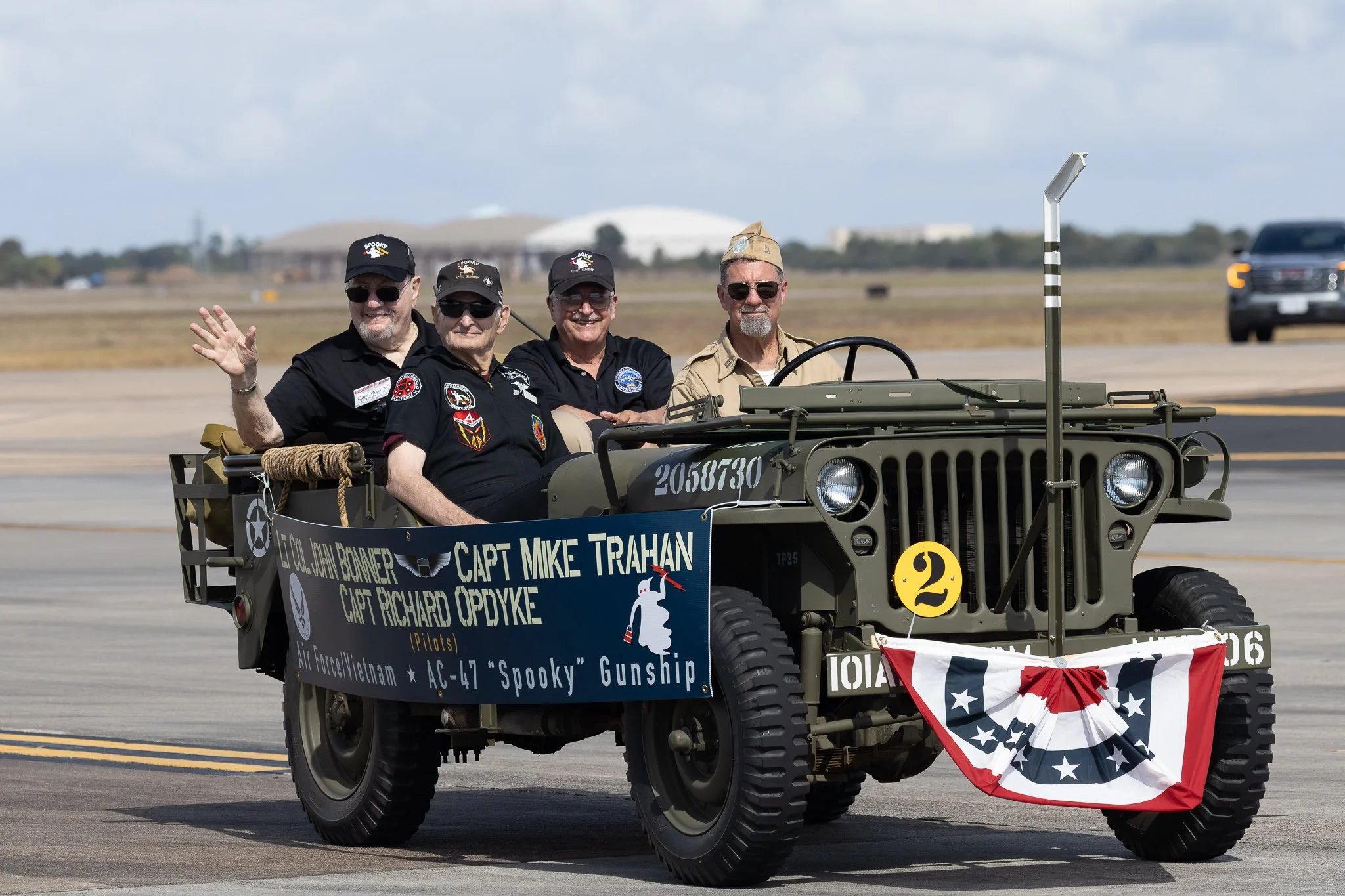
I'm not the biggest propeller-plane fan, but I appreciate the history behind the Warbirds and the dedication of the volunteer pilots who keep these aircraft flying. There's something special about seeing these pieces of aviation history in the air rather than sitting behind ropes on the ground.
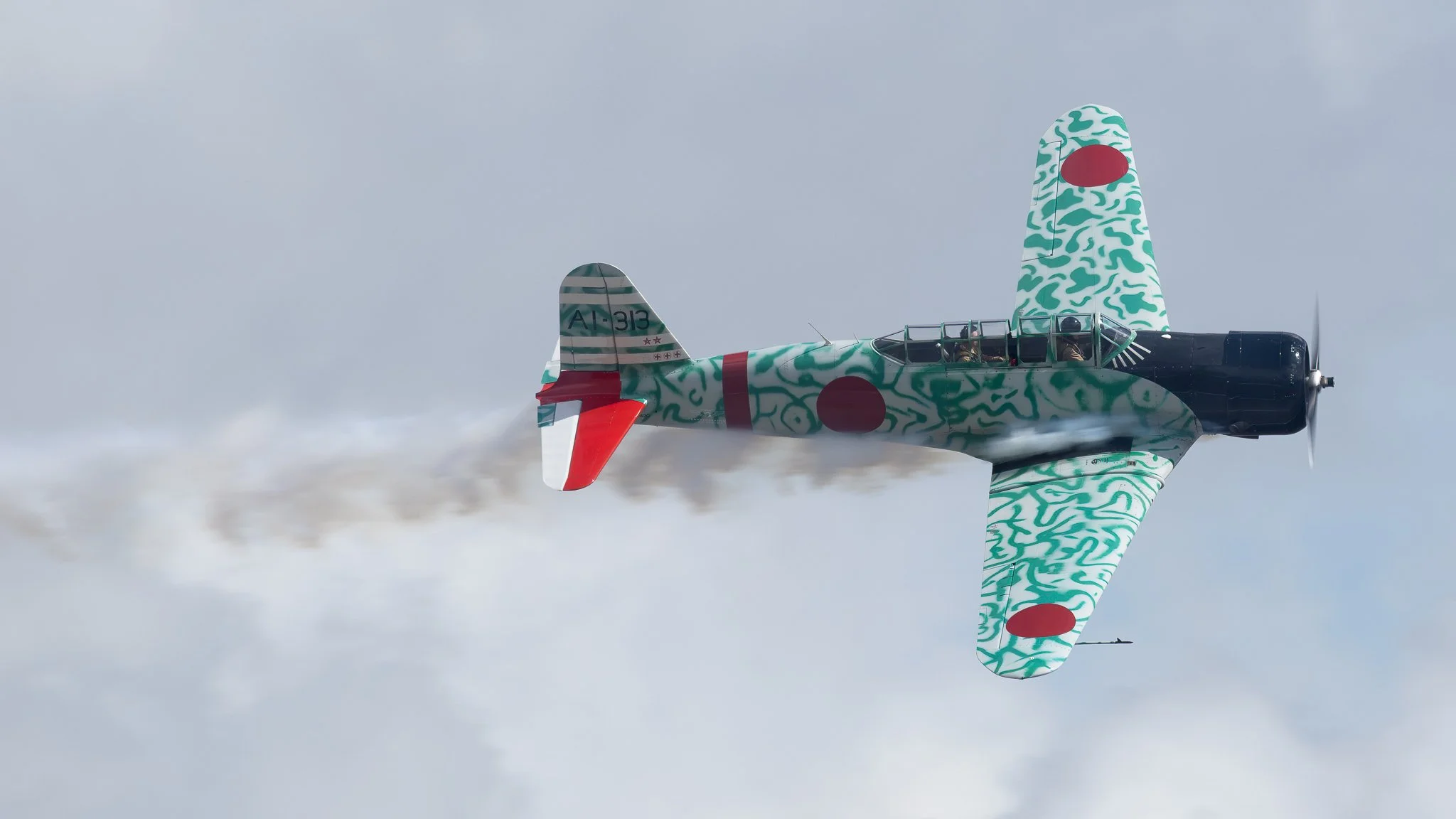
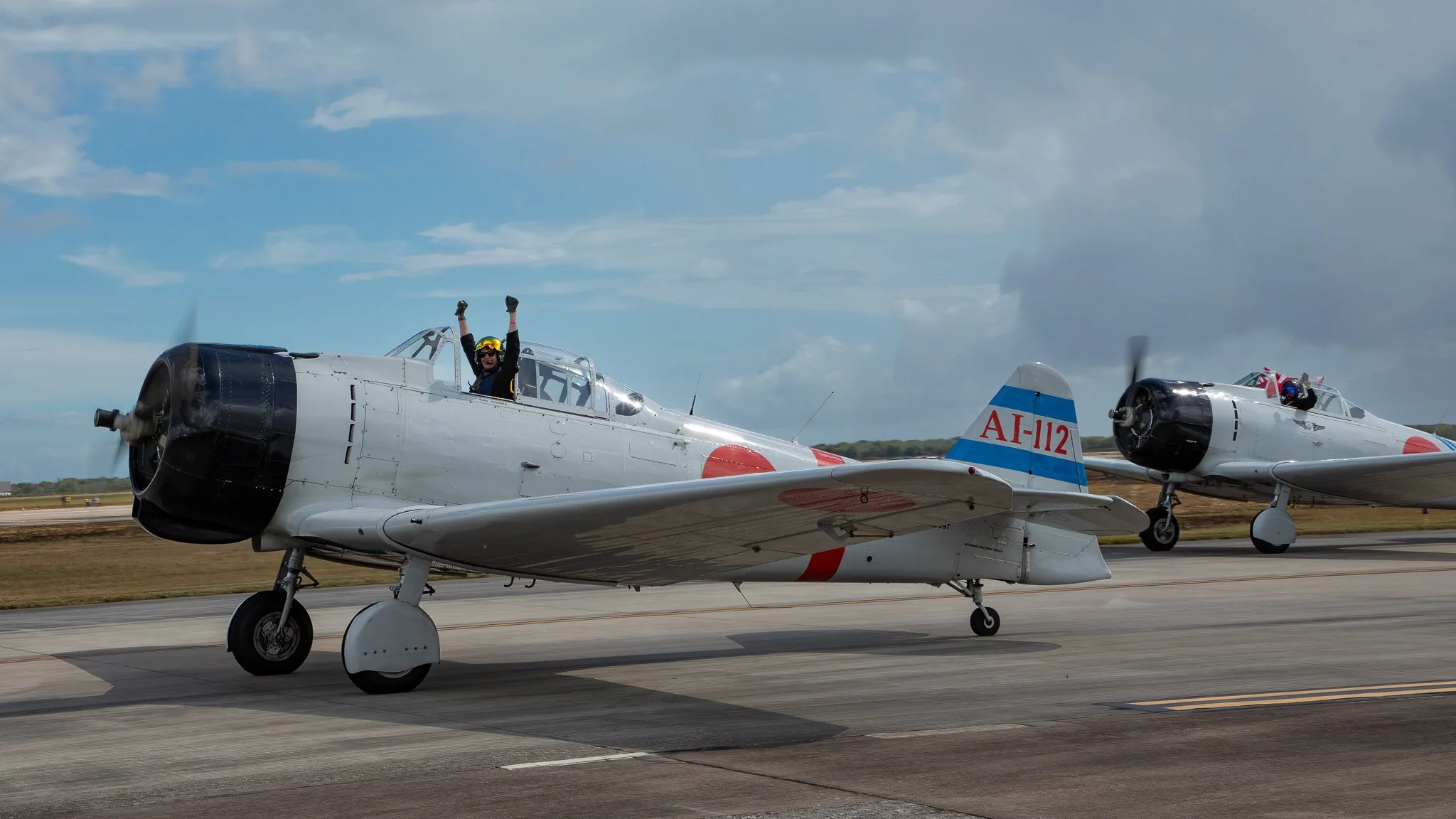
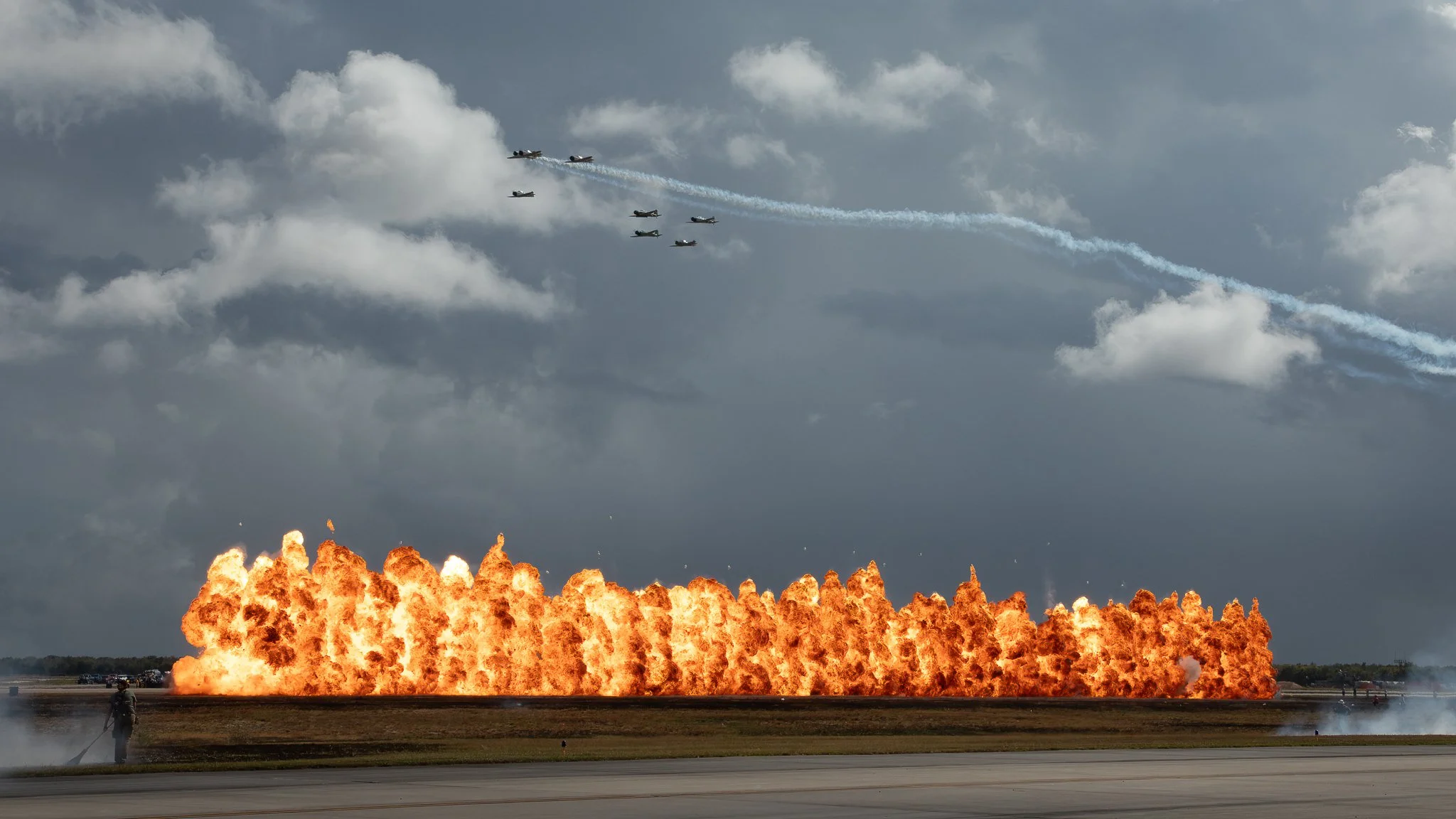
One of the more dramatic demonstrations was Tora! Tora! Tora!, a reenactment of the Japanese attack on Pearl Harbor. With narration, aircraft, and pyrotechnics, the performance brought the scene to life.
Unfortunately, the wind was blowing the smoke and heat toward the Photo Pit. By the end of the demonstration, I smelled as though I'd just walked out of an animal farm.
Not exactly the souvenir I had in mind.
The Arctic Ghost—and a Change of Perspective
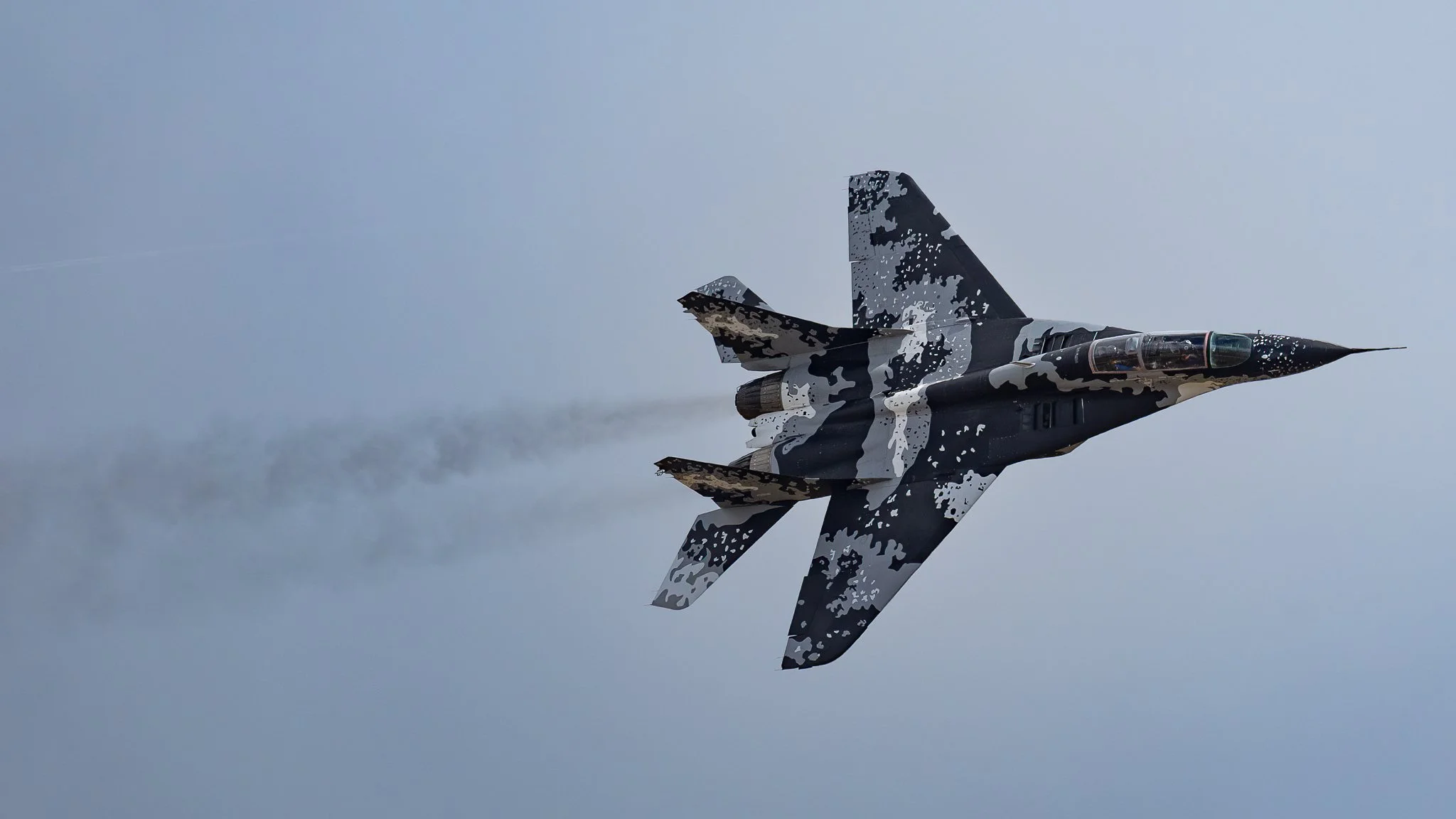
One of the most striking aircraft I photographed was the Arctic Ghost, a MiG-29UB Fulcrum surrounded by vapor against a dramatic sky.
The vapor enveloping the aircraft made for an especially compelling image. It was one of those moments when the conditions, the aircraft, and the background came together in a way you couldn't plan.
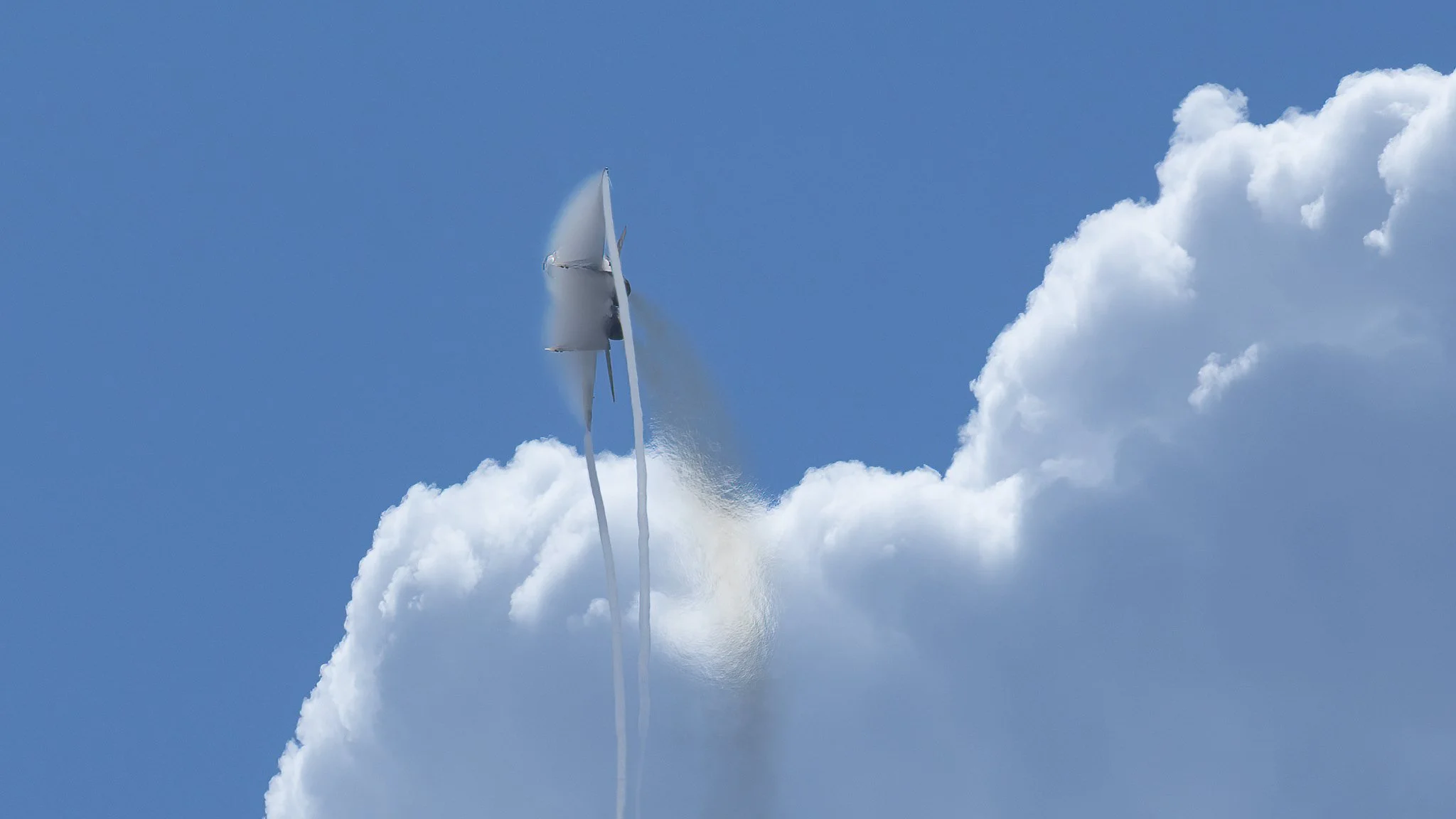
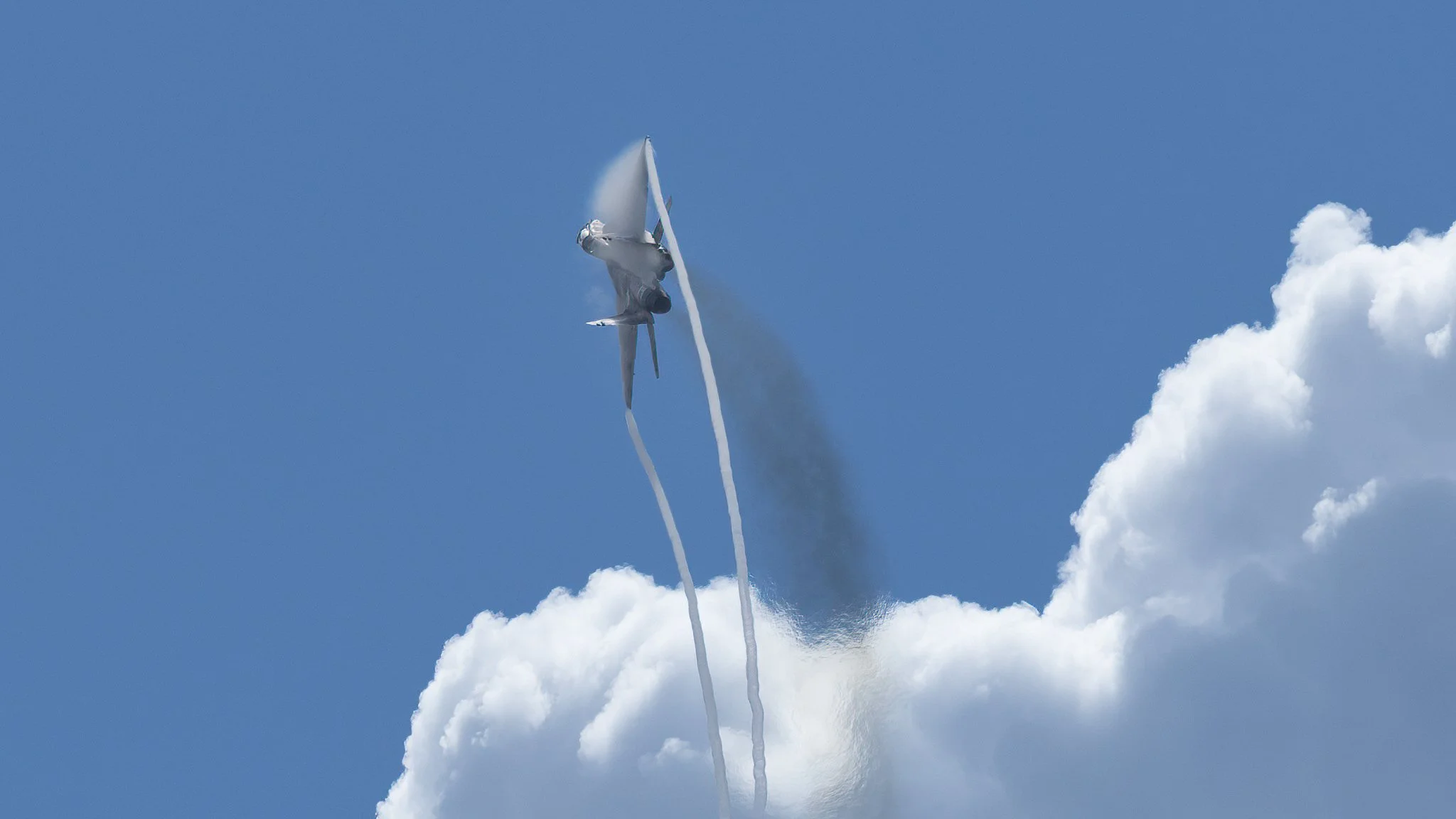
The moment also reinforced a lesson I've learned through photography: never stop shooting just because an aircraft leaves the main performance area.
Keep following it until it's out of sight—or until you're twisted into a position where you physically can't keep it in the frame. You never know what you might capture if you keep shooting a little longer.
The MiG-29 was flown by Jared Isaacman, the NASA administrator. I hadn't thought much of him before, but learning that he could fly fighter jets gave me a different perspective.
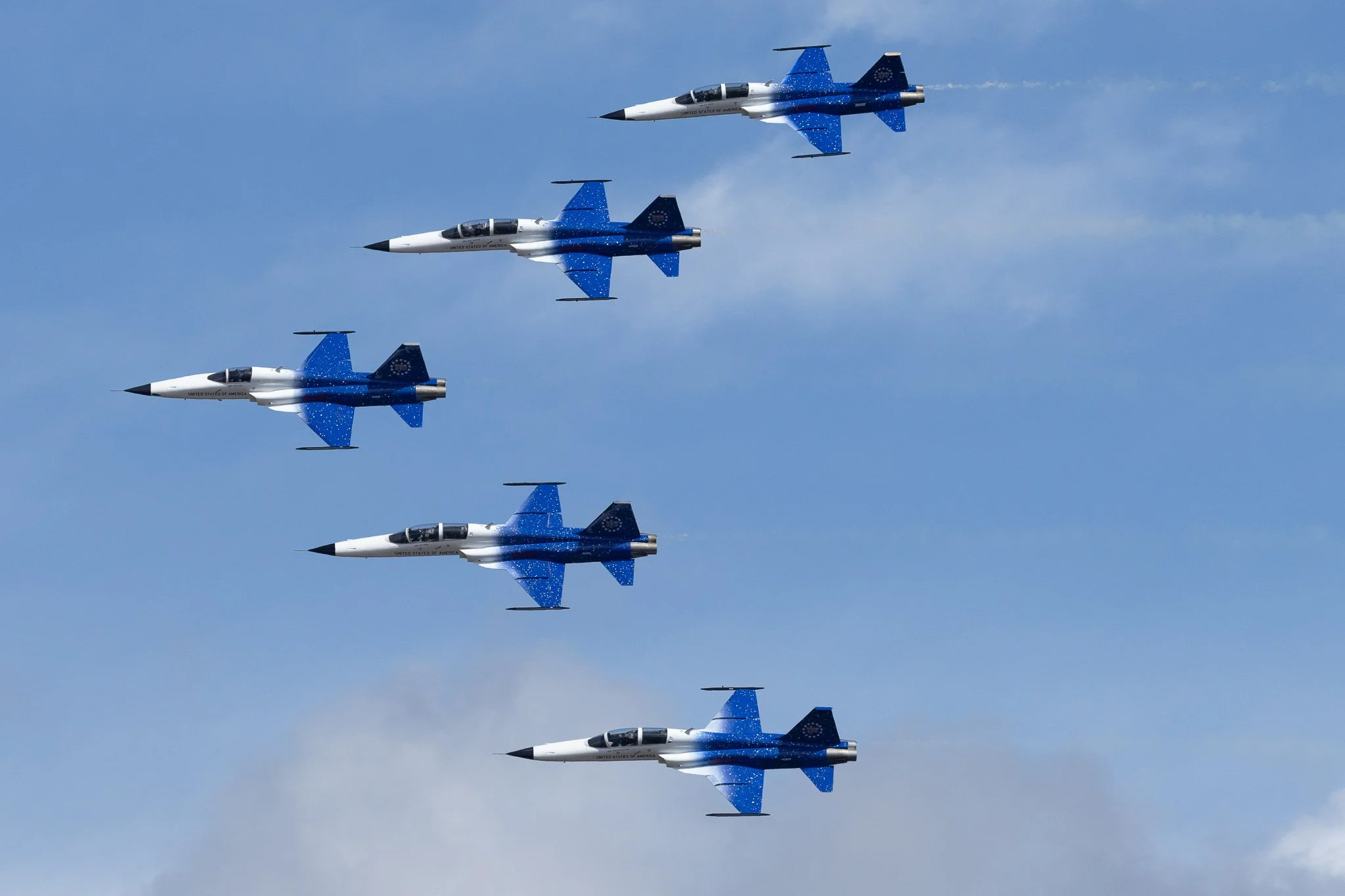
After the MiG-29, the Tiger jets took to the sky. Jared Isaacman, the NASA administrator, flew one of the Northrop F-5 Tiger IIs, which he owns. These were the Freedom 250 team’s jets, created to celebrate America’s 250th birthday, and this was their Wings Over Houston debut.
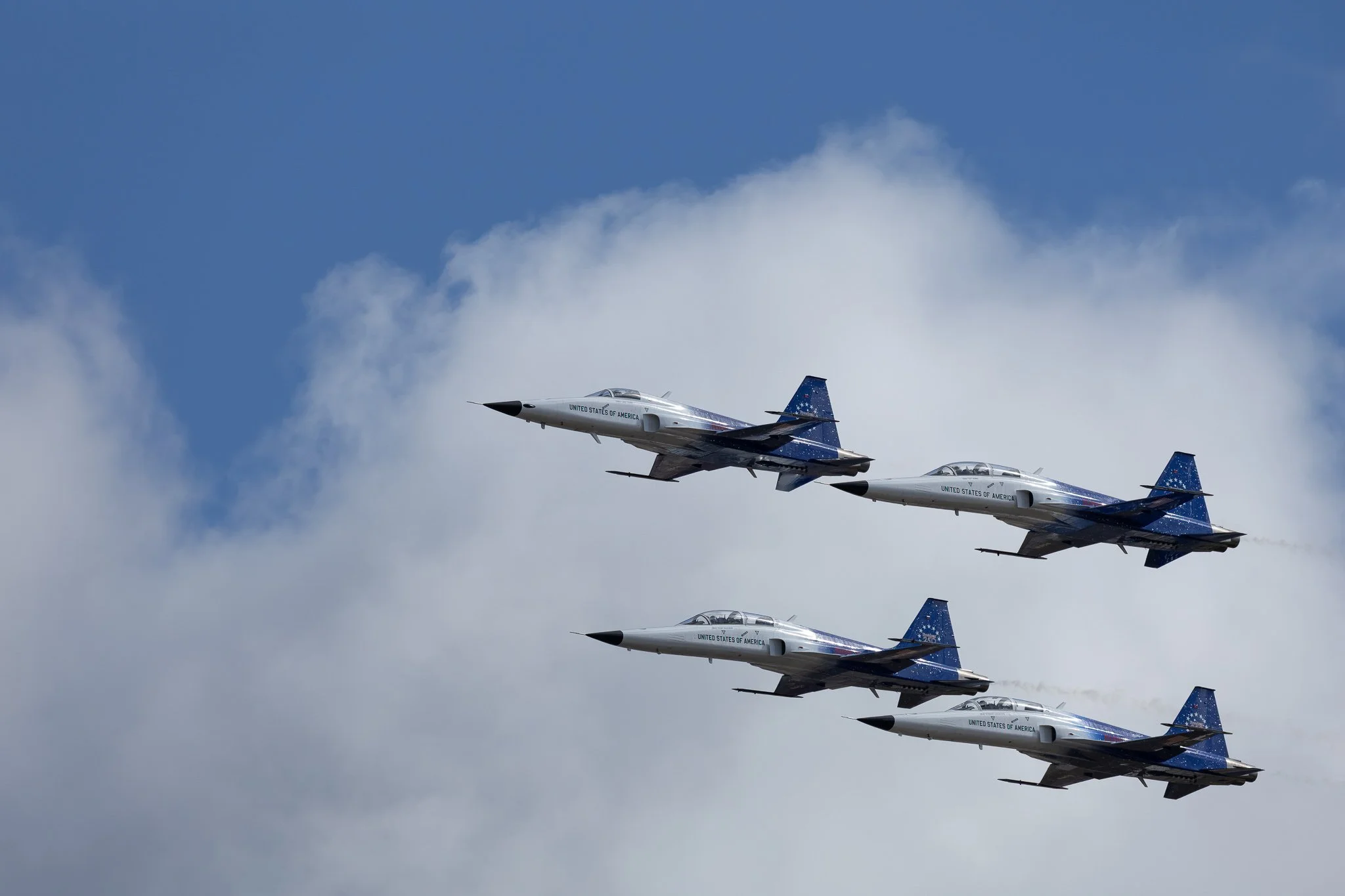
After more than 20 years in corporate IT, I've seen plenty of executives who are good at strategic planning but don't necessarily understand what it takes to execute those plans on the ground. I've come to value people who have firsthand experience and practical skills, not just the ability to tell others what to do.
I don't have to agree with or admire everything about someone to recognize a skill set I respect. In this case, the ability to fly fighter jets earned Isaacman more respect from me than he had before.
The NextGen Eagles and a United 777
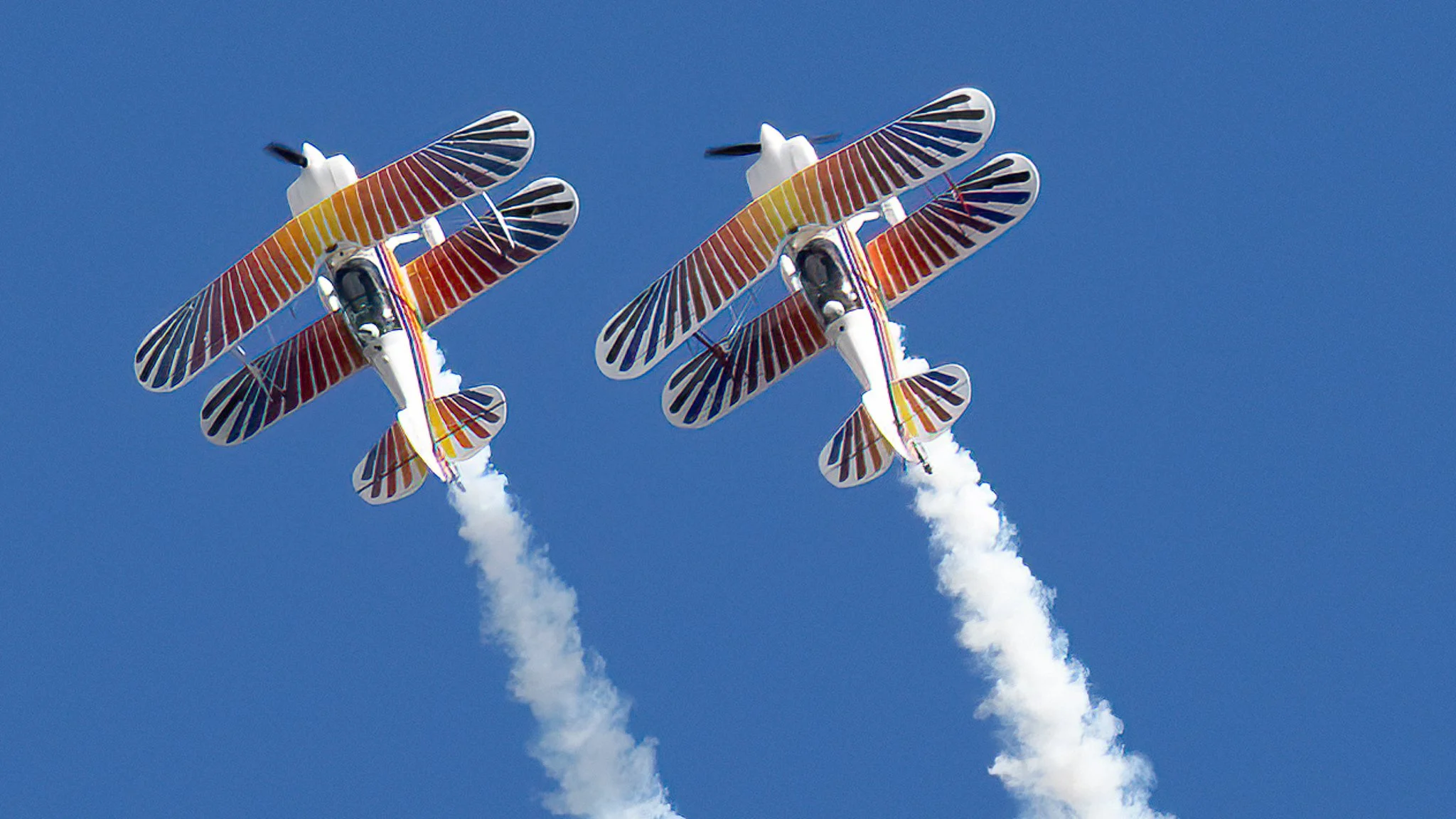
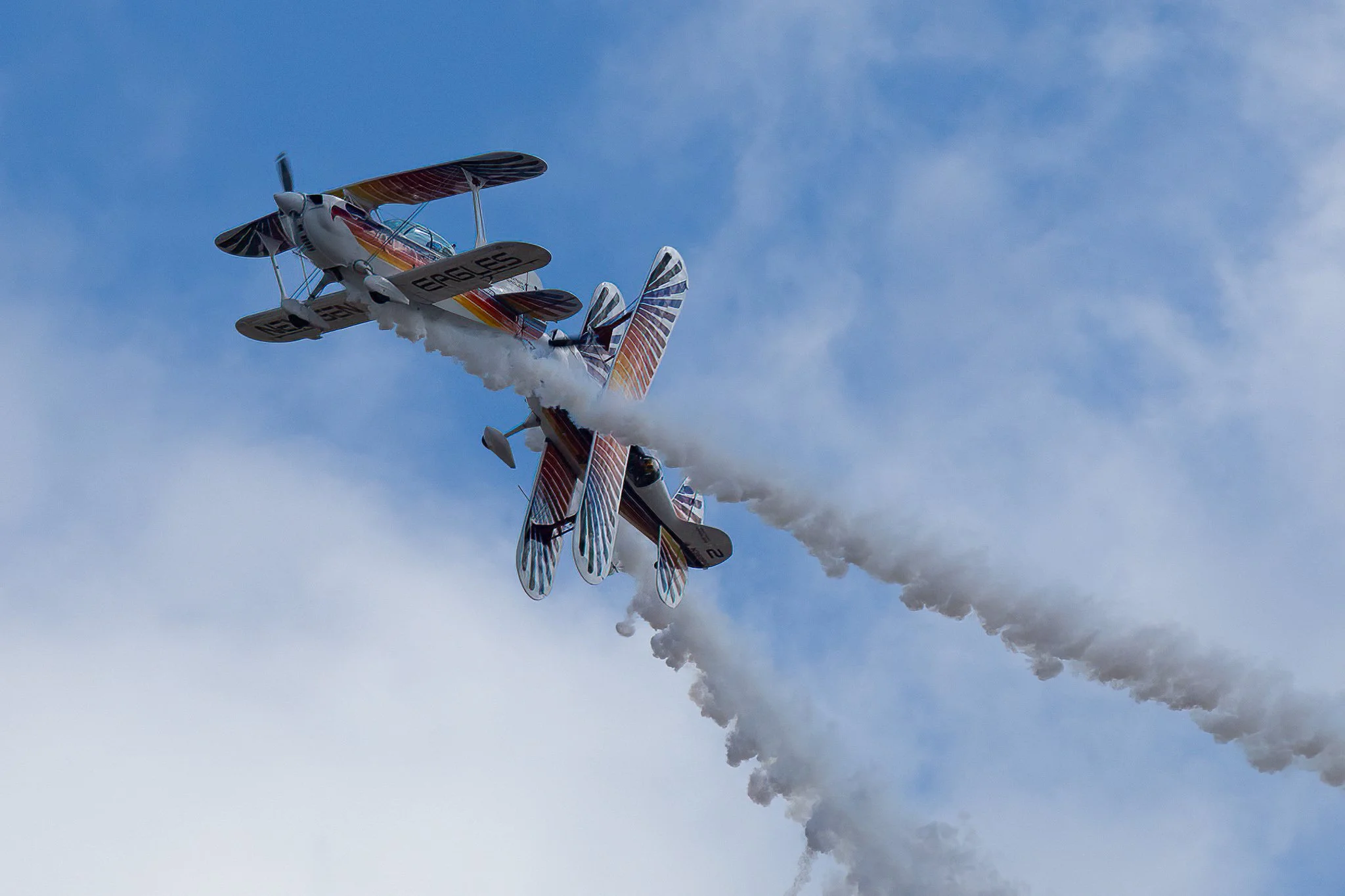
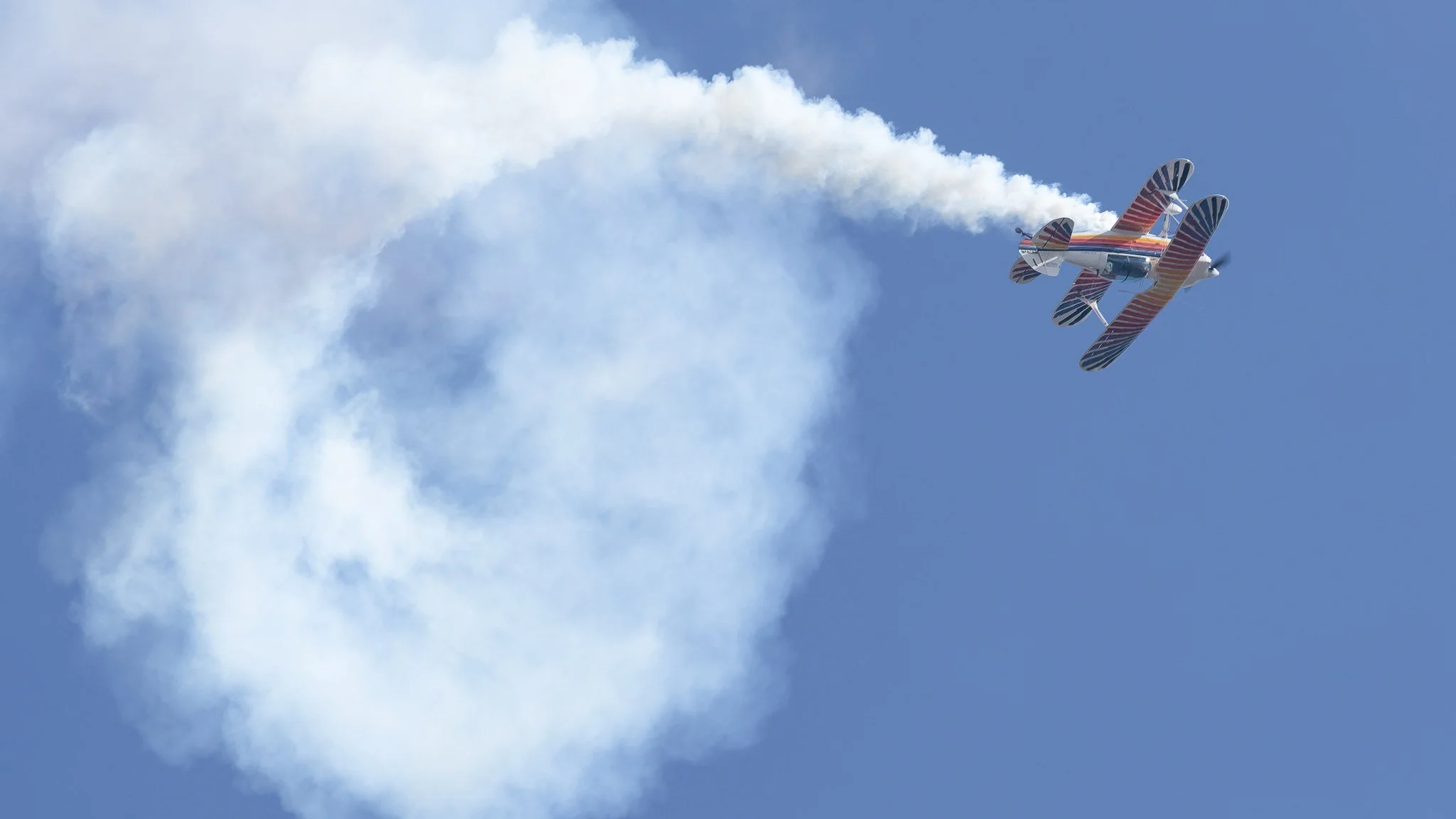
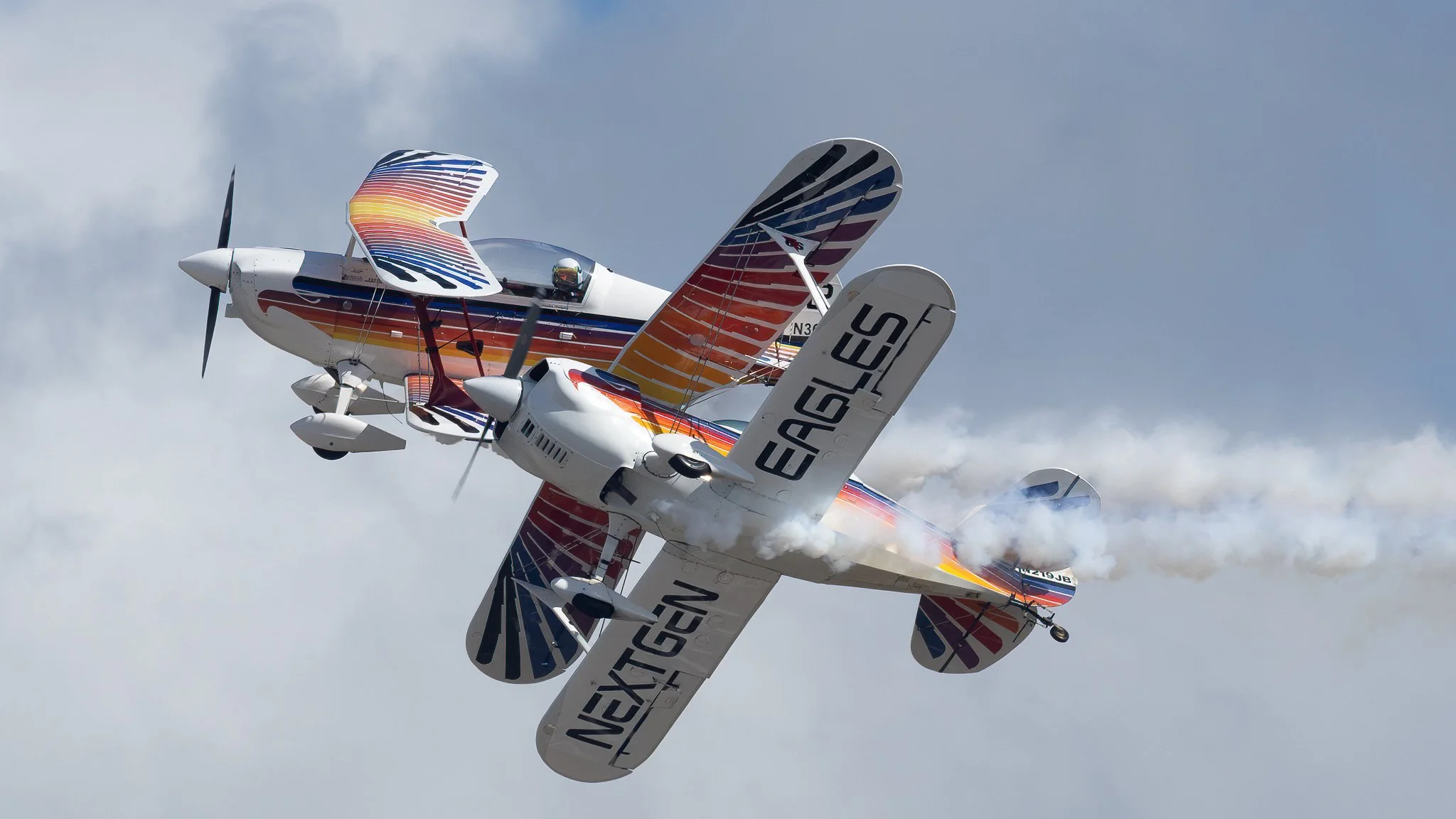
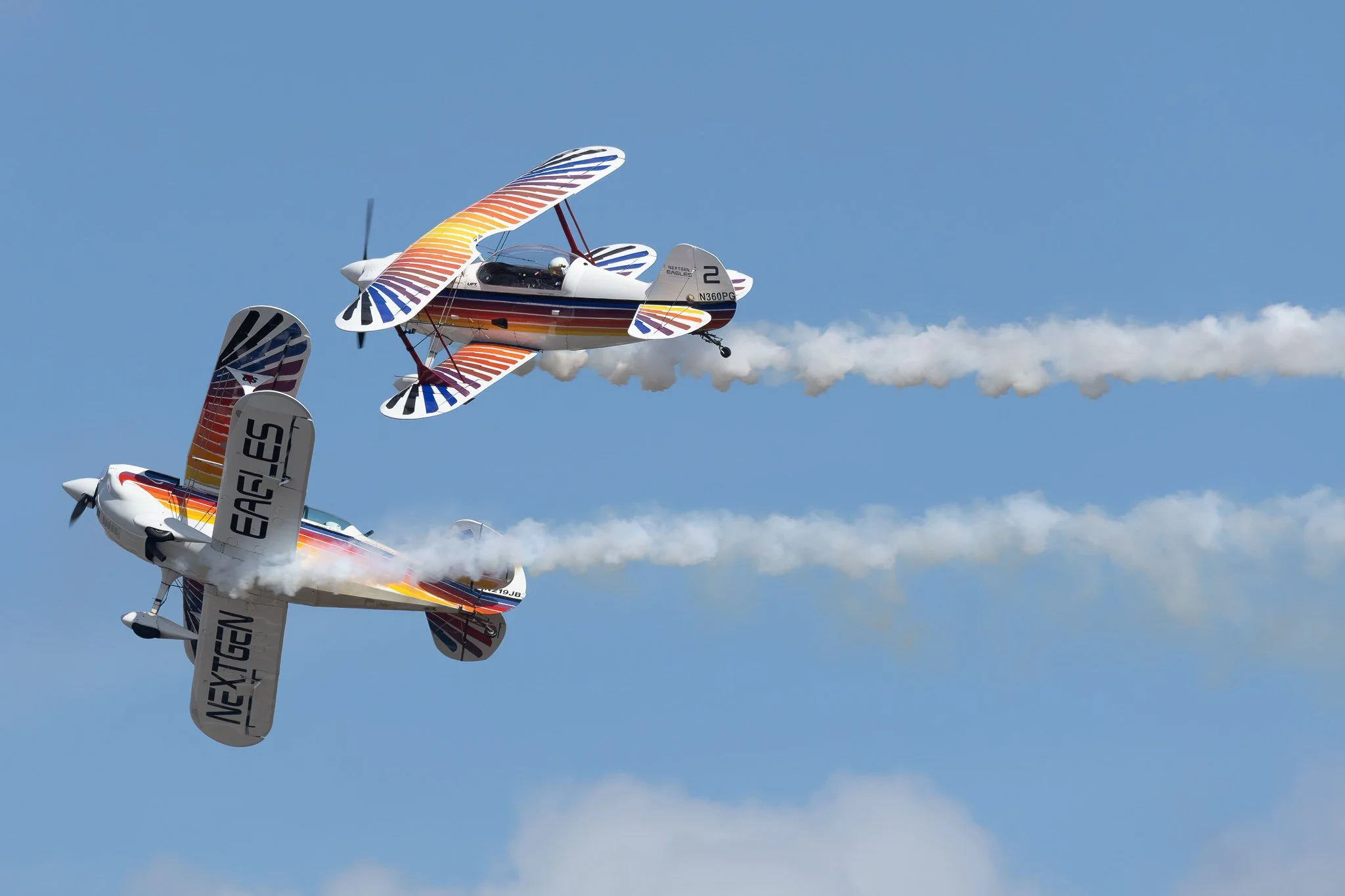
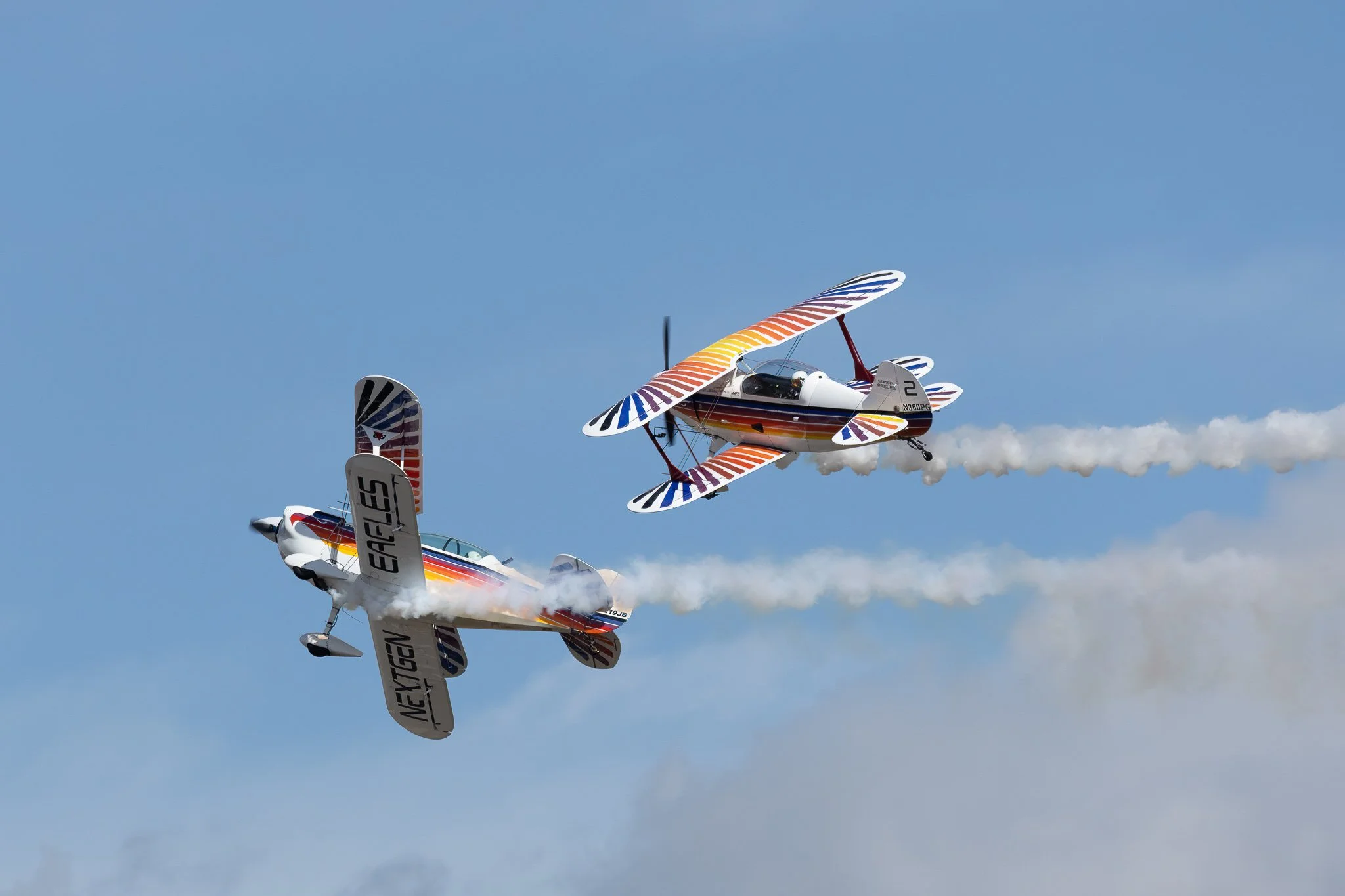
I always enjoy watching the NextGen Eagles. Their brightly colored biplanes and impressive aerobatics make them a pleasure to watch. There's something about seeing those planes twist, turn, and maneuver through the sky that never gets old.
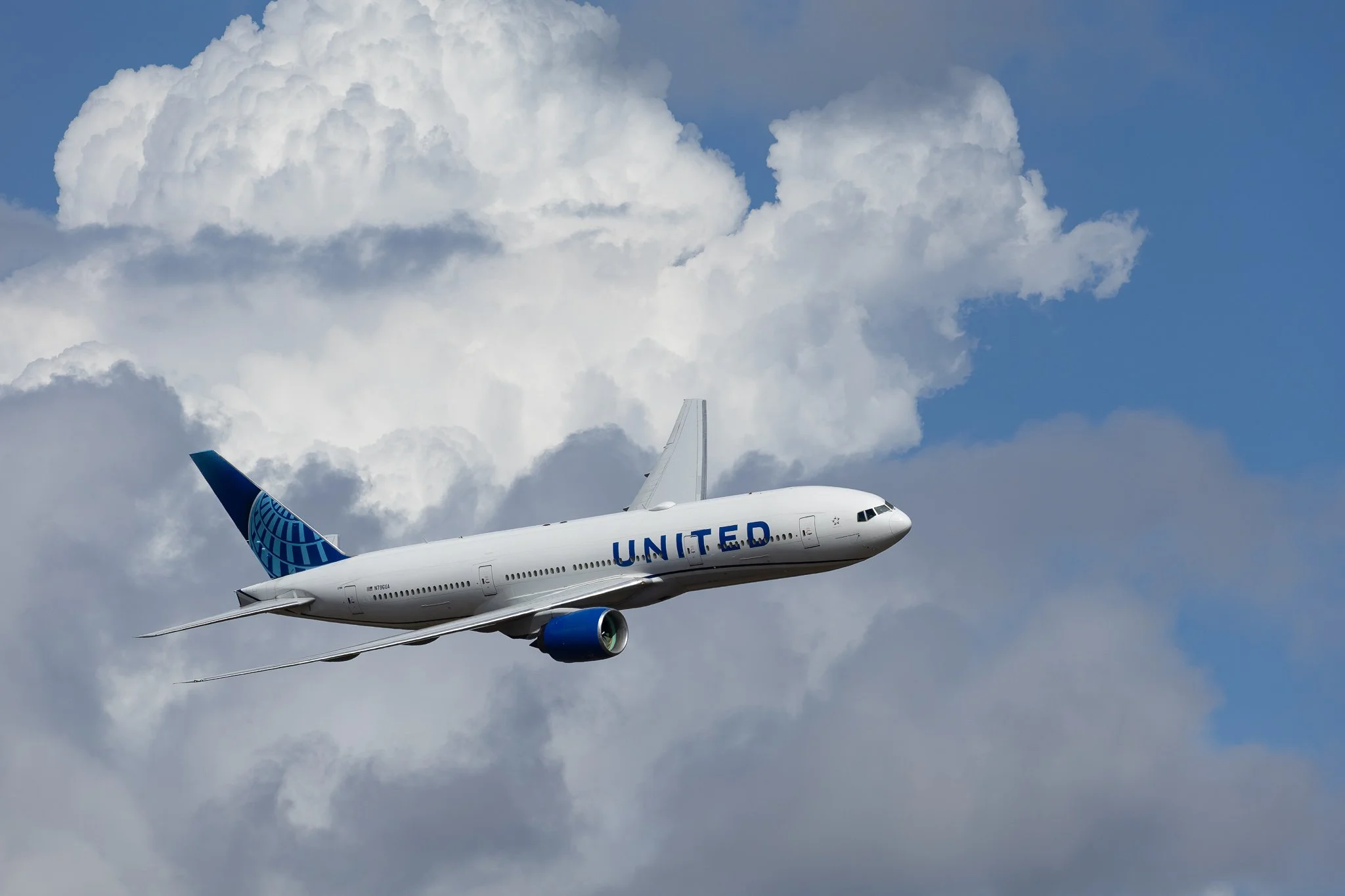
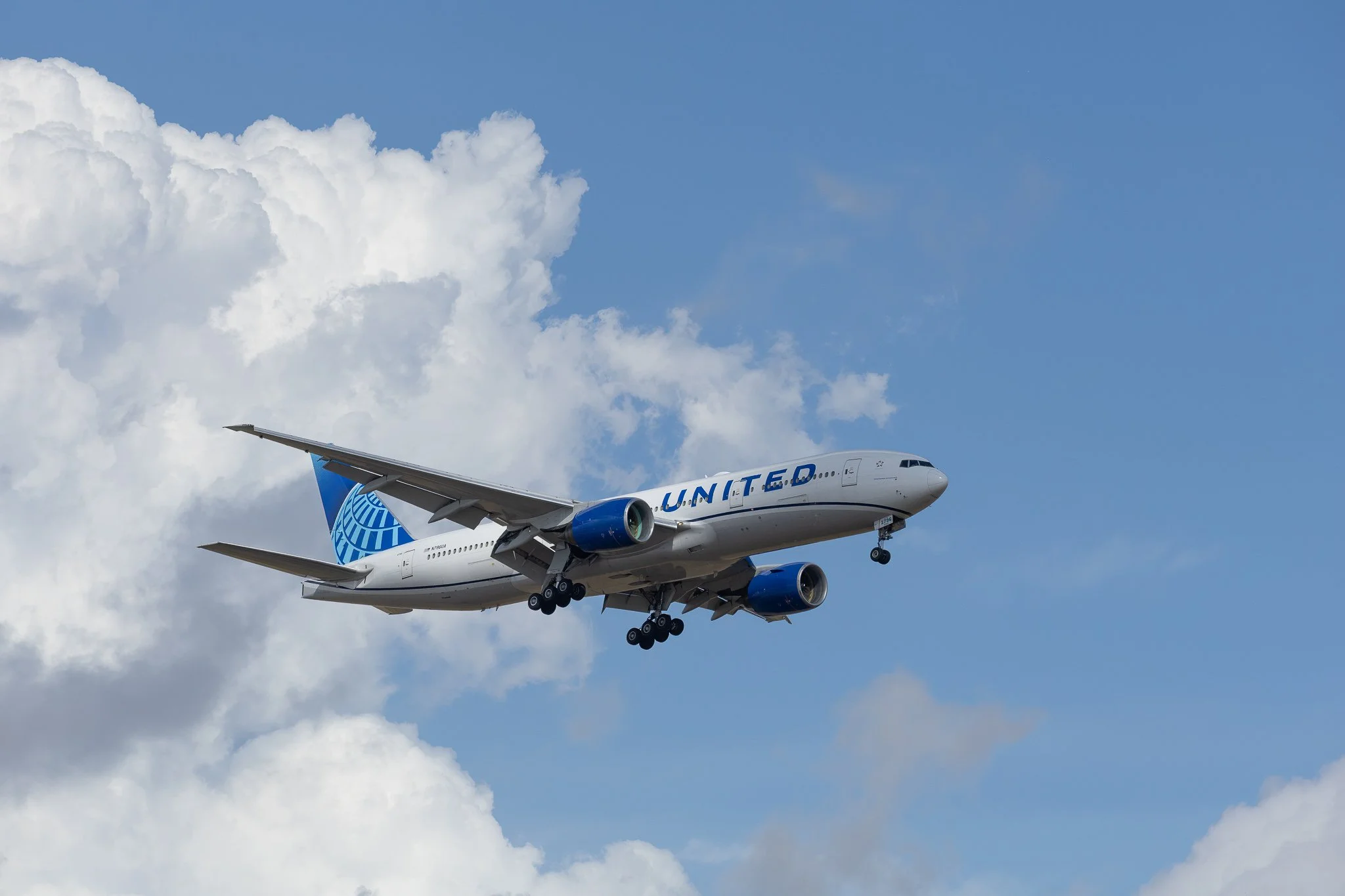
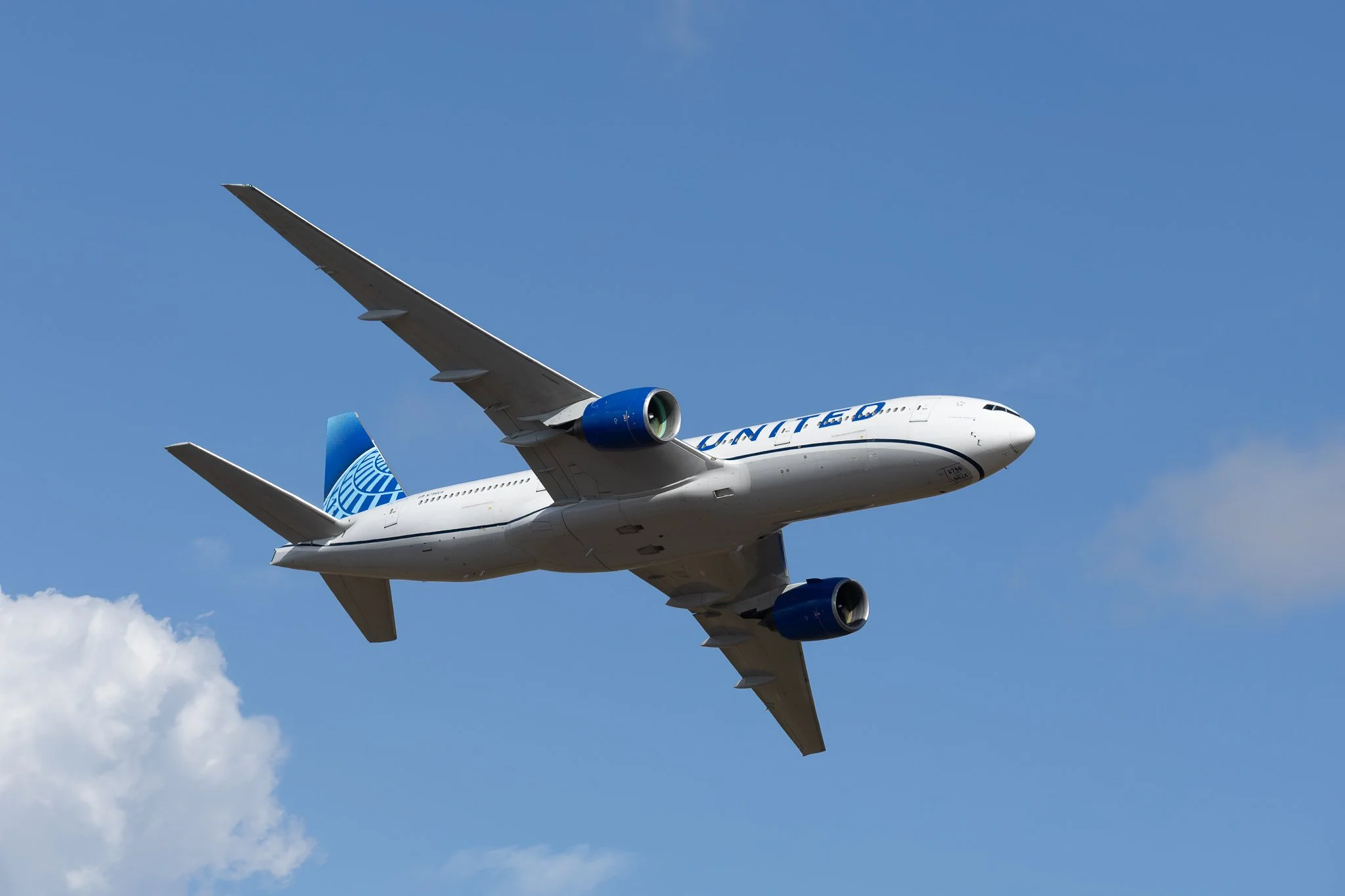
Then came the United Airlines Boeing 777, which demonstrated just how maneuverable a commercial airliner can be.
Watching it approach from a distance, you find yourself thinking, My goodness, it's going to take forever to get here! But as the aircraft enters the main flying area, your perspective changes. The sheer power of its engines and the speed at which this enormous aircraft moves are incredible. It's a reminder that even a plane designed to carry hundreds of passengers can put on quite a show.
Give Me Jets!
Now, jets are more my thing.
I love their speed, power, and the sheer force of their presence. When a jet tears across the sky, you don't just see it—you feel it.
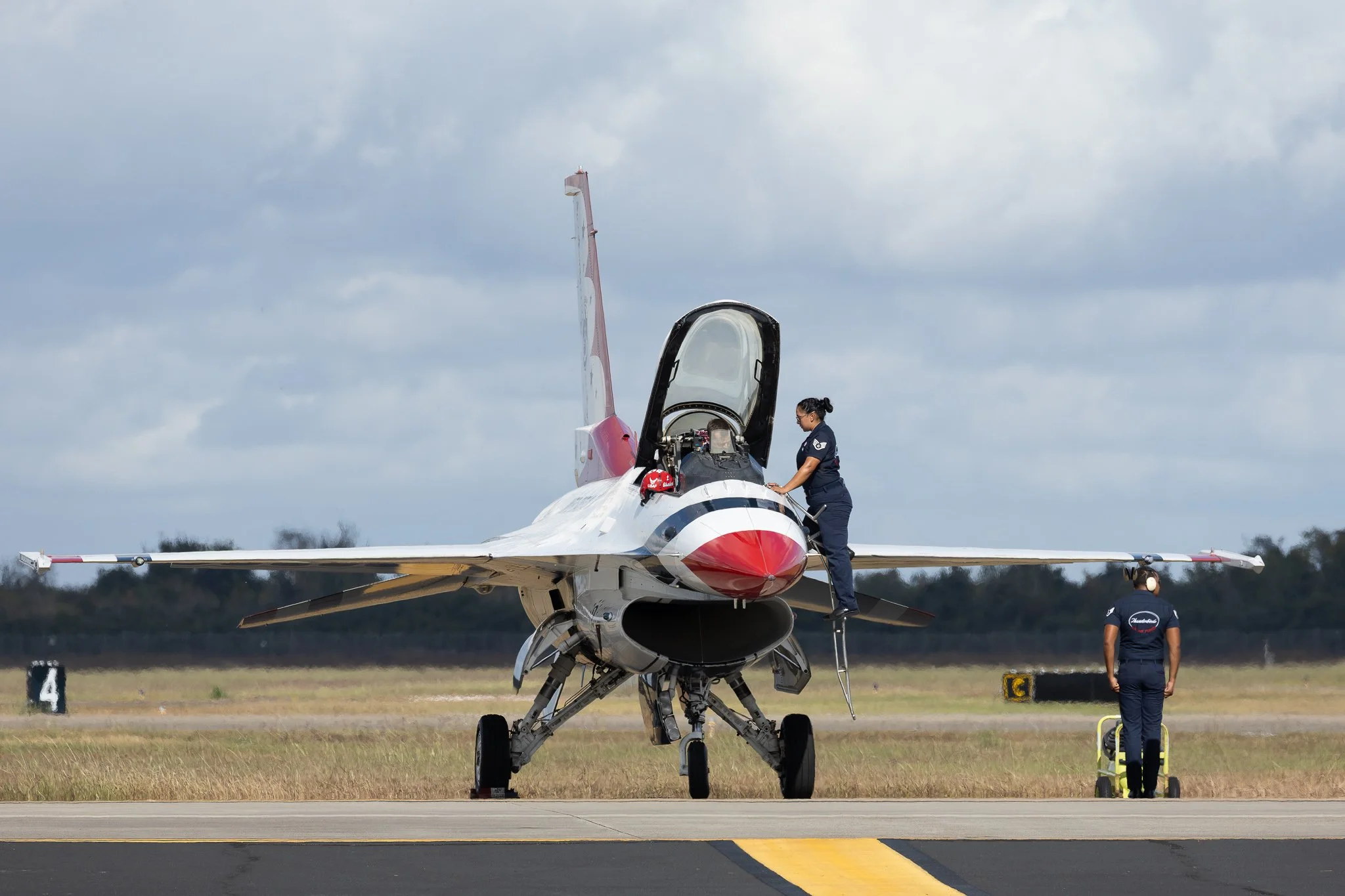
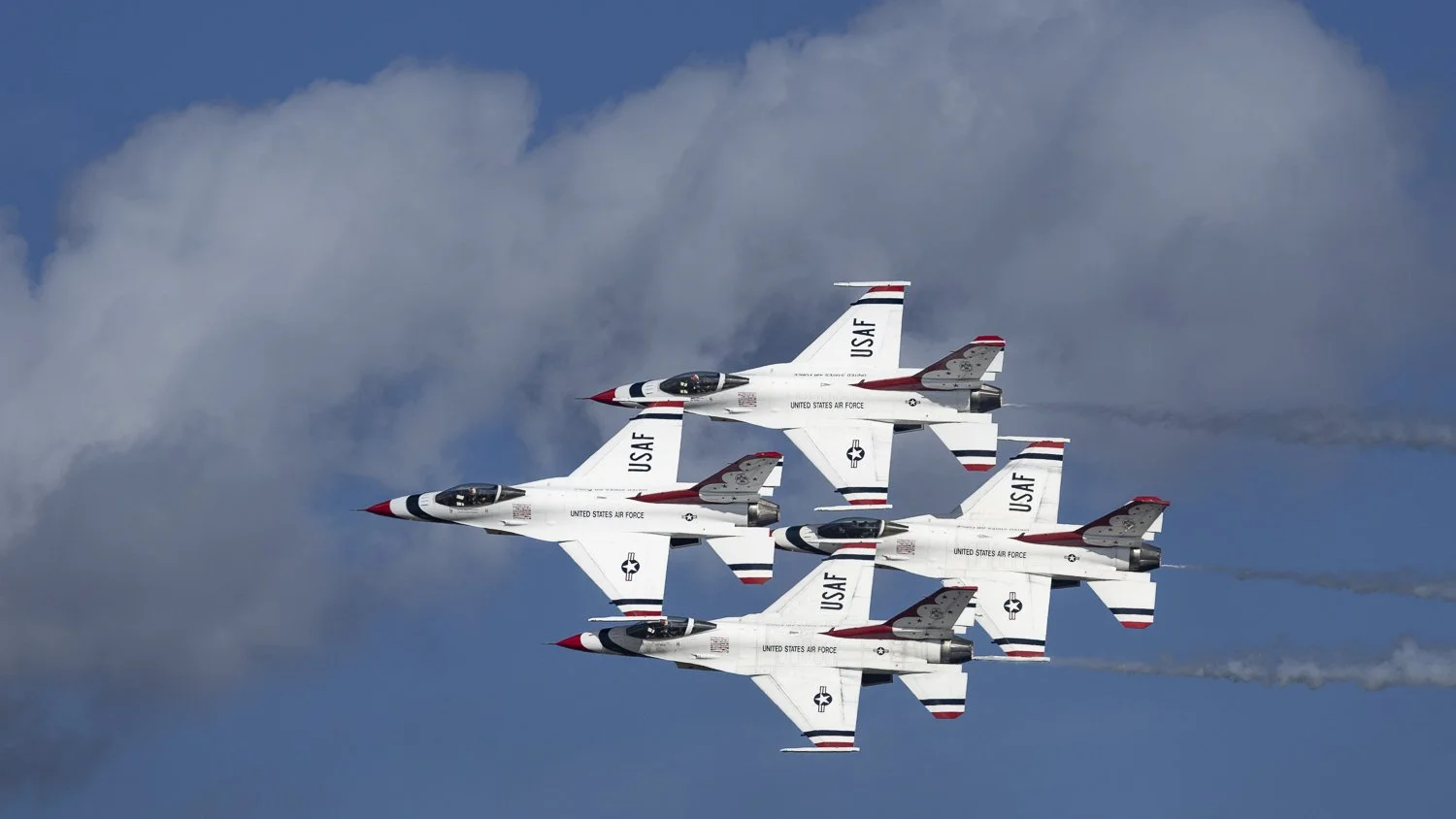
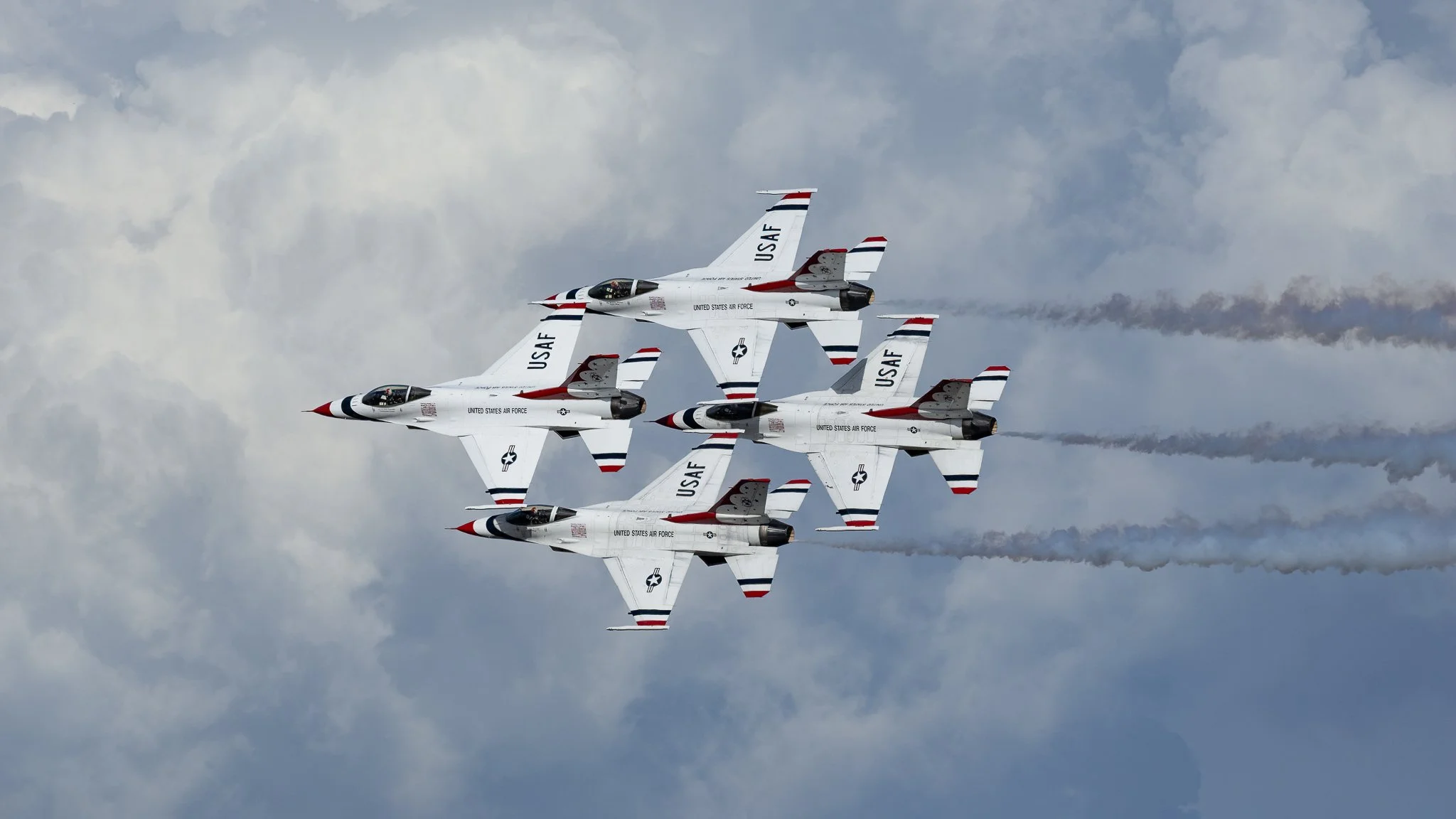
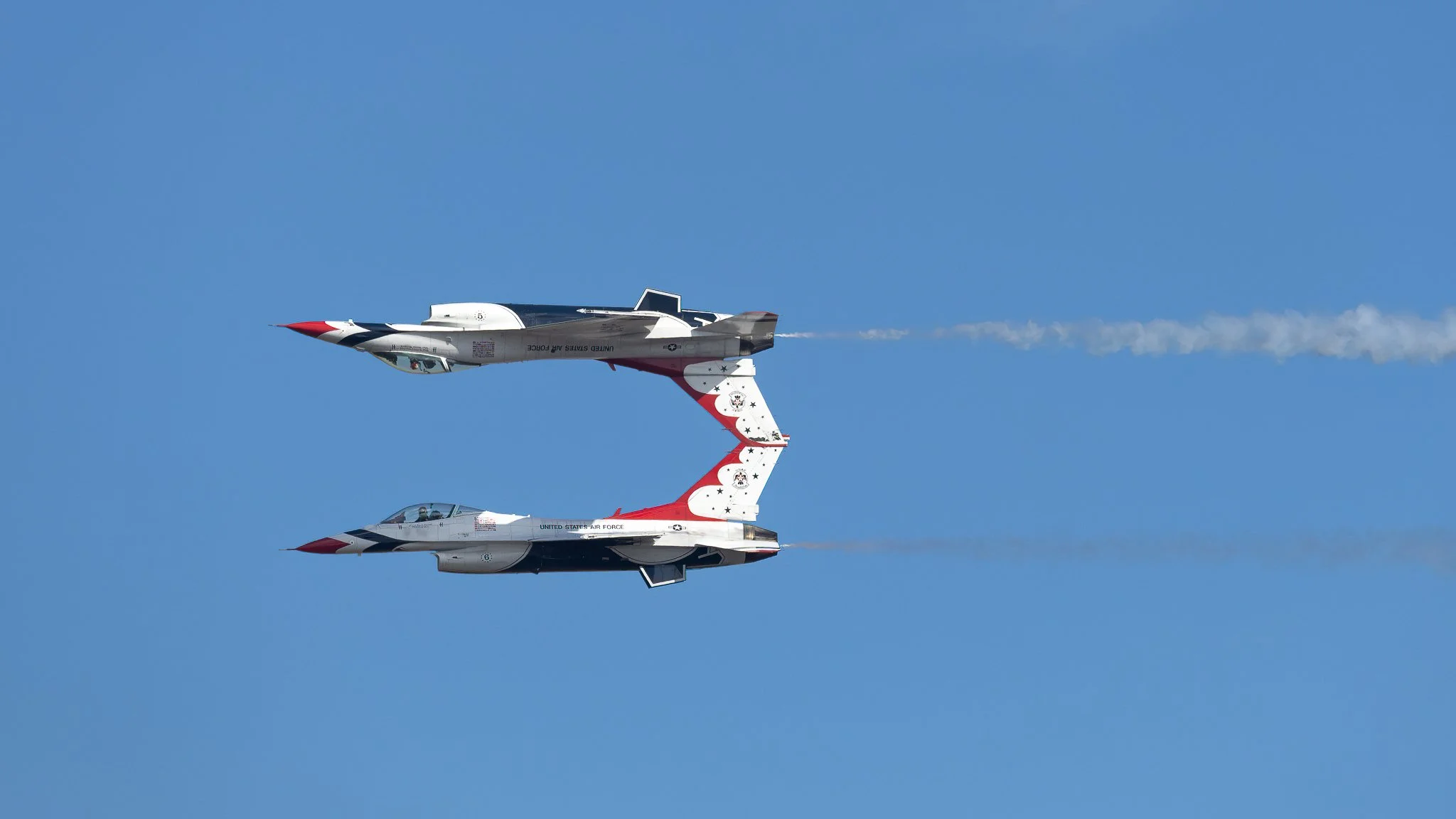
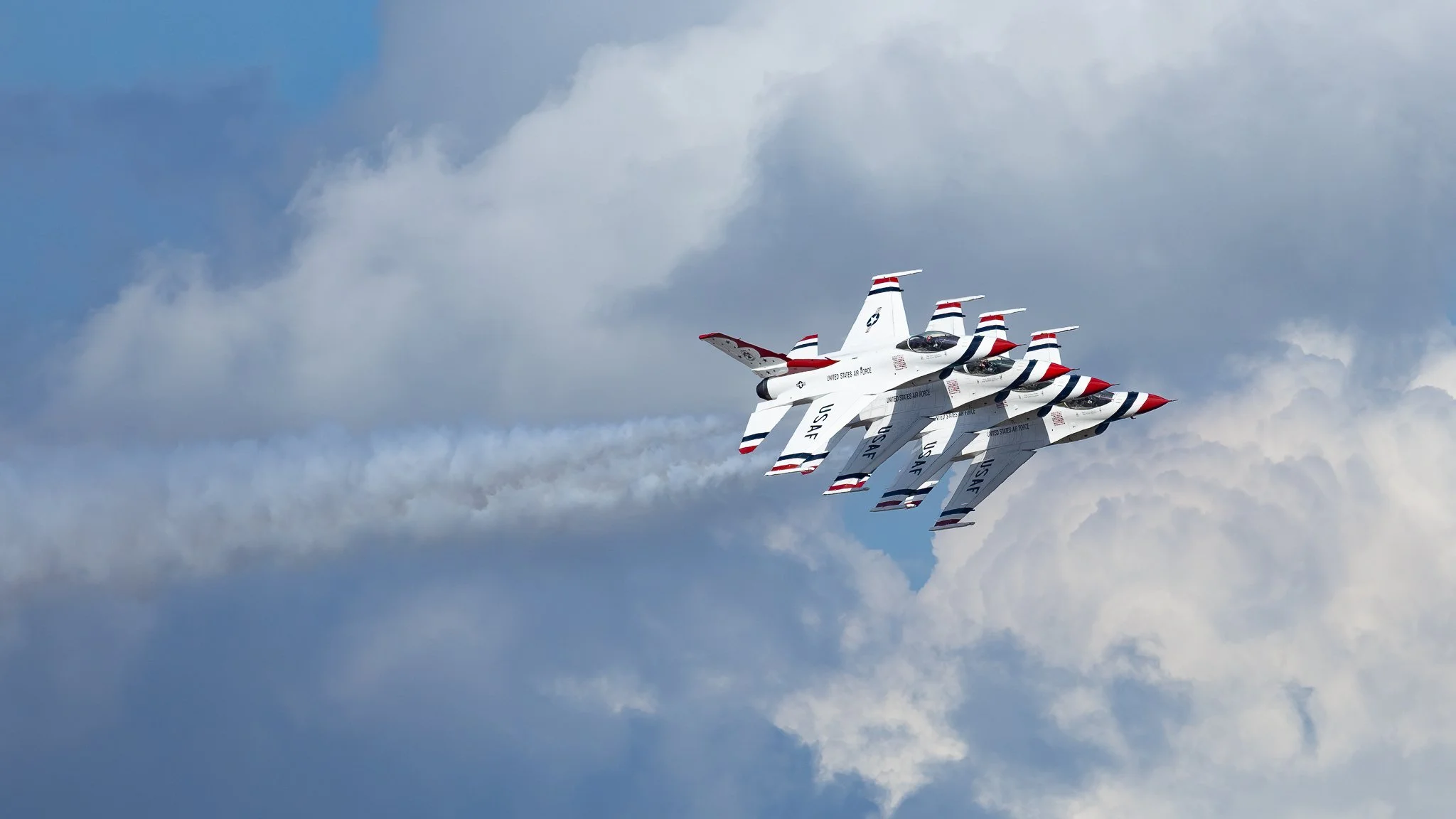
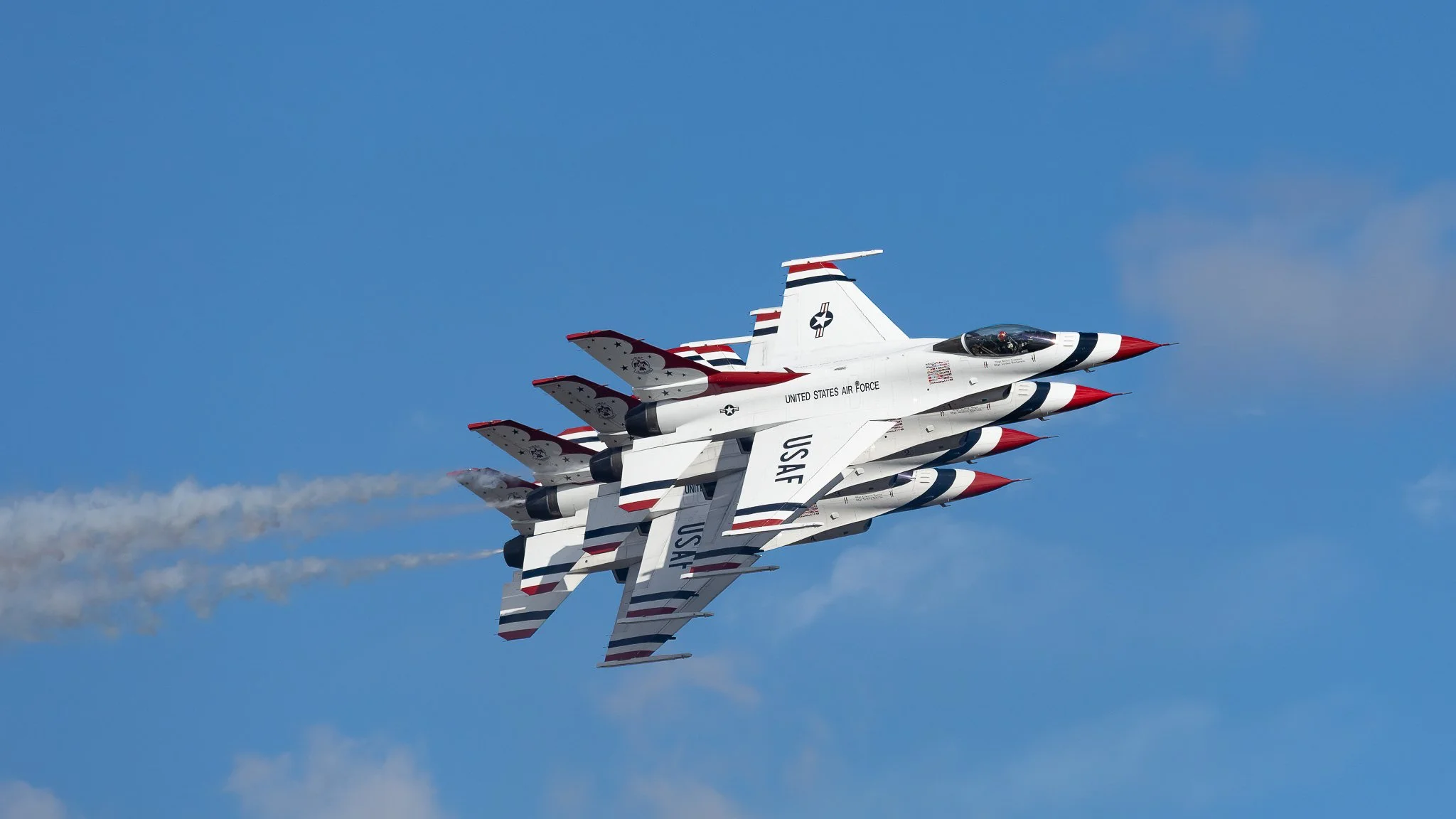
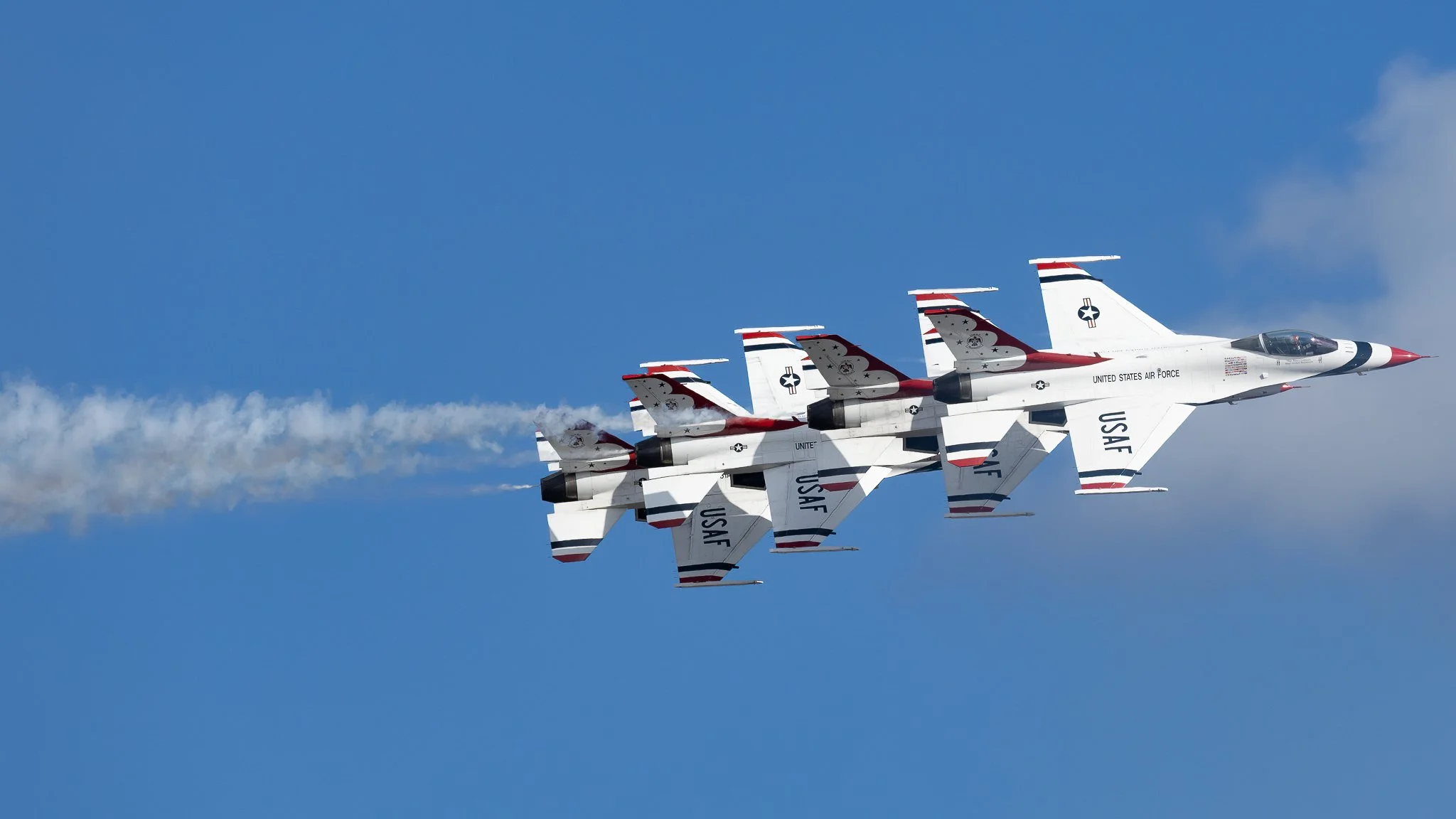
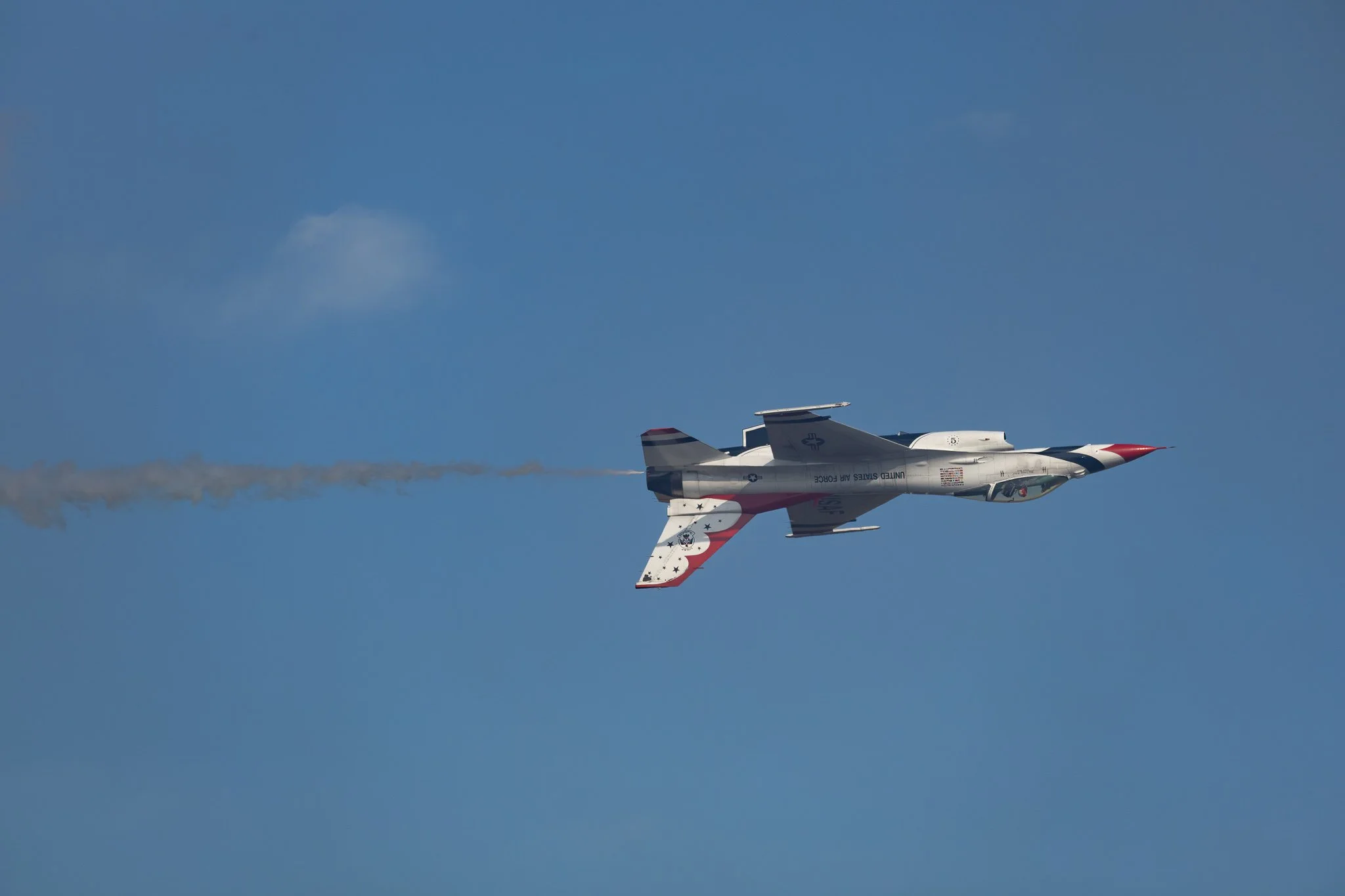
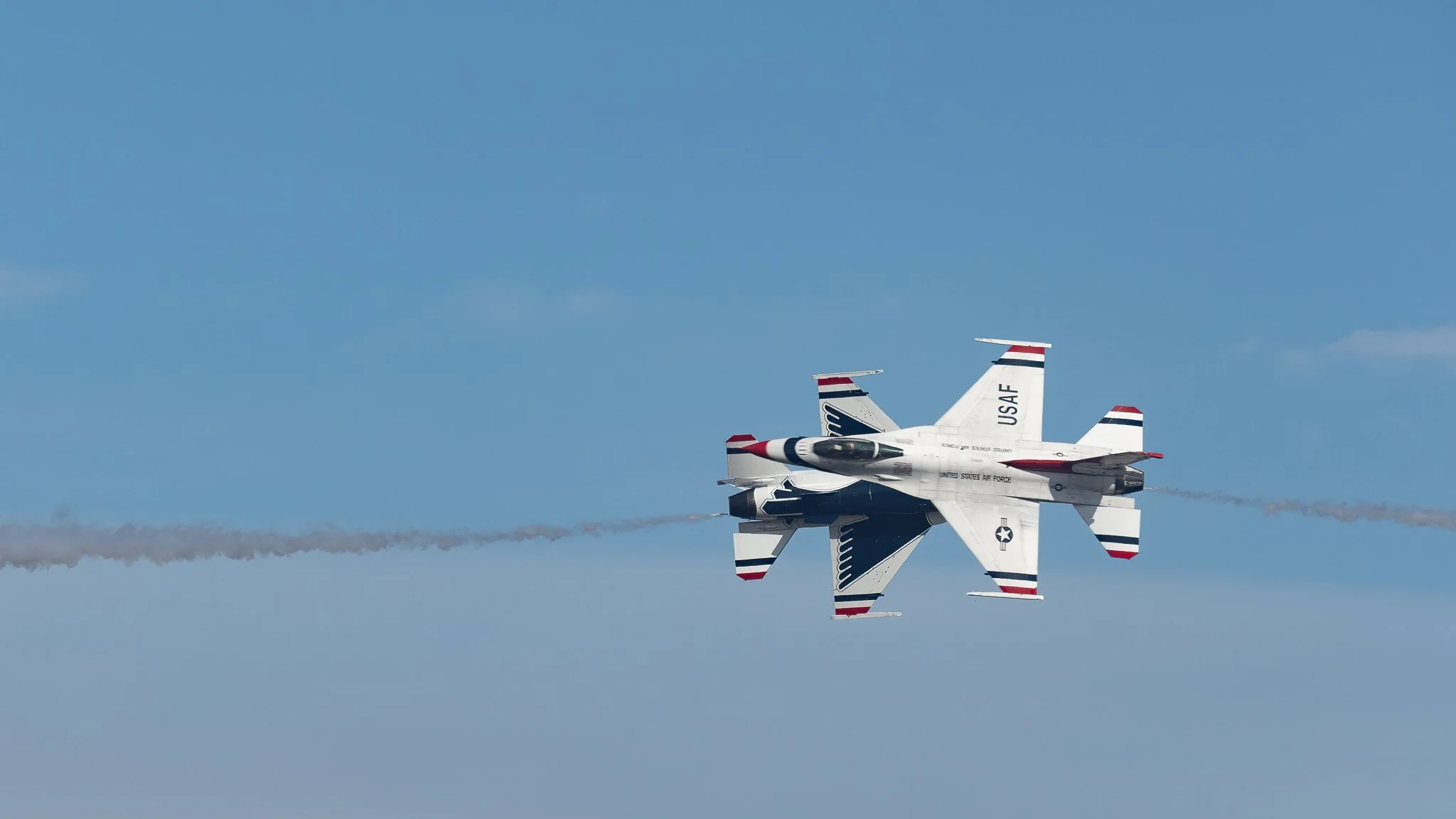
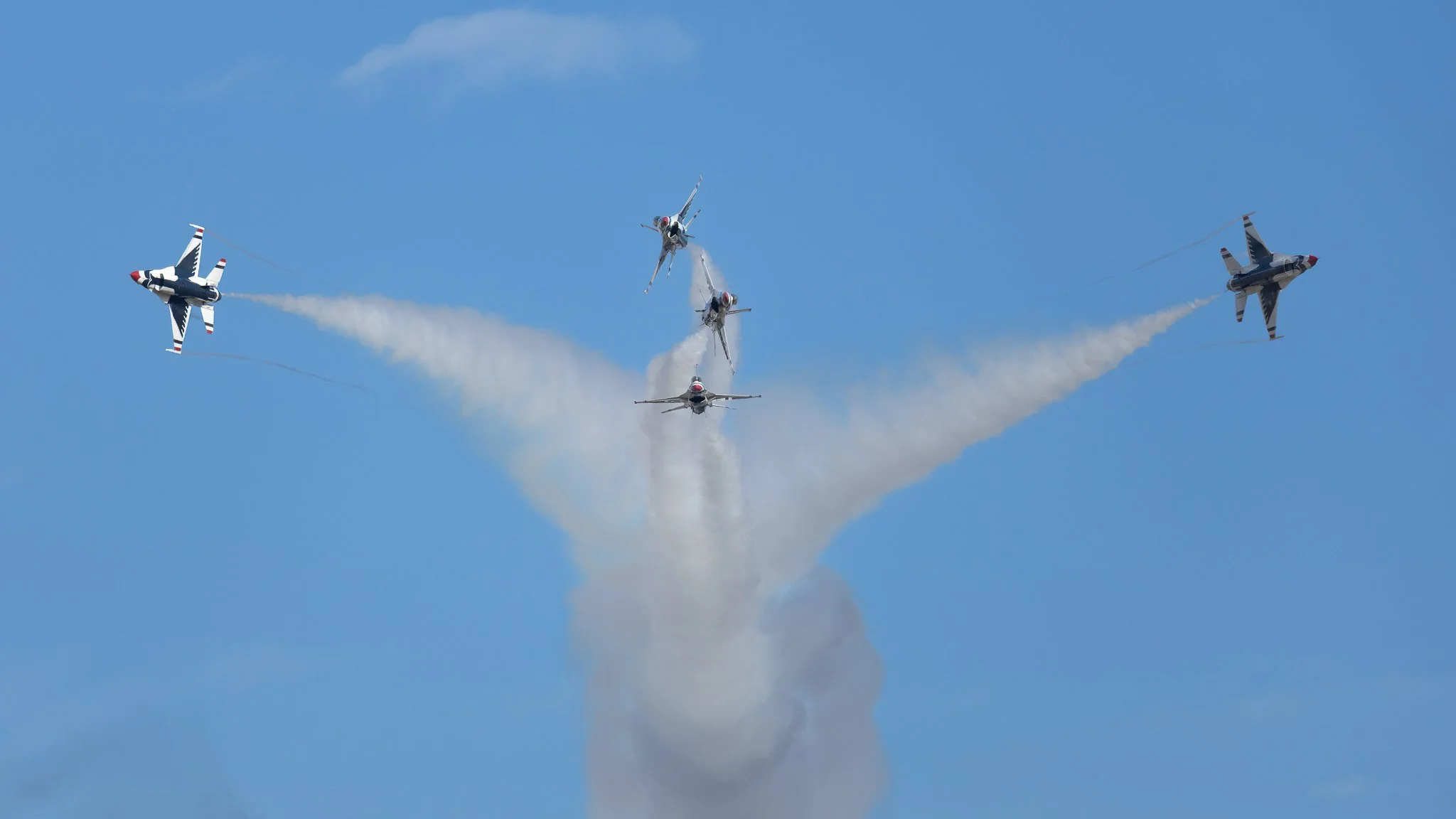
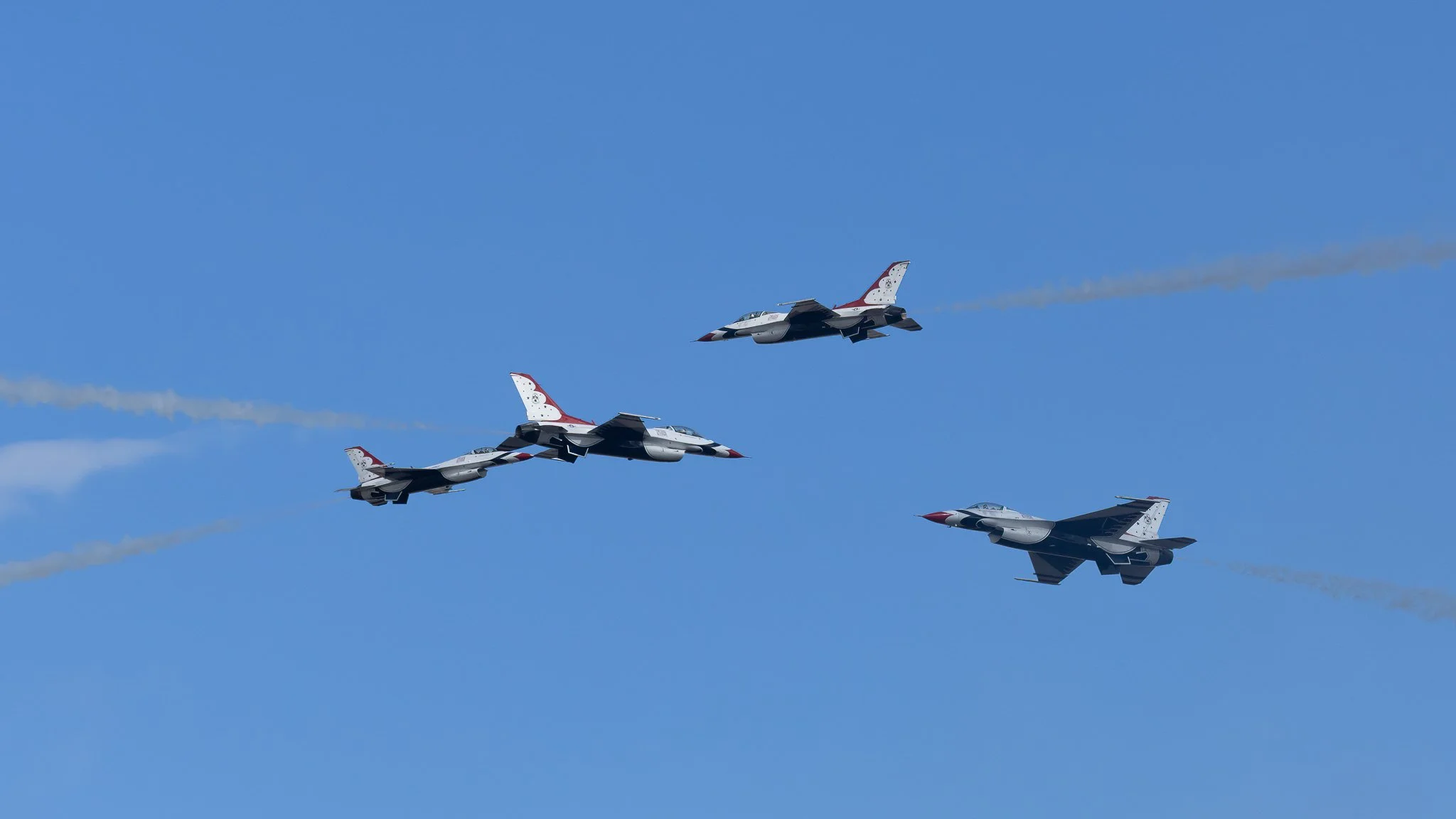
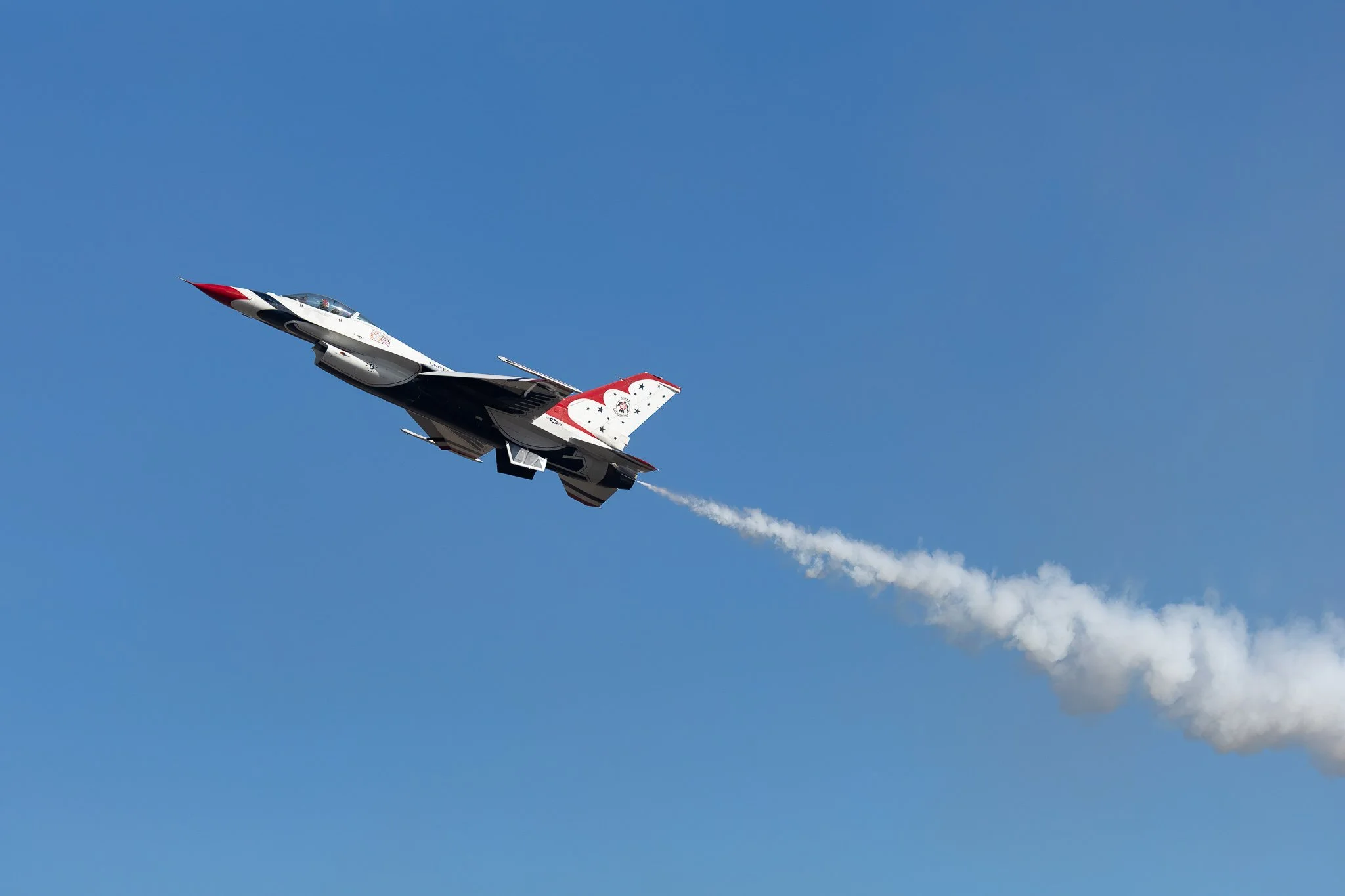
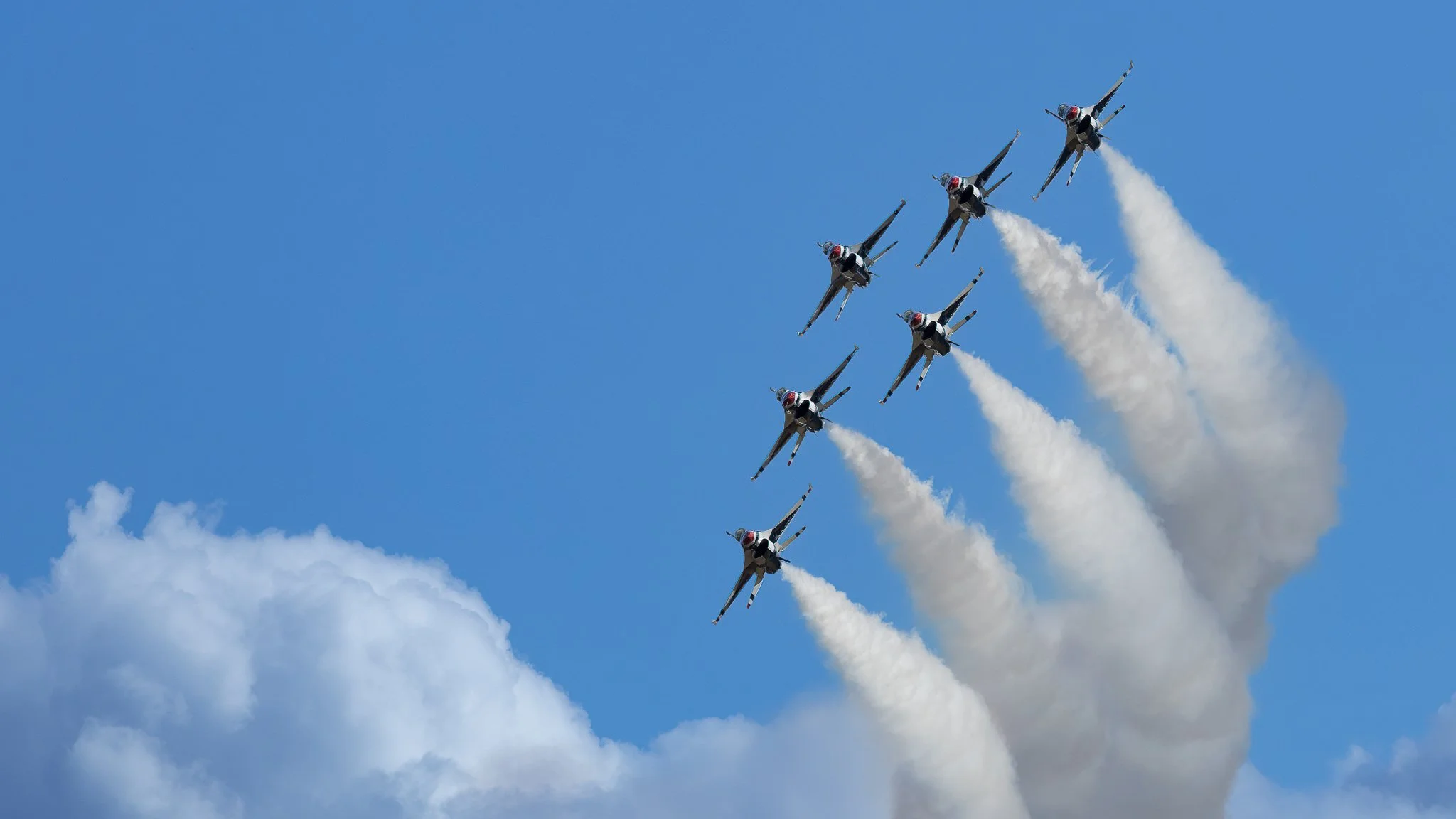
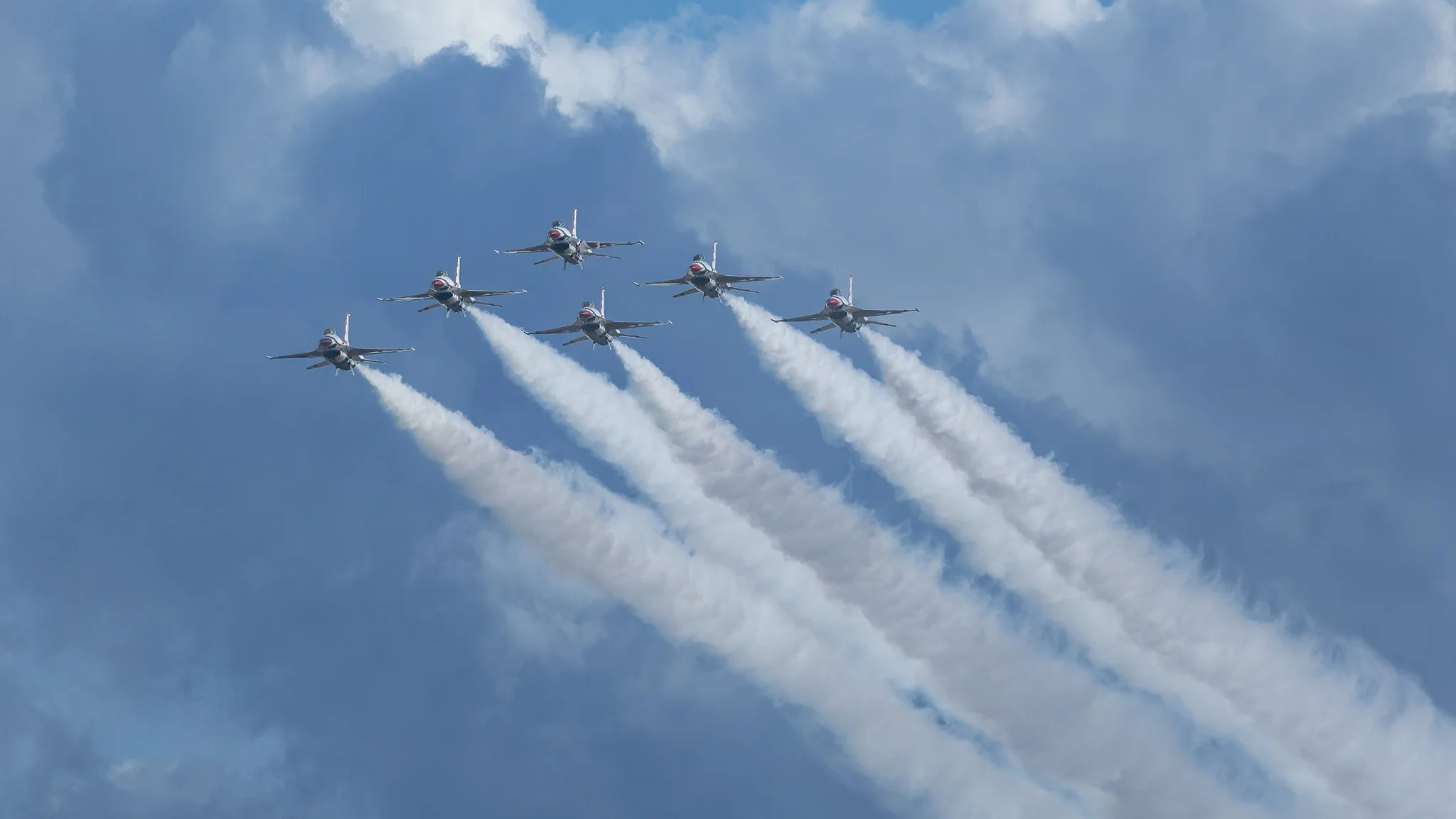
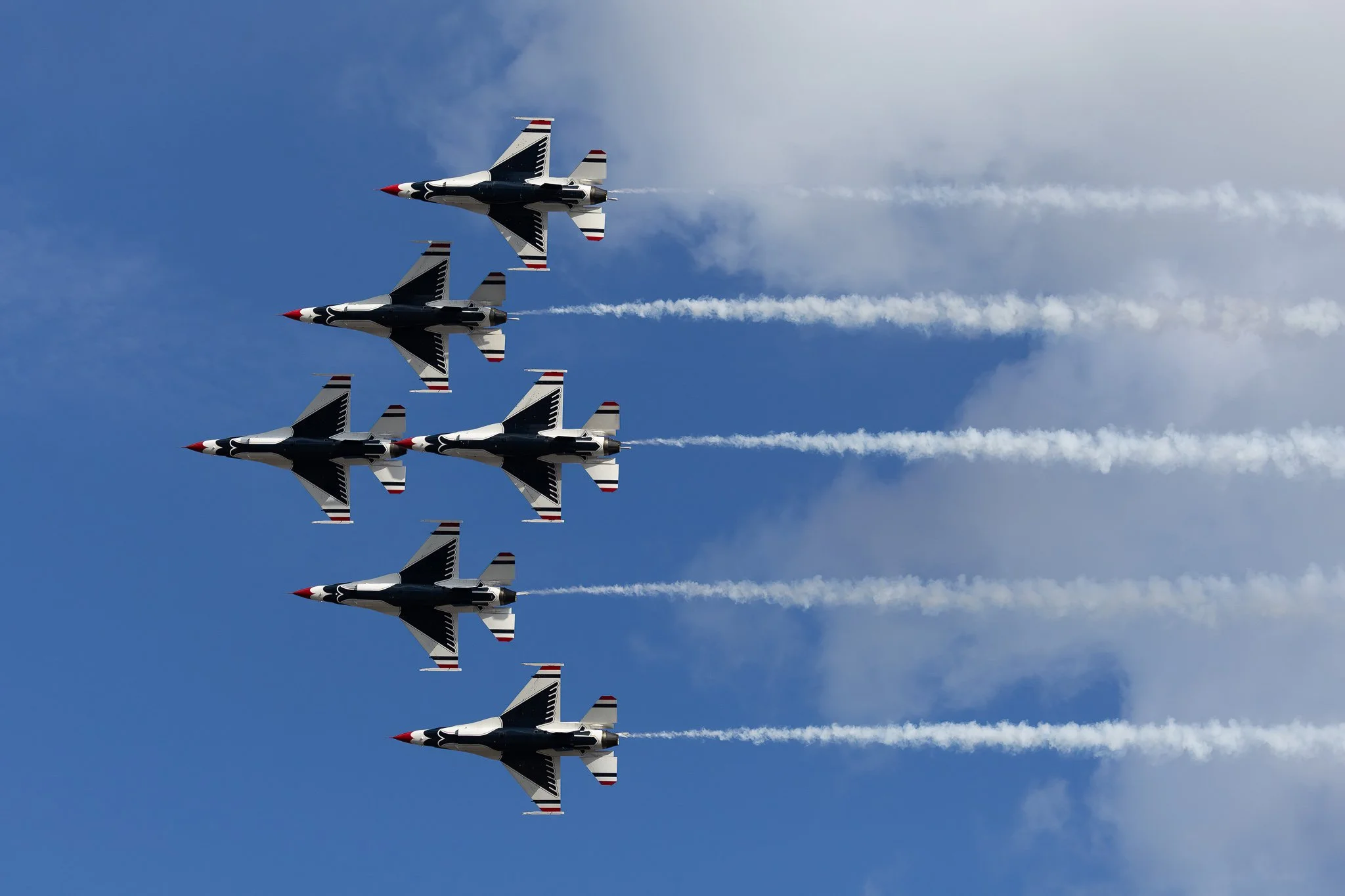
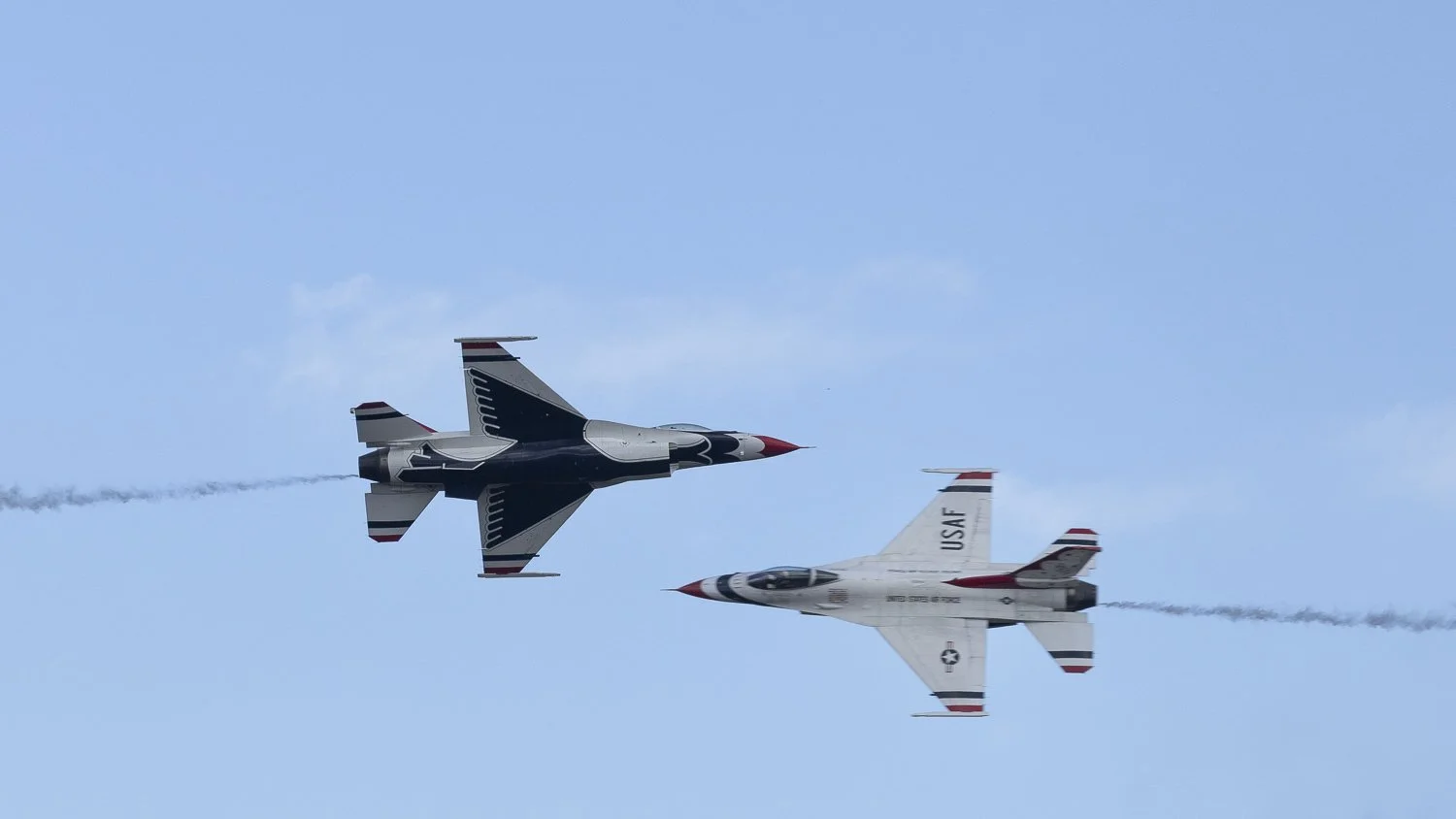
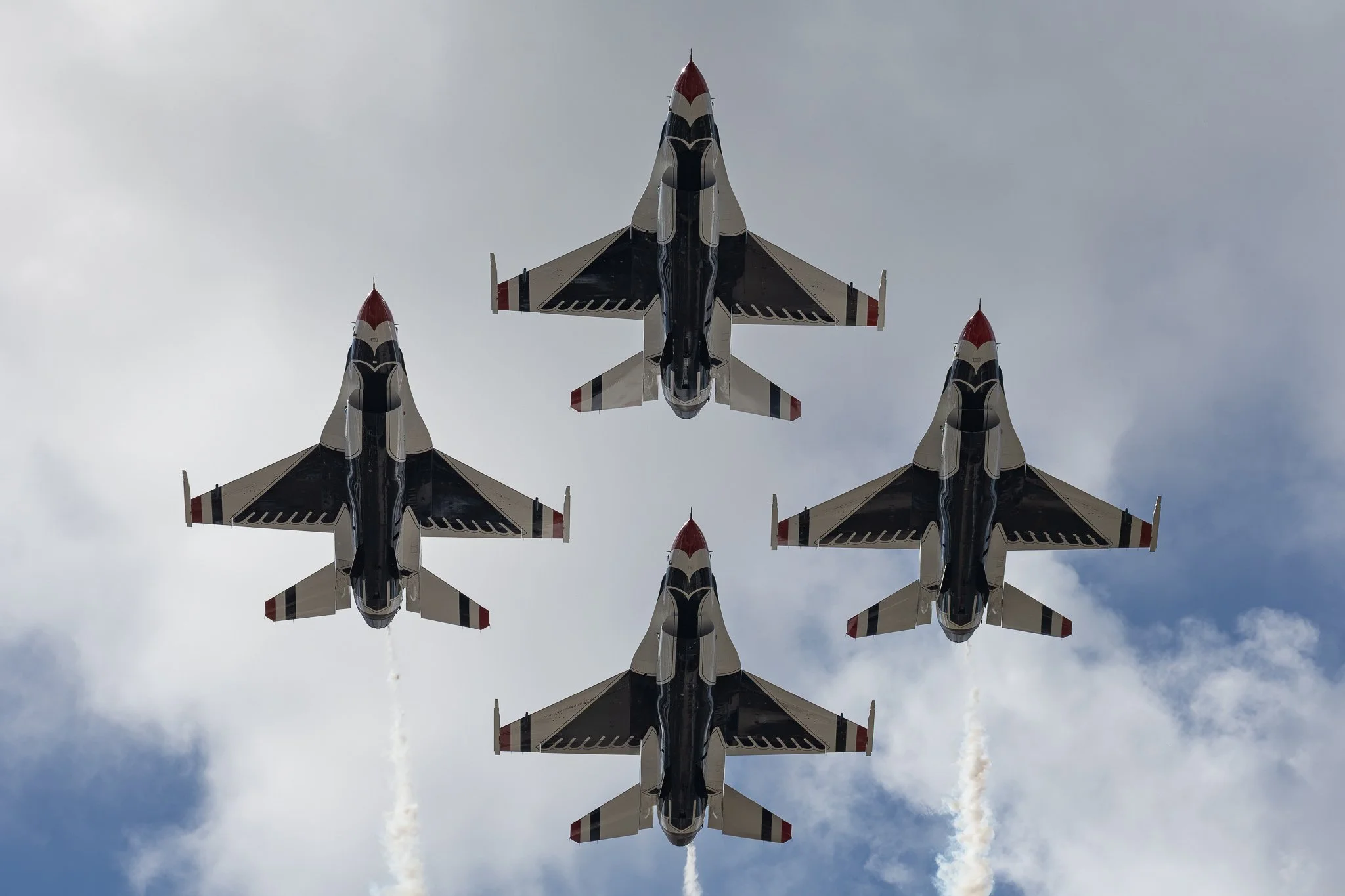
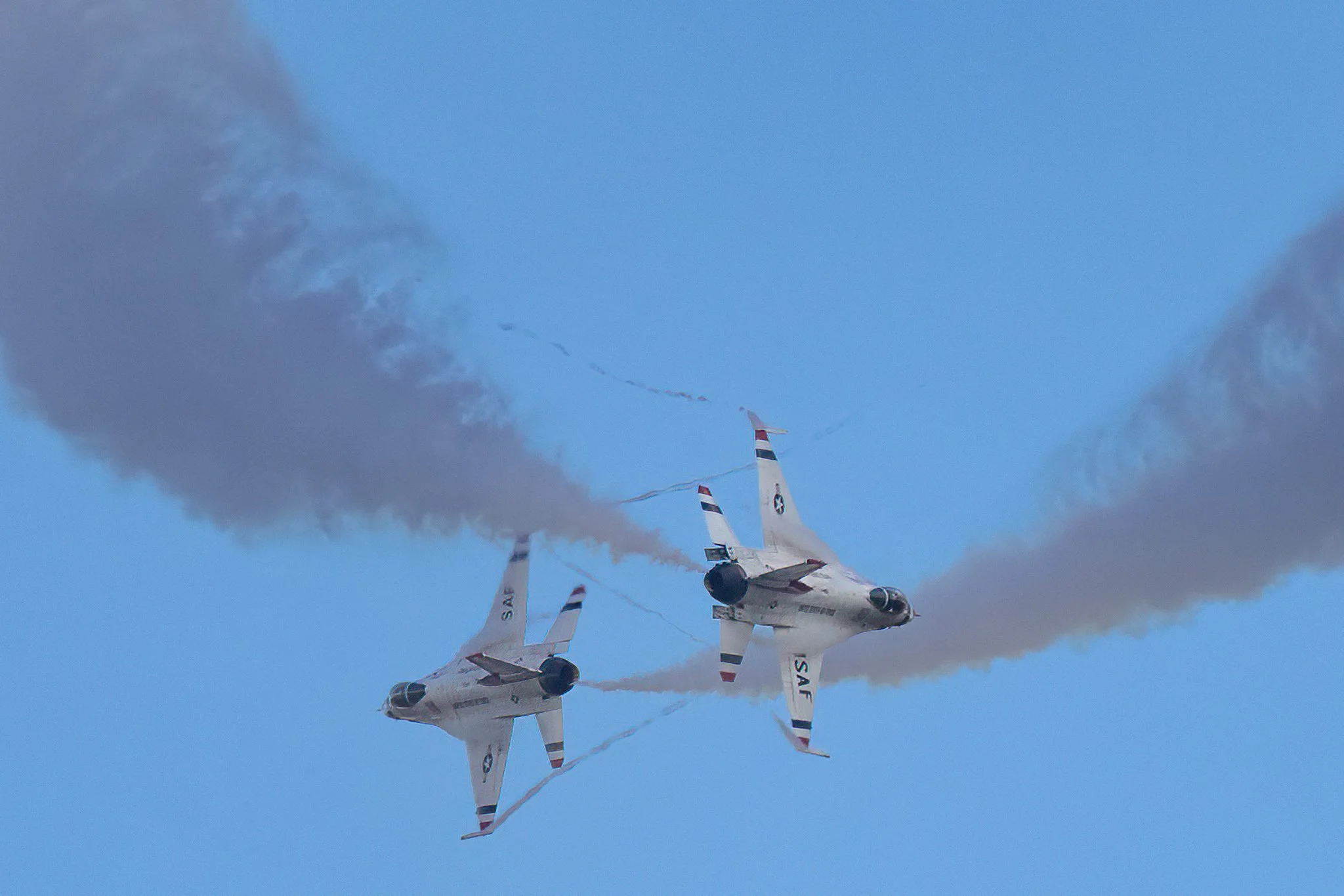
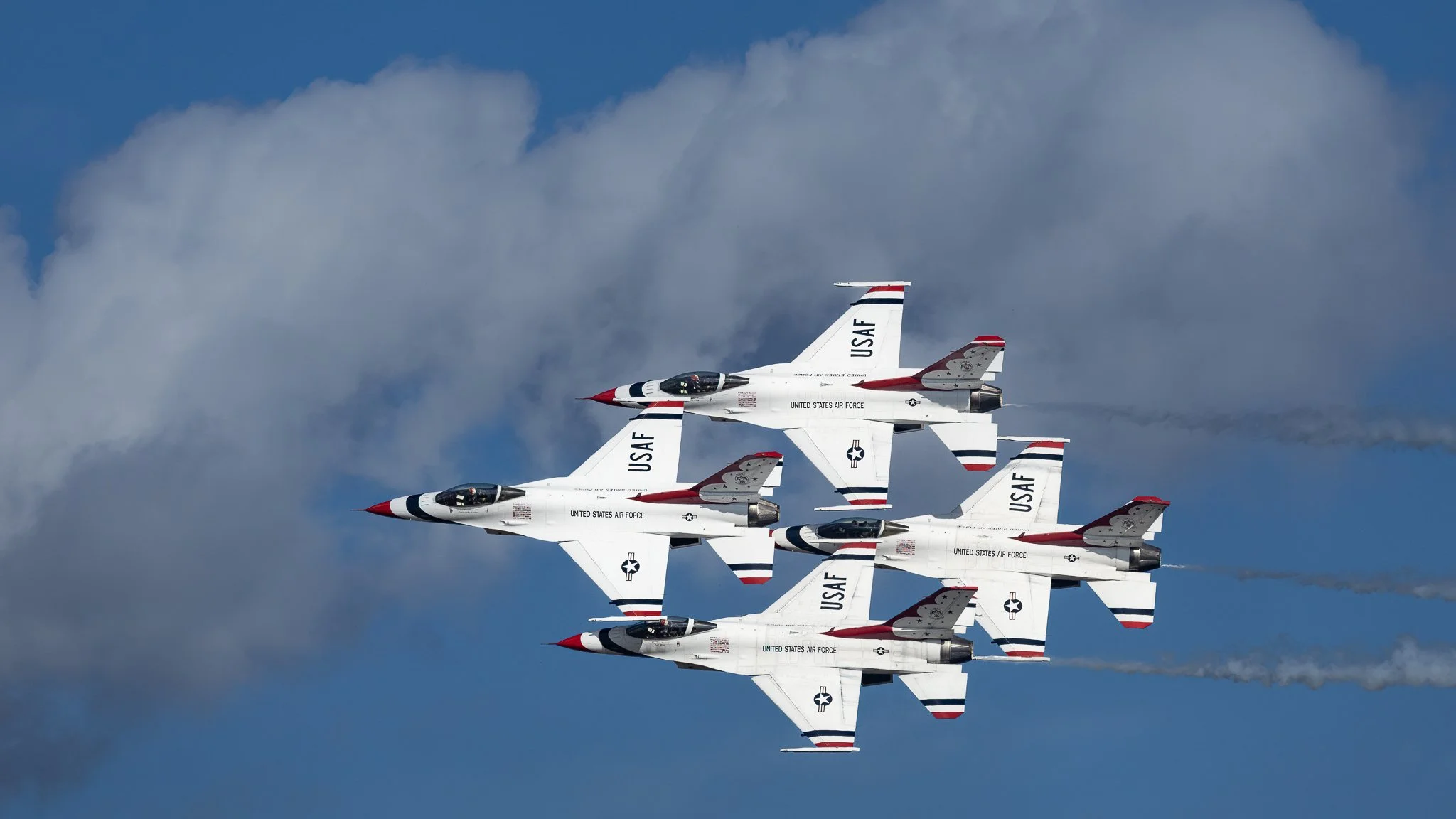
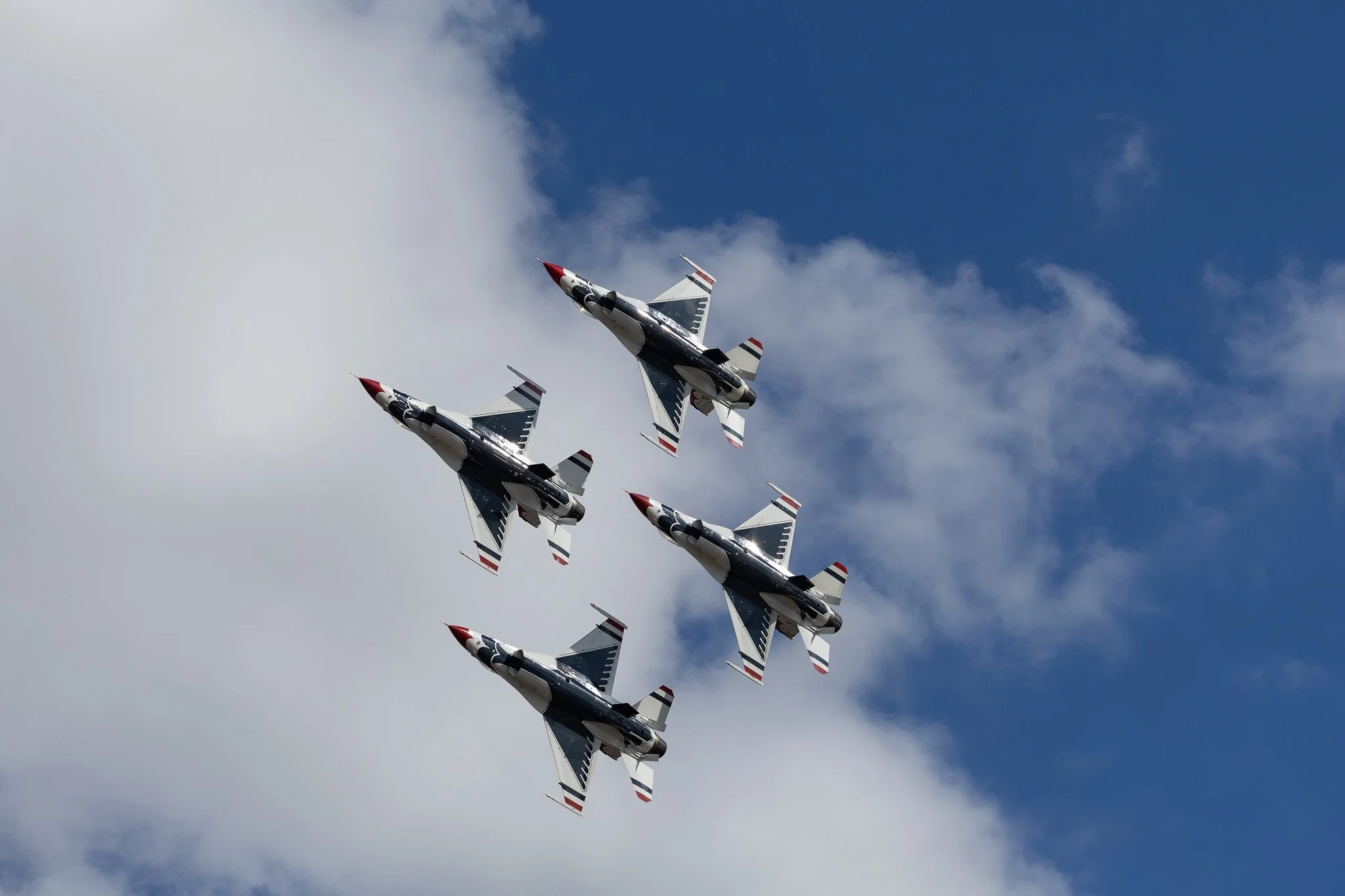
The U.S. Air Force Thunderbirds were one of the performances I was especially looking forward to photographing. Watching the F-16s maneuver in formation was exciting, but trying to capture them with a camera was another challenge entirely.
I was eager to see whether my settings would work. The jets moved quickly, formations changed, and I had to keep tracking the aircraft while trying to compose each shot. There wasn't much time to stop and think. I had to follow, frame, and keep shooting, trusting that I'd made the right decisions.
I'd find out how well I'd done when I got home and reviewed the photographs.
And the jets didn't always make things easy. Sometimes one would come screaming out of nowhere from behind or off to the side while I was concentrating on another aircraft. It was enough to make me jump.
Meanwhile, my Apple Watch kept warning me about noise levels that reached 120 decibels. With engines roaring and aircraft passing overhead, hearing protection wasn't optional. The sound was part of the experience, but it could also damage your hearing.
3,300 Photos Later
By the end of the day, I was hot, sweaty, and a little sunburned. The box lunch—a Chick-fil-A chicken sandwich, chips, and a chocolate chip cookie—was welcome, but I ate it quickly. I didn't want to miss any of the action.
When the show ended, we were exhausted. Thankfully, we didn't have to sit in a long line of cars waiting to leave the parking lot.
Despite the rain in the forecast, the weather had eventually cooperated. The skies turned mostly sunny, with puffs of clouds scattered overhead—pretty much ideal conditions for an airshow.
Near the end of the day, the man next to us remarked that buying the umbrella had been a good idea because it seemed to have kept the rain away.
Yes, it did.
Apparently, we'd stumbled upon a weather-deflecting umbrella. Who knew?
Saturday had turned out to be a great day.
Or so I thought.
Once home, I recharged the batteries and transferred more than 3,300 photographs and 96 video clips to an external hard drive. Then I started reviewing the images on my computer.
That's when I noticed some of the shots weren't as sharp as I'd hoped.
I'd started with a shutter speed of 1/4000 second, an aperture of f/8, and Auto ISO. Those settings seemed reasonable for fast-moving jets, but reviewing the photographs showed me there was room to experiment.
For Sunday, I planned to increase the shutter speed to 1/5000 second to help freeze the action and close the aperture to f/11 for greater depth of field. That might give aircraft flying at slightly different distances in a formation a better chance of being in focus. I'd keep Auto ISO and see what happened.
Of course, faster shutter speeds and a narrower aperture can affect exposure, so I'd have to see how the camera handled the changes. And the slower-moving propeller aircraft would require different settings if I wanted to capture the motion of their propellers.
Switching settings throughout the day adds another layer of complexity when the action is moving quickly. But that's part of learning: research, experiment, review the results, and try again.
I went to bed early, exhausted but already thinking about what I'd do differently the next day.
Saturday was in the books.
Sunday was still ahead of us.